
 |
|
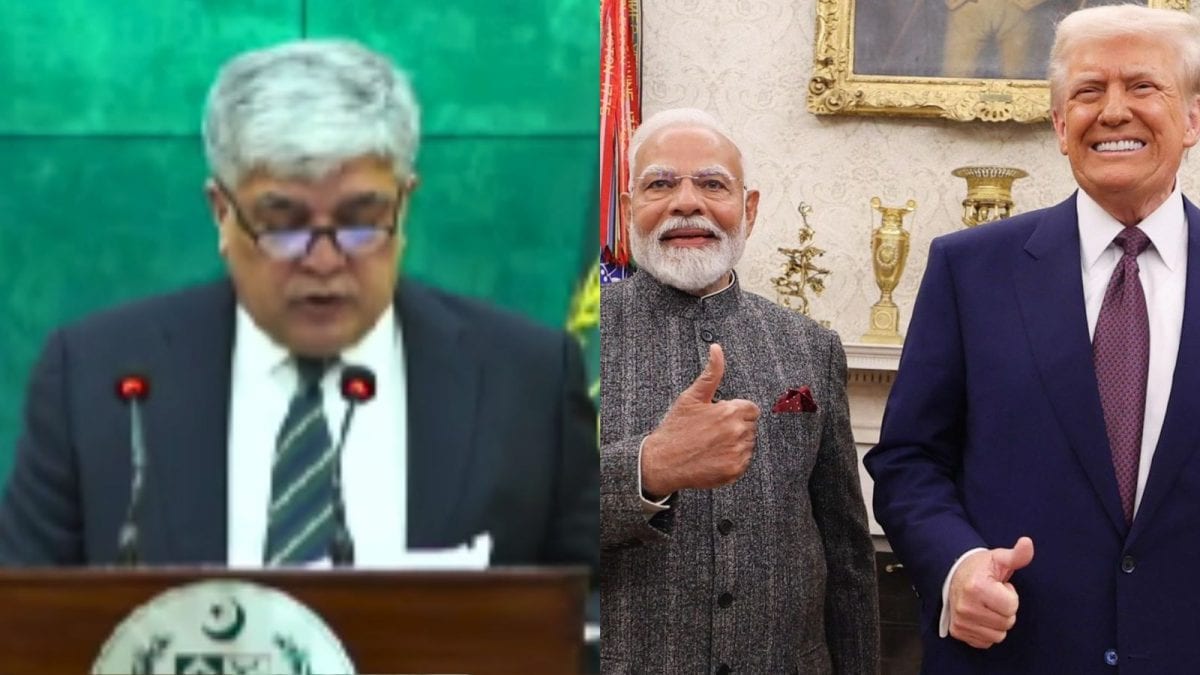
The joint statement released following a meeting between US President Donald Trump and Indian Prime Minister Narendra Modi has sparked a strong reaction from Pakistan. The statement, which called on Pakistan to bring to justice the perpetrators of the 2008 Mumbai and 2016 Pathankot attacks and to ensure its territory is not used for cross-border terrorism, has been characterized by Pakistan's Ministry of Foreign Affairs (MOFA) as "one-sided, misleading, and contrary to diplomatic norms." This strong rebuke highlights the deep-seated tensions and mutual accusations of state-sponsored terrorism between India and Pakistan, a conflict that has repeatedly destabilized the region and drawn international attention. The Pakistani government's response underscores the complex geopolitical dynamics at play, particularly the delicate balance between US relations with both India and Pakistan.
The Pakistani MOFA's statement goes beyond simple disagreement, directly accusing India of sponsoring terrorism and failing to comply with UN Security Council resolutions. This counter-accusation is a significant escalation, framing the India-US joint statement not as a call for accountability, but rather as a biased and unfair condemnation ignoring India's own alleged involvement in acts of terrorism and extrajudicial killings. The inclusion of this counter-narrative in Pakistan's official response reflects a deliberate strategy to challenge the narrative presented by India and the US, asserting Pakistan's own perspective and deflecting criticism. The reference to India's alleged non-compliance with UN resolutions suggests an attempt to leverage international legal frameworks to discredit India's claims and bolster Pakistan's position on the issue.
The joint statement's focus on cross-border terrorism, mentioning specific groups like Jaish-e-Mohammad and Lashkar-e-Tayyiba, further fuels the existing tensions. While the US's commitment to combating global terrorism is stated, the inclusion of these groups, widely considered to operate from Pakistani territory, directly implicates Pakistan in harboring terrorist organizations. This targeted condemnation, coupled with the announcement of the extradition of Tahawwur Rana, underscores the US's commitment to assisting India in bringing perpetrators to justice. However, this also highlights the challenges faced by the US in navigating its relationships with both India and Pakistan, forcing the US to take sides to some degree, a decision that could potentially exacerbate regional instability. The Pakistani government's concerns extend beyond the specific accusations, encompassing the wider context of strengthening US-India defense ties and technology transfer, viewing this as potentially disrupting the regional power balance.
The announcement of the "U.S.-India COMPACT" initiative, designed to enhance military cooperation across various domains, has further fueled Pakistan's concerns about a shift in regional power dynamics. Pakistan's anxieties are rooted in the potential for this enhanced military cooperation to create an imbalance of power, leaving Pakistan at a strategic disadvantage. This concern underscores the larger geopolitical anxieties fueling Pakistan's reaction to the India-US joint statement. The statement isn't simply a response to specific accusations of terrorism; it's a reflection of broader anxieties regarding shifting regional alliances and the perceived threat to Pakistan's national security. The Pakistani government's response must therefore be understood within this broader context of strategic competition and geopolitical maneuvering in South Asia.
The situation highlights the complex and multifaceted nature of the conflict between India and Pakistan. It is not simply a matter of combating terrorism, but also involves deep-seated historical grievances, competing territorial claims, and a struggle for regional dominance. The international community, including the United States, faces a considerable challenge in navigating these complex dynamics and fostering a lasting peace in the region. The diplomatic efforts will require a nuanced understanding of the perspectives of all parties involved, a willingness to address underlying causes of conflict, and a commitment to fostering genuine dialogue and reconciliation. The continued escalation of rhetoric and counter-accusations, as evidenced by Pakistan’s response, underscores the urgency of finding a path towards de-escalation and a more sustainable resolution to this long-standing conflict.
Source: 'One-Sided, Misleading': Pakistan Reatcs To Bold India-US Joint Statement On Cross-Border Terrorism