
 |
|
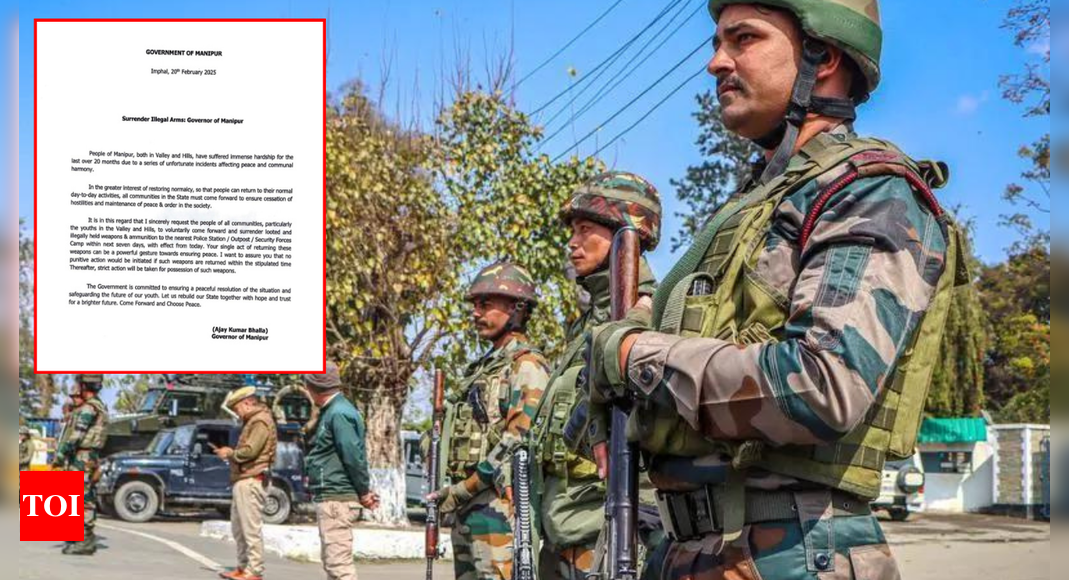
The ongoing conflict in Manipur, India, has reached a critical juncture, prompting a decisive intervention from the state's Governor, Ajay Kumar Bhalla. Facing persistent violence and a proliferation of illegally held firearms, Governor Bhalla issued a stark ultimatum: all citizens must surrender looted or illegally possessed weapons within seven days or face stringent legal consequences. This forceful measure underscores the gravity of the situation and the government's determination to quell the escalating unrest. The ultimatum is directed at both the Valley and Hills regions of Manipur, emphasizing the inclusive nature of the appeal for peace and disarmament. This comprehensive approach reflects the government's understanding of the widespread nature of the problem and its desire for a uniform solution across the diverse communities involved.
Governor Bhalla's letter, addressed to the residents of Manipur, carries a dual message of urgency and leniency. While the seven-day deadline sets a clear expectation of compliance, the Governor has explicitly stated that no punitive action will be taken against those who voluntarily return their weapons within the stipulated timeframe. This carrot-and-stick approach is designed to incentivize cooperation while simultaneously deterring those who might choose to remain defiant. This strategy is not without precedent, and similar initiatives have been employed in other conflict zones with varying degrees of success. The effectiveness of this approach in Manipur will hinge on factors such as community trust in authorities, the accessibility of surrender points, and the credibility of the promise of amnesty.
The background to this dramatic ultimatum is the protracted and violent conflict that has plagued Manipur for over 20 months. This ongoing unrest has resulted in significant loss of life and widespread displacement, disrupting daily life for countless citizens. The state has witnessed clashes between various groups, with security forces engaged in intensive operations to disarm militant groups and restore order. These operations have already yielded substantial results, as evidenced by the recent seizure of a large cache of arms and ammunition. The increase in the stockpiling of illegal weapons, however, presents a persistent threat and necessitates urgent action to prevent further escalation. This escalating arms race makes the Governor’s ultimatum a crucial attempt to preempt even greater violence in the future.
The imposition of President's Rule on February 13, following the resignation of Chief Minister N Biren Singh, signifies a significant shift in the state's governance and security approach. The President's Rule has strengthened the government’s capacity to enforce its disarmament policies and maintain control. The withdrawal of the Suspension of Operations (SoO) agreement with certain armed groups has further complicated the situation, leading to renewed clashes and heightened tensions. The decision to revoke the SoO agreement has elicited mixed reactions, with the Meitei civil society group COCOMI expressing criticism while the Kuki Inpi, representing the Kuki tribes, welcomed the move. This starkly contrasting reaction reflects the deeply divided political landscape and the complex ethnic tensions that underpin the conflict.
The Governor's ultimatum, therefore, operates within a complex political and security context. Its success will not only depend on the level of cooperation from the citizens of Manipur but also on the government's capacity to ensure the safety and security of those who choose to comply. The aftermath of the seven-day period will be a critical test of the government's resolve and its ability to effectively manage the weapons surrendered and address the underlying causes of the conflict. The coming weeks will be crucial in determining whether this ultimatum contributes to a sustainable path toward peace in Manipur or exacerbates the already fragile situation. A truly effective solution will require not just disarmament but also a broader strategy addressing the socio-political grievances that fuel the conflict. This will necessitate open dialogue, reconciliation efforts, and sustainable economic development across all communities to build lasting peace.