
 |
|
The recent appointment process for the Chief Election Commissioner (CEC) in India has sparked significant controversy, with the Congress party vehemently criticizing the government's handling of the matter. The core of the contention revolves around the timing of the selection meeting, held despite the Supreme Court's pending decision on the composition of the selection panel. The Congress argues that this premature meeting demonstrates the government's prioritization of control over the Election Commission, rather than maintaining its crucial credibility. This perspective is further fueled by the government's decision to exclude the Chief Justice of India (CJI) from the selection panel, a move that has raised serious concerns about the impartiality and independence of the process. The Congress contends that the CJI's presence is vital to ensure the integrity and transparency of the selection, preventing any potential political influence or manipulation. The removal of the CJI is seen as a significant departure from previous practices, altering the established norms and raising questions about the government's intentions.
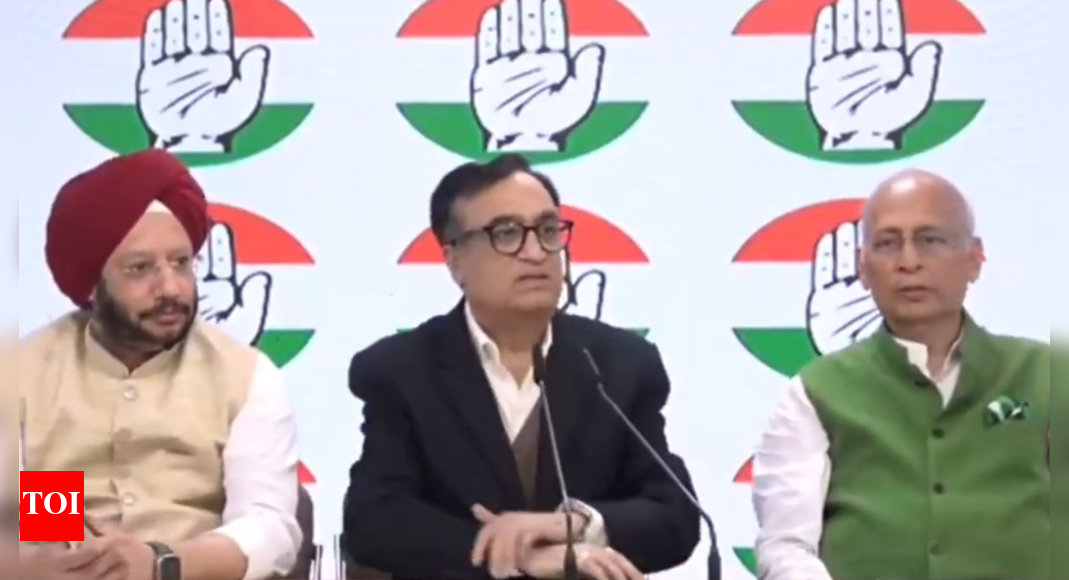
Abhishek Manu Singhvi, a prominent Congress MP, explicitly stated that the government's actions reveal their primary goal: securing control over the Election Commission, rather than upholding its credibility. This statement underscores the party's deep-seated concern that the government's actions undermine the fundamental principles of free and fair elections, which are the cornerstone of a democratic society. The integrity of the Election Commission is paramount, as it plays a vital role in overseeing elections and ensuring the fairness and transparency of the electoral process. Any perception of political interference or bias can severely damage public trust in the electoral system, potentially leading to instability and undermining the democratic fabric of the nation. The Congress party's argument centers on the belief that the government's actions have created a situation where public trust in the Election Commission is jeopardized, thus jeopardizing the credibility of the entire electoral system.
Rahul Gandhi's intervention further highlights the Congress party's concerns. His questions in Parliament directly challenged the government's decision to exclude the CJI from the selection panel. This action, the Congress argues, is a blatant attempt to manipulate the selection process and potentially appoint a CEC who is more amenable to the ruling party's interests. The exclusion of the CJI directly contradicts the established norms and practices previously followed in selecting the CEC, creating a perception of a deliberate attempt to circumvent the established checks and balances within the system. This raises serious questions about the government's commitment to transparency, accountability, and the upholding of democratic principles. The Congress's concerns extend beyond the immediate appointment; they fear that this precedent will set a dangerous tone for future appointments, potentially allowing for undue political influence over a critical independent institution. The long-term ramifications of this decision could significantly weaken the democratic foundations of the country.
The impending retirement of the current CEC, Rajiv Kumar, on February 18th adds further urgency to the situation. The timing of the selection meeting, so close to the retirement date, raises questions about whether the government is deliberately trying to rush the process and limit any meaningful scrutiny of its actions. The succession planning within the Election Commission is another area of concern. The next senior-most Election Commissioner, Gyanesh Kumar, will become the acting CEC, but his term also has a defined end date. This creates a situation where the Election Commission might be left without a permanent CEC for an extended period, potentially impacting its operations and ability to effectively manage future elections. The Congress's concerns are not merely political posturing; they reflect a serious apprehension about the future of free and fair elections in India. The party believes that the government's actions constitute a direct threat to the integrity of the electoral process and calls for a transparent, independent and impartial selection process for the CEC, one that prioritizes credibility over political control.
The controversy surrounding the appointment of the CEC highlights a broader debate about the balance between executive power and the independence of key institutions in India. Critics argue that this episode underscores a worrying trend of government encroachment on the autonomy of vital democratic bodies. The Congress's challenge extends beyond the specifics of the CEC appointment; it represents a broader fight to protect the integrity of democratic processes and prevent undue influence by the executive branch. The ongoing legal challenges and the Supreme Court's upcoming decision will be crucial in determining the outcome and the larger implications for the future of India's electoral landscape. The international community also monitors such events closely, and any perceived erosion of democratic institutions can have significant consequences for India's image and standing on the global stage. Therefore, the resolution of this controversy is not only a matter of domestic politics but also has wider implications for India's relationship with the international community.
Source: 'Govt wants control not credibility': Congress on meeting to pick poll body chief