
 |
|
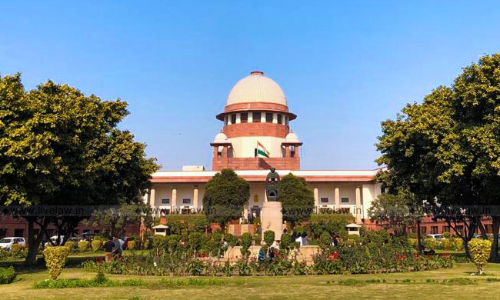
The Supreme Court of India delivered a significant judgment on December 3rd, 2024, in the case of Union of India & Ors. v. Saroj Devi (Civil Appeal No. 13730 of 2024). The ruling centered on the rightful entitlement of Saroj Devi, the widow of Naik Inderjeet Singh, a soldier who perished while on duty. The court's decision not only granted Saroj Devi the Liberalised Family Pension (LFP) and associated benefits she had been seeking, but also levied a substantial fine of Rs. 50,000 on the Union of India for its protracted and ultimately unsuccessful challenge of the Armed Forces Tribunal's (AFT) initial ruling. The court explicitly criticized the government's actions, stating that the widow should not have been subjected to the legal battle in the first place. This case highlights the complexities of military pension laws and the implications of bureaucratic processes on the lives of bereaved families.
Naik Inderjeet Singh, who served in the Indian Army since February 27, 1996, tragically died on January 23, 2013, while participating in an Area Domination Patrol under Operation Rakshak near the Line of Control (LoC) in Jammu and Kashmir. He succumbed to cardiopulmonary arrest after experiencing breathlessness during his duty in extreme weather conditions. While initially classified as a 'battle casualty,' his death was later reclassified as a 'physical casualty attributable to military service'. This reclassification formed the crux of the legal dispute, as the Union of India argued that under the January 31, 2001, order issued by the Director (Pensions), Ministry of Defence, the Liberalised Family Pension (LFP) was only applicable under specific categories (D and E of paragraph 4.1) and that Singh's death did not fit those criteria. The AFT, however, had ruled in favor of Saroj Devi, granting her the LFP and an ex-gratia lumpsum amount usually reserved for battle casualties.
The Supreme Court's judgment meticulously examined the facts and legal arguments presented by both sides. The court considered the initial classification of Singh's death as a 'battle casualty' by his Commanding Officer, supported by Clause 1(g) of Appendix A of Army Order 1 of 2003, which categorizes casualties due to natural calamities or illnesses induced by climatic conditions near the LoC as 'battle casualties'. This finding was critical in understanding the context of Singh's death. The court further delved into the definition of 'war-like situations' within category E (f) of the 2001 order, concluding that this is an inclusive term and that Singh's death, resulting from illness aggravated by the harsh conditions near the LoC, indeed fell under this category. The court therefore upheld the AFT's decision, dismissing the Union of India's appeal. The fine imposed on the Centre served as a strong condemnation of their decision to contest the widow's rightful claim, emphasizing the moral responsibility of the government to treat such cases with empathy and due consideration.
This case is not merely a legal victory for Saroj Devi but a significant precedent concerning the interpretation of military pension regulations. It underscores the importance of a compassionate and just approach to the welfare of families who have sacrificed so much for national service. The Supreme Court’s decision to levy costs on the Union of India sends a clear message that the government must act responsibly and avoid dragging grieving widows into lengthy and expensive legal battles, especially when the merit of their claims is evident. The ruling offers crucial clarity on the interpretation of the relevant clauses concerning LFP eligibility in cases of soldiers dying under extreme circumstances while on duty, especially in conflict zones. The case also highlights the need for a more streamlined and compassionate process for addressing such claims, reducing bureaucratic hurdles and ensuring timely justice for deserving families. The Supreme Court's decision reinforces the principles of fairness, justice, and empathy within the framework of military welfare, setting a vital precedent for future cases.
The judgment in Union of India & Ors. v. Saroj Devi serves as a landmark decision, shaping the understanding and application of military pension laws within the Indian legal system. Its impact will likely extend beyond the specific facts of the case, influencing future litigation concerning the entitlements of the families of deceased military personnel. The court's emphatic rejection of the government's appeal, coupled with the substantial financial penalty, highlights the importance of upholding justice and demonstrating compassion toward those who have made profound sacrifices for their country. The case serves as a reminder of the responsibility of the government to ensure that the families of deceased soldiers receive the benefits to which they are justly entitled, without unnecessary delays or legal battles. The detailed analysis of the relevant clauses within the pension regulations provided by the Supreme Court is expected to guide future applications and interpretations of similar cases, ultimately leading to a fairer and more efficient system for resolving such disputes.