
 |
|
Prime Minister Narendra Modi's recent two-day visit to Kuwait marked a significant diplomatic event, representing the first such visit by an Indian Prime Minister in 43 years. The trip, however, transcended the realm of high-level political negotiations and garnered significant public attention due to a heartwarming personal interaction that highlighted Modi's commitment to his constituents and his engagement with social media. The visit was initiated by an invitation from Sheikh Meshal Al-Ahmad Al-Jaber Al-Sabah, the Amir of Kuwait, with the stated goal of strengthening bilateral ties between India and Kuwait across various sectors. This broad objective encompassed economic cooperation, cultural exchange, and strategic partnerships, reflecting the growing importance of the relationship in a complex geopolitical landscape. The success of the visit, however, was not solely measured by official agreements and signed documents; it was also defined by a deeply human connection that resonated with millions.
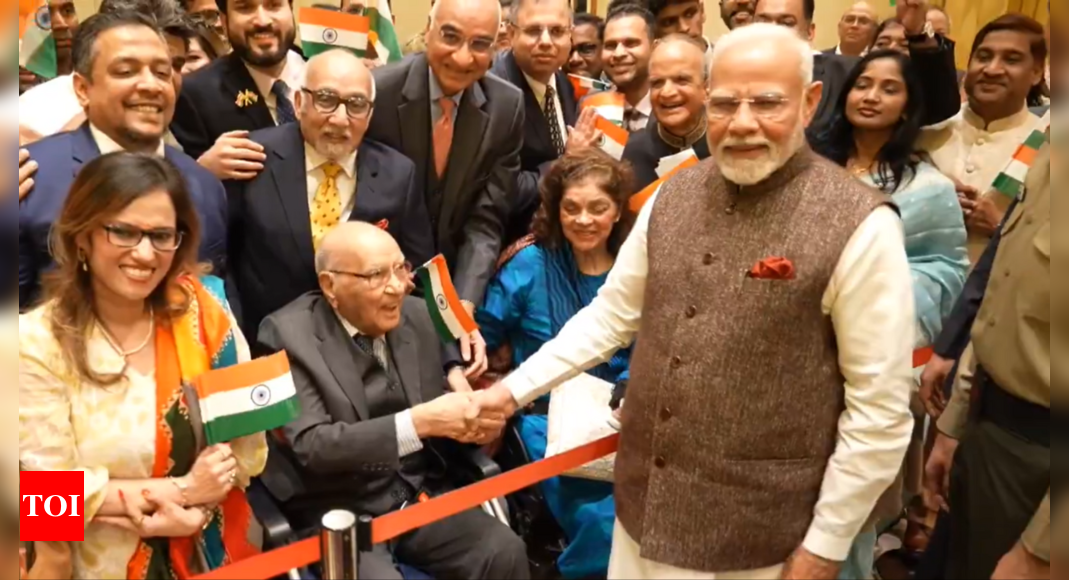
The most striking aspect of Modi's Kuwaiti visit was the fulfillment of a social media request. Shreya Juneja, a granddaughter of 101-year-old former Indian Foreign Service (IFS) officer Mangal Sain Handa, had appealed to Prime Minister Modi via social media to meet her grandfather during his stay in Kuwait. This simple request, made public through the digital sphere, quickly captured the attention of both national and international media. Modi's prompt and affirmative response, 'Absolutely! I look forward to meeting Mangal Sain Handa Ji in Kuwait today,' demonstrated a remarkable openness and willingness to engage directly with the concerns of ordinary citizens, highlighting a significant aspect of his leadership style. This personal touch served to humanize the prime minister's image, bridging the gap between high-level diplomacy and the individual experiences of the Indian diaspora.
The meeting between Prime Minister Modi and Mangal Sain Handa was not merely a photo opportunity; it represented a powerful symbol of respect for elders and a recognition of the contributions of the Indian diaspora to the global community. Handa's son, Dilip Handa, expressed profound gratitude for the prime minister's gesture, describing the experience as 'an experience of a lifetime.' This simple act of meeting an elderly former diplomat underscored Modi's awareness of the importance of acknowledging and appreciating the past contributions of individuals who have shaped India's identity on the global stage. It also showcased the power of social media in facilitating direct communication between citizens and their leaders, opening up new avenues for citizen engagement and feedback.
Beyond the deeply personal interaction with Mangal Sain Handa, Prime Minister Modi's visit also involved significant cultural exchanges. During his stay in Kuwait City, Modi met with Abdullateef Alnesef and Abdullah Baron, two individuals who played pivotal roles in translating the Hindu epics, the Ramayana and the Mahabharata, into Arabic. This interaction symbolized the importance of cultural diplomacy and the promotion of India's rich cultural heritage on the global stage. The translation of these epic poems represents a significant contribution to intercultural understanding and highlights the shared human experiences that transcend geographical and linguistic boundaries. By acknowledging and appreciating these efforts, Modi further reinforced the message of inclusivity and mutual understanding that permeated his visit.
The broader context of Prime Minister Modi's visit to Kuwait is significant in terms of India's foreign policy objectives. The visit underscores the growing importance of India's relations with the Gulf region, particularly given Kuwait's strategic location and its substantial Indian diaspora. The strengthening of bilateral ties between India and Kuwait holds immense potential for economic cooperation, cultural exchange, and enhanced security cooperation in a region of considerable geopolitical significance. The success of the visit, as evidenced by the warm reception afforded to Modi and the concrete steps taken to enhance bilateral relations, signals a promising chapter in the long-standing relationship between the two countries. The combination of high-level diplomatic engagements and the highly publicized personal interactions, such as the meeting with Mangal Sain Handa, contributed to a holistic and impactful visit, projecting a positive image of India on the global stage.
In conclusion, Prime Minister Modi's visit to Kuwait was a multifaceted success. While the formal diplomatic achievements are notable, the deeply human aspect of the trip—particularly the fulfillment of a social media request and the engagement with individuals who have bridged cultural divides—has resonated strongly with the public. This blend of high-level diplomacy and personal interaction showcases a leadership style that values both national interests and individual connections. The visit underscores the growing importance of the India-Kuwait relationship and serves as a reminder of the potential for social media to facilitate citizen engagement and shape the narrative of international diplomacy.
Source: PM Modi keeps promise made on X, meets woman's 101-year-old grandfather in Kuwait