
 |
|
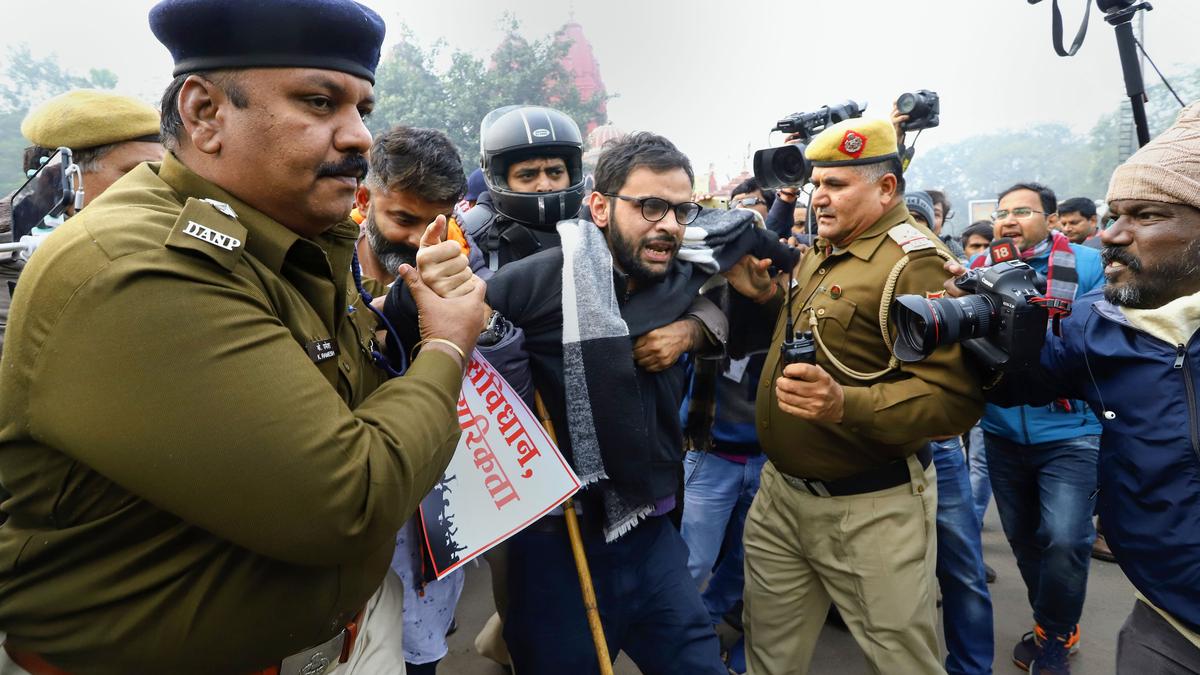
Umar Khalid, a former Jawaharlal Nehru University student, recently appeared before the Delhi High Court to challenge his involvement in the February 2020 northeast Delhi riots. The case, filed under the stringent Unlawful Activities (Prevention) Act (UAPA), alleges a ‘larger conspiracy’ behind the violence that resulted in 53 deaths and over 700 injuries. Khalid’s legal team, led by senior advocate Trideep Pais, vehemently argued against the charges, highlighting the lack of concrete evidence linking Khalid to the alleged conspiracy. The core of their argument rests on the apparent discrepancy between Khalid's accusation and the treatment of other individuals allegedly involved in the same ‘conspiracy meetings.’ The lawyer pointed out that several individuals who allegedly attended these meetings have not been named as accused, leading to questions about the selective targeting of Khalid and Sharjeel Imam. This selective prosecution, the defense argues, points towards a flawed and potentially politically motivated investigation.
The defense's strategy hinges on discrediting the prosecution's case by emphasizing the absence of any incriminating evidence against Khalid. Mr. Pais stressed that there is no physical evidence linking Khalid to the violence, no evidence of him procuring funds, raising funds, or engaging in any act of terrorism. Furthermore, he underscored the fact that Khalid was not even present in northeast Delhi during the riots. This geographical element is crucial in weakening the prosecution's claim that Khalid played a significant role in orchestrating or executing the violence. The defense is clearly aiming to portray Khalid as a victim of selective prosecution, targeted for his political activism rather than for any genuine involvement in the riots.
Beyond the lack of evidence, the defense also appealed to the principle of parity in seeking bail for Khalid. They presented the cases of several co-accused—Devangana Kalita, Natasha Narwal, Asif Iqbal Tanha, and Ishrat Jahan—who have already been granted bail. By highlighting the similarities in their cases and the fact that Khalid has spent over four years in pre-trial incarceration, the defense attempts to establish the unjust nature of his prolonged detention without trial. This argument draws on the principle of equal justice under the law, suggesting that Khalid’s continued detention is disproportionate compared to the treatment of his co-accused, further reinforcing the perception of selective prosecution. The defense is strategically combining legal arguments with appeals to principles of justice and fairness to bolster their case for bail.
The hearing also included submissions on behalf of Meeran Haider, another accused in the case. This underscores the broader context of the case, involving several individuals accused of involvement in the riots. The outcome of Khalid's bail plea will have significant implications, not only for him but also for the larger legal battle surrounding the Delhi riots and the application of the UAPA. The UAPA, a controversial law often criticized for its potential for misuse against dissent, is at the heart of this legal challenge. The court's decision will also set a precedent for other similar cases, influencing how such accusations are investigated and prosecuted in the future. The legal battle surrounding the Delhi riots, and this case specifically, has become a significant symbol in ongoing debates about freedom of speech, political activism, and the application of national security laws.
The Delhi High Court’s decision will be closely watched by legal experts, activists, and the general public alike. The case highlights the complexities of prosecuting cases involving allegations of large-scale violence and conspiracy, especially when those allegations intersect with political activism and freedom of expression. The arguments presented by the defense raise crucial questions about the fairness of the justice system, the potential for misuse of stringent laws like UAPA, and the importance of ensuring equal justice for all accused individuals. The prolonged detention of Khalid and others accused in the Delhi riots underscores the broader issue of pre-trial detention and the need for a swift and fair judicial process. The outcome of this case will undoubtedly have significant consequences for the future of legal proceedings related to the Delhi riots and the application of the UAPA in similar cases.
Source: What is the basis of making me accused in riots case, Khalid asks in Delhi HC