
 |
|
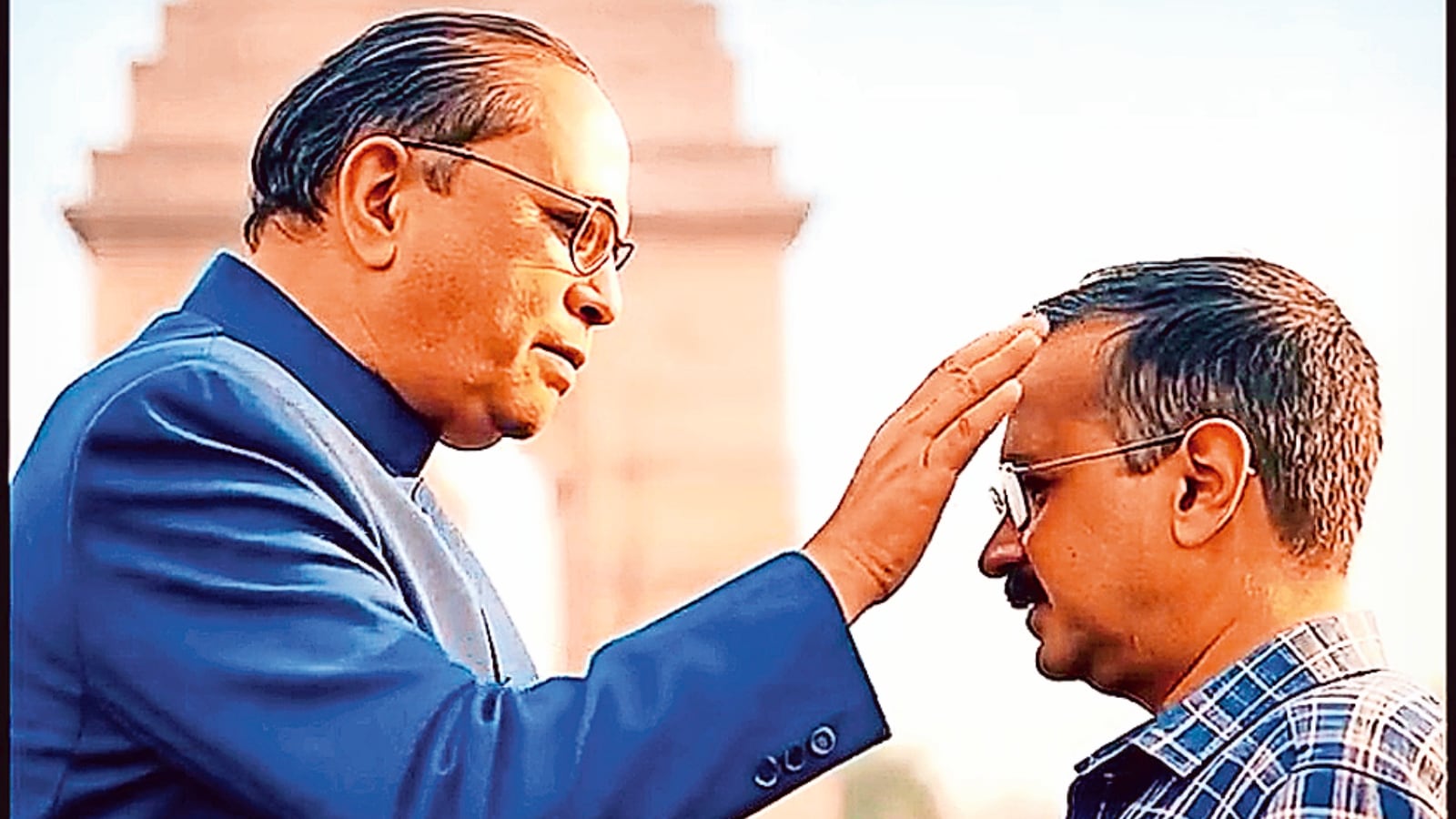
The political landscape of New Delhi is heating up as the Assembly polls approach. Arvind Kejriwal, the Aam Aadmi Party (AAP) national convener, has launched a scathing attack on Union Home Minister Amit Shah, escalating the rhetoric surrounding the upcoming elections. Kejriwal's maiden address in his home constituency of New Delhi served as a platform to not only criticize Shah but also to elevate Dr. B.R. Ambedkar to a position of almost divine reverence within his political narrative. This strategic move underscores the significance of Ambedkar's legacy and its potential to sway voters in a politically charged environment.
Kejriwal's address, delivered after a visit to the Valmiki temple, directly pitted the legacy of Dr. Ambedkar against the Bharatiya Janata Party (BJP). His forceful declaration – 'Those who love Babasaheb should reject the BJP' – sets the stage for a campaign intensely focused on ideological differences. The heart of Kejriwal's argument revolves around his interpretation of Shah's recent comments on Ambedkar in Parliament, which he characterized as insulting and reflective of a deeper disdain for the architect of the Indian Constitution. He further claimed that Prime Minister Narendra Modi's subsequent support of Shah's statement solidified his belief that the remarks were intentional and part of a larger political strategy.
Kejriwal didn't shy away from expressing his personal devotion to Ambedkar, declaring himself a 'bhakt' (devotee). He highlighted his deep engagement with Ambedkar's biography, particularly during his time in prison. He painted a vivid picture of Ambedkar's struggles and achievements, emphasizing the stark contrast between the unparalleled contributions of the scholar and the perceived disrespect he has often faced. This narrative aims to resonate with a significant segment of the population, particularly those who identify strongly with Ambedkar's legacy of social justice and empowerment.
Beyond Ambedkar, Kejriwal also positioned Bhagat Singh as a key figure for the AAP, underscoring the party's commitment to certain ideals. The strategic placement of images of Ambedkar and Bhagat Singh in government offices in Delhi and Punjab further emphasizes this ideological stance, positioning them as figures worthy of emulation. While acknowledging the significance of other historical figures like Mahatma Gandhi and Jawaharlal Nehru, Kejriwal's focus on Ambedkar and Bhagat Singh serves to clearly differentiate the AAP's ideology from that of the BJP.
The escalating tension between Kejriwal and Shah has taken center stage, with the AAP leader directly challenging Shah's perceived disrespect of Ambedkar. The personal nature of the attack, portraying the dispute as a clash between differing religious or ideological allegiances, amplifies the political drama. This rhetorical strategy aims to mobilize support among voters who hold Ambedkar in high regard and simultaneously casts the BJP in an unfavorable light. This is a high-stakes gamble, relying heavily on the power of Ambedkar's image and the potential for strong emotional responses among the electorate.
The BJP's response, delivered through Delhi spokesperson Praveen Shankar Kapoor, attempted to dismiss Kejriwal's attack as a pre-election gimmick. Kapoor's assertion that Kejriwal's pronouncements are motivated by self-interest attempts to undermine the credibility of the AAP leader's message and to shift the focus away from the core issues raised in Kejriwal’s speech. The upcoming election will serve as the ultimate arbiter of the effectiveness of both parties' campaigns and the weight of the emotional and ideological appeals made by both sides.
The use of oaths and pledges by Kejriwal during his speech seeks to further engage voters emotionally. By invoking a clear choice – 'Babasaheb or the BJP' – he is forcing voters to make a decisive stand on the issue. This tactic simplifies the complex political landscape, presenting voters with a seemingly straightforward binary choice. However, this simplification might also be viewed critically, as it ignores the nuances of political participation and the complexities of voter motivations. This strategy highlights the high-stakes gamble Kejriwal is taking to mobilize voters by evoking strong emotional responses through the symbolism of Ambedkar's legacy.
In conclusion, Kejriwal's address represents a calculated move in the ongoing political contest in Delhi. The strategic deployment of Ambedkar's image, combined with the direct confrontation of Amit Shah, marks a significant moment in the electoral campaign. The success of this strategy remains to be seen, with the results of the upcoming elections determining whether the emotional appeal resonated effectively with the electorate. The broader implication is the potential impact of using historical figures and religious or ideological symbols to influence voting patterns in a highly competitive political environment. The coming weeks will undoubtedly witness further escalation of the political discourse, as both parties aim to secure voter support.