
 |
|
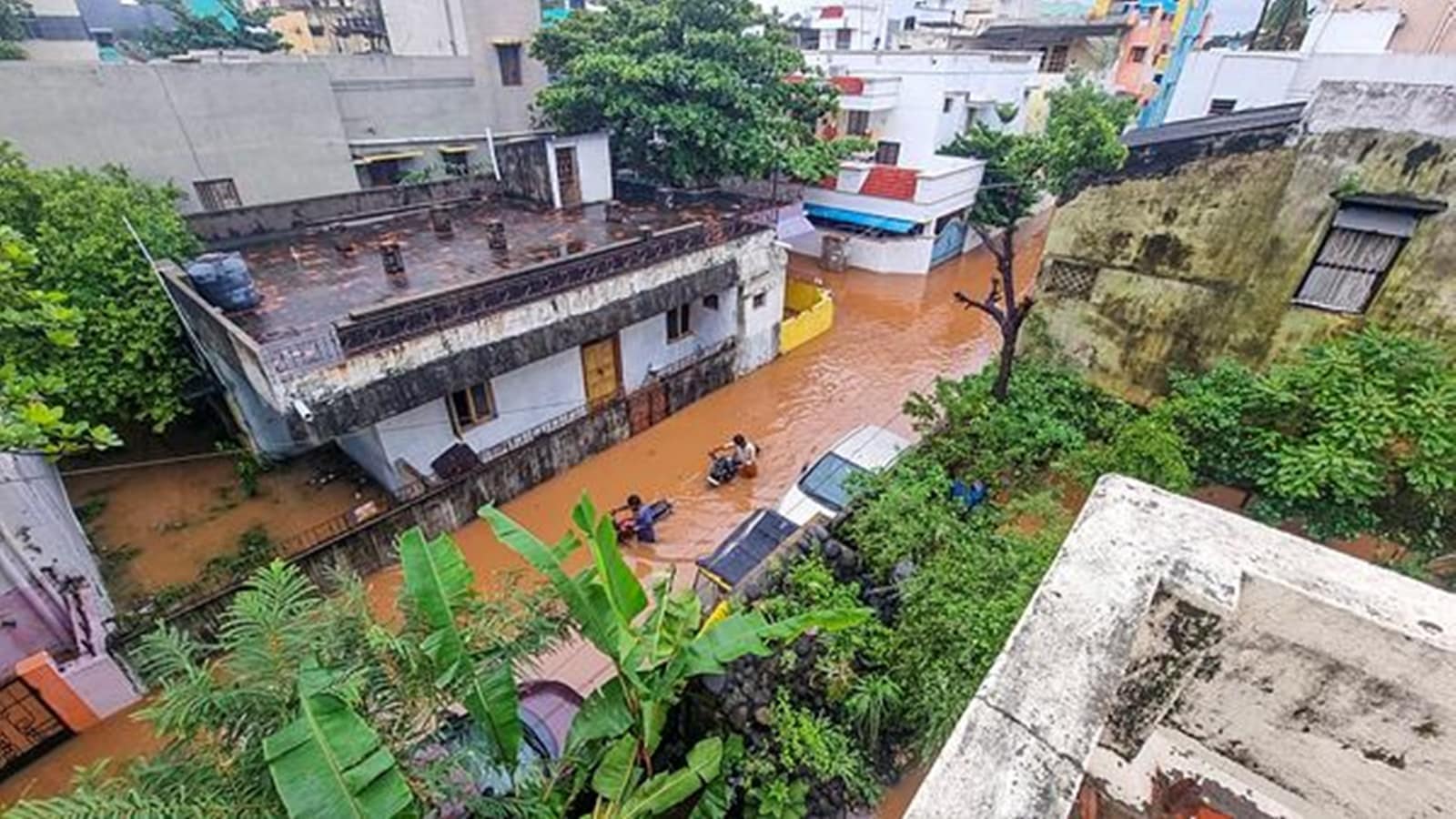
The impact of Cyclone Fengal, which made landfall near Puducherry late Saturday night, has been devastating. The unprecedented rainfall resulted in severe flooding across Puducherry and several districts in Tamil Nadu, causing widespread damage to infrastructure, farmlands, and residential areas. Puducherry bore the brunt of the storm, recording 490 mm of rainfall by Sunday morning – its highest 24-hour total in three decades, exceeding even the rainfall during the catastrophic 2015 Chennai floods. This deluge submerged streets, leaving low-lying areas inundated with waist-deep water and forcing residents from their homes. The sheer volume of water overwhelmed drainage systems, turning streets into rivers and causing significant disruption to daily life. The destruction extended beyond the immediate flooding; trees were uprooted, power lines were snapped, and major roads were rendered impassable, cutting off access to many communities.
The response to this crisis has been multifaceted and involved significant mobilization of resources. Chief Minister N Rangasamy reported that Puducherry had received 50 cm of rainfall and that rescue teams were actively engaged in evacuating stranded individuals. Residential colonies saw water entering homes, submerging vehicles. Relief centers were established, with voluntary organizations providing essential food supplies to affected residents. The Indian Army swiftly joined the rescue efforts, with a Humanitarian Assistance and Disaster Relief (HADR) team successfully evacuating over 100 people stranded in the severely flooded Krishna Nagar area. This swift military intervention highlights the scale of the emergency and the need for coordinated action.
The neighboring Villupuram district in Tamil Nadu experienced similarly severe conditions. Automatic weather stations recorded astonishing rainfall totals – 504 mm in Mailam, 46 cm in Nemmeli, and 41 cm in Vanur. Transport Minister S S Sivasankar reported the evacuation of over 1,281 residents to 21 relief camps across the district. Infrastructure damage was significant, with incidents of wall collapses, uprooted electric poles and trees, and the inundation of key infrastructure like the new bus stand and the collectorate complex. The challenges extended beyond immediate rescue; restoring power and clearing debris are ongoing processes requiring considerable time and resources.
The Tamil Nadu government's response to the crisis was comprehensive and proactive. Chief Minister M K Stalin addressed reporters, highlighting the unprecedented rainfall in Mailam, Nemmeli, and Vanur. He announced that a team of six ministers and senior IAS officers were coordinating relief efforts on the ground, working closely with local officials. Recognizing the substantial financial burden, Stalin also stated that the state would request a central team to assess the damage and provide financial assistance, acknowledging the historical challenges in securing adequate funds from the Union government. The scale of the operation involved the deployment of 12 teams from the NDRF and SDRF to Villupuram and Cuddalore, supplemented by over 22,000 workers from various government agencies.
Cuddalore district mirrored the scenes of chaos witnessed in other affected areas. Residential areas were submerged, necessitating the use of boats for rescue operations. The National Disaster Response Force (NDRF), along with Tamil Nadu Disaster Rescue teams, coordinated relief efforts, clearing uprooted trees from major highways. Even in Chennai, which experienced over 18 cm of rainfall, more than 1,000 residents were moved to shelters, showcasing the widespread nature of the impact. The government's Amma Canteens played a crucial role in providing food relief, distributing over 1.07 lakh free meals on Saturday and 9.10 lakh food packets statewide. Deputy Chief Minister Udhayanidhi Stalin inspected the affected regions, while other ministers led relief efforts on the ground. The coordinated effort, involving multiple government agencies, military personnel, and voluntary organizations, highlights the gravity of the situation and the scale of the combined response required to address the immediate needs and begin the long process of recovery and rebuilding.
The aftermath of Cyclone Fengal serves as a stark reminder of the devastating impact of extreme weather events and the crucial need for robust disaster preparedness and response mechanisms. The scale of the flooding and the extent of the damage underscore the importance of infrastructure improvements to mitigate future risks. The collaborative efforts of government agencies, military personnel, and voluntary organizations illustrate the value of a coordinated response to such crises. The long-term recovery will require significant financial resources and a sustained commitment to rebuilding affected communities and restoring essential services. The experience also highlights the vulnerability of coastal regions to extreme weather and the critical need for long-term strategies to address the challenges of climate change and its potentially devastating consequences.
Source: Record rain in Puducherry, parts of Tamil Nadu as Cyclone Fengal unleashes chaos