
 |
|
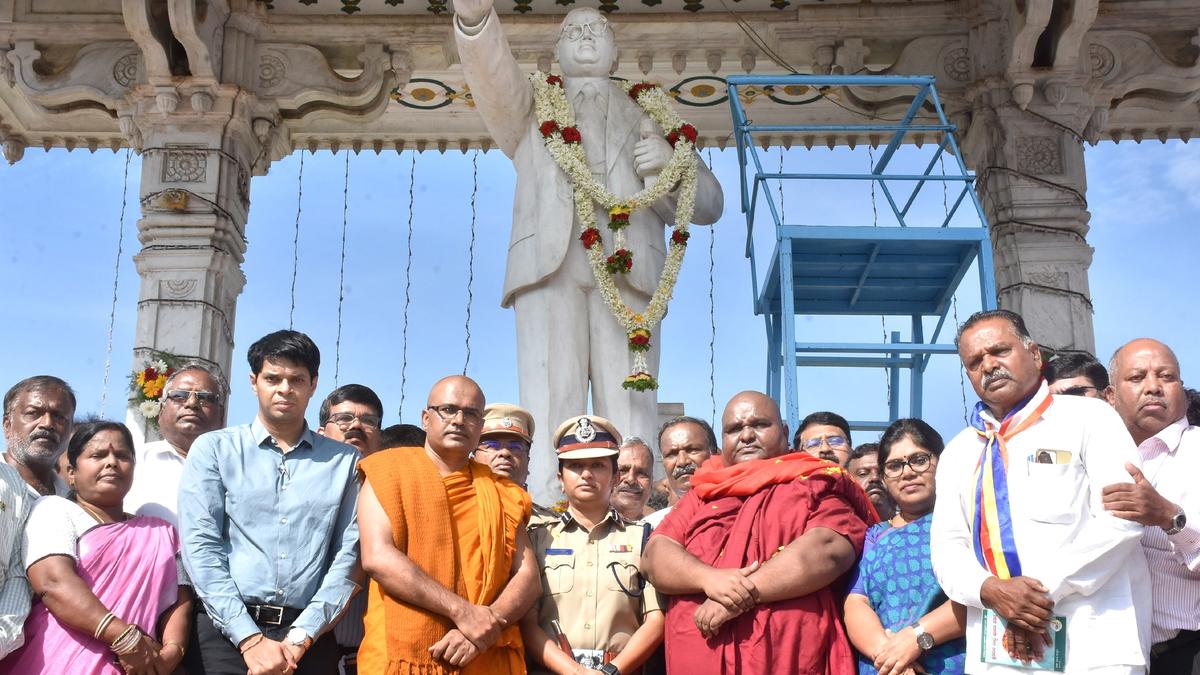
The 68th death anniversary of Bhimrao Ramji Ambedkar, the architect of the Indian Constitution, was observed on Friday as Mahaparinirvana Diwas. Across India, tributes poured in for the revered figure who dedicated his life to fighting for social justice and equality. In one such observance, the district administration paid homage to Dr. Ambedkar with a ceremony featuring floral offerings at the Town Hall. The event served as a poignant reminder of Ambedkar's enduring legacy and the ongoing struggle against social injustices he fought so tirelessly to eradicate.
A Buddhist monk, Kalyansiri Bhanteji, delivered a powerful speech highlighting the continuing relevance of Ambedkar's ideals in contemporary India. He emphasized that while Ambedkar's constitution guarantees equality for all, the reality on the ground remains far from this ideal. The persistence of casteism and untouchability, despite significant strides in urbanization and social reform, underscores the urgent need to address deeply ingrained prejudices and discriminatory practices. Bhanteji's words served as a call to action, urging individuals to introspect and actively work towards dismantling the systemic inequalities that continue to marginalize vulnerable communities.
Bhanteji's address focused on the attitudinal shift required to bring about genuine social change. He argued that merely superficial changes in urban settings are insufficient to address the root causes of caste-based discrimination. A transformative change in mindset is crucial, requiring individuals to internalize Ambedkar's values of equality, justice, and human dignity. He emphasized the importance of moving beyond mere symbolic gestures and actively challenging the social structures that perpetuate caste-based discrimination. The speech resonated with the attendees, prompting reflection on personal responsibility in combating social injustice.
The event also included the chanting of the Triratna Vandana, a traditional Buddhist prayer expressing reverence for the Buddha, Dharma (his teachings), and Sangha (the monastic community). The participation of local officials, including the Deputy Commissioner, City Police Commissioner, and ZP CEO, demonstrated a commitment from various sectors of society to remember and honor Ambedkar's contributions. Their presence underscored the importance of collective action in upholding the principles of equality and social justice that Ambedkar championed throughout his life.
Ambedkar's life serves as a powerful example of unwavering dedication to social reform. His relentless fight against social inequalities, despite facing immense adversity, inspires generations to continue the struggle for a more just and equitable society. His legacy extends far beyond the drafting of the Indian Constitution; it embodies a commitment to fighting for the rights of the marginalized and oppressed. The tributes paid on his death anniversary represent not only a moment of remembrance, but also a reaffirmation of the ongoing commitment to realizing Ambedkar's vision of a truly egalitarian society. The challenges remain significant, but the continued remembrance of Ambedkar's life and work offers a beacon of hope and inspiration for future generations.
The persistent challenges related to caste discrimination highlight the need for sustained efforts beyond symbolic gestures. While urban areas might witness a dilution of overt caste practices, the underlying prejudices and biases remain deeply entrenched in the societal psyche. Addressing this requires a multi-pronged approach encompassing educational initiatives, legal reforms, and most importantly, a fundamental shift in individual attitudes. The call for introspection and attitudinal change reflects the understanding that lasting social change cannot be achieved through superficial measures alone. Genuine progress demands a commitment to challenging discriminatory beliefs and actively dismantling the systems that perpetuate caste-based inequality.
The participation of various officials in the tribute ceremony signifies the importance of collective responsibility in upholding Ambedkar's legacy. It highlights the need for collaborative efforts across different sectors of society to address the pervasive issue of caste discrimination. Government initiatives, along with the active participation of civil society organizations and individuals, are essential for creating a more inclusive and equitable society. The event serves as a reminder that remembering Ambedkar is not merely a historical exercise, but a continuous call to action to fight for social justice and equality in contemporary India. The fight for social justice, equality, and liberty is a continuous journey, and Ambedkar's life remains a constant inspiration for those committed to this cause.
Source: Tributes paid to B.R. Ambedkar on his 68th death anniversary