
 |
|
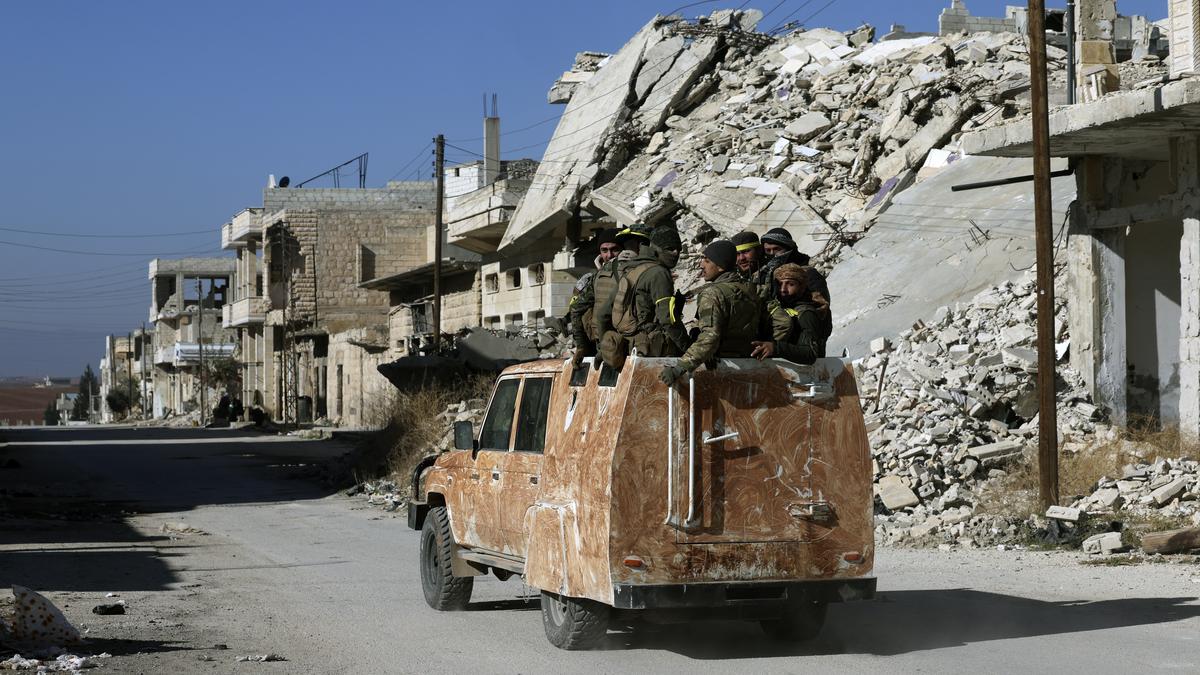
The Syrian civil war took a dramatic turn on December 1st, 2024, when a swift rebel offensive resulted in the loss of Aleppo, Syria's second-largest city, to government forces. This marked the first time since the conflict began in 2011 that the Syrian regime had lost control of Aleppo. The Islamist-dominated rebel alliance, spearheaded by Hayat Tahrir al-Sham (HTS), launched their assault on Wednesday, coinciding with a fragile ceasefire in neighboring Lebanon. This stunning victory for the rebels dealt a severe blow to President Bashar al-Assad and his Iranian and Russian backers. The speed and effectiveness of the rebel advance highlight the weakening state of the Assad regime and its dwindling resources, particularly in light of the simultaneous conflict in Lebanon which heavily depleted the Hezbollah forces, a crucial ally of Assad.
The Syrian Observatory for Human Rights (SOHR), a UK-based war monitor with a network of sources inside Syria, reported that the rebels now control almost all of Aleppo city, with the exception of areas held by Kurdish forces. The offensive met with surprisingly little resistance, leading experts to question the overall strength and preparedness of the Syrian army. The Observatory documented numerous airstrikes conducted by Syrian and Russian forces in an attempt to regain control, resulting in significant civilian casualties in both Aleppo and Idlib. These attacks, however, proved ineffective in stemming the rebel advance, underscoring the rebels' tactical success and the limited efficacy of the government's air power.
The fall of Aleppo signifies a major strategic shift in the Syrian conflict. For years, Aleppo was a key battleground, and its recapture by government forces in 2016, with significant Russian air support, was considered a major turning point. The city's loss now represents a profound reversal of fortunes for Assad, jeopardizing his grip on power. The rebels' success is partly attributed to the depletion of the Syrian army's resources and manpower due to the ongoing conflict in Lebanon, where Hezbollah suffered significant losses fighting Israel. This weakening of the Assad regime has created a power vacuum exploited by the HTS and allied factions, triggering the rapid rebel advance.
The international community responded with a mixture of concern and condemnation. Russia and Iran, key allies of the Assad regime, expressed extreme concern over the losses. Iran's Foreign Minister even went so far as to accuse the United States and Israel of orchestrating the rebel offensive, while vowing that the Syrian army would eventually prevail. The United States, which maintains a military presence in northeastern Syria, released a statement through the National Security Council, highlighting the Assad regime's reliance on foreign powers and its refusal to engage in the 2015 UN-led peace process as contributing factors to the current crisis. The UN envoy also expressed concern about the escalating conflict and its potential impact on regional stability. Meanwhile, Israel, which has been monitoring the situation closely, remains cautious about the implications of the rebel victory for its own national security interests.
The situation in Aleppo itself is characterized by uncertainty and fear. Residents described chaotic scenes, with charred vehicles and bodies lying in the streets following Russian airstrikes. Many remain confined to their homes, seeking safety amid the ongoing upheaval. The rebels have made efforts to maintain a semblance of order by ensuring essential services, such as bakeries, continue to function to prevent widespread panic and maintain the cooperation of the civilian population.
The long-term implications of Aleppo's fall remain unclear. Experts suggest the loss of the city represents a crippling blow to the Assad regime's authority and legitimacy, potentially leading to further fragmentation of Syria and exacerbating the already dire humanitarian situation. The ongoing conflict continues to generate immense human suffering, displacement, and instability within Syria and across its borders. The international community faces a formidable challenge in finding a lasting solution to the Syrian crisis, particularly given the multiple layers of regional and international involvement and the deeply entrenched political divisions.
The swift rebel advance in Aleppo serves as a stark reminder of the fragility of the Syrian peace process and the volatile nature of the conflict. While Assad’s pronouncements of victory against the ‘terrorists’ reveal his determination to hold onto power, the reality on the ground suggests a significant shift in the balance of power. The international community is increasingly grappling with the need for a coordinated response to address the escalating crisis. Failure to achieve lasting peace in Syria will have profound consequences for regional security and stability and for millions of Syrian civilians caught in the crossfire.
Source: Syrian government loses Aleppo after lightning rebel offensive: monitor