
 |
|
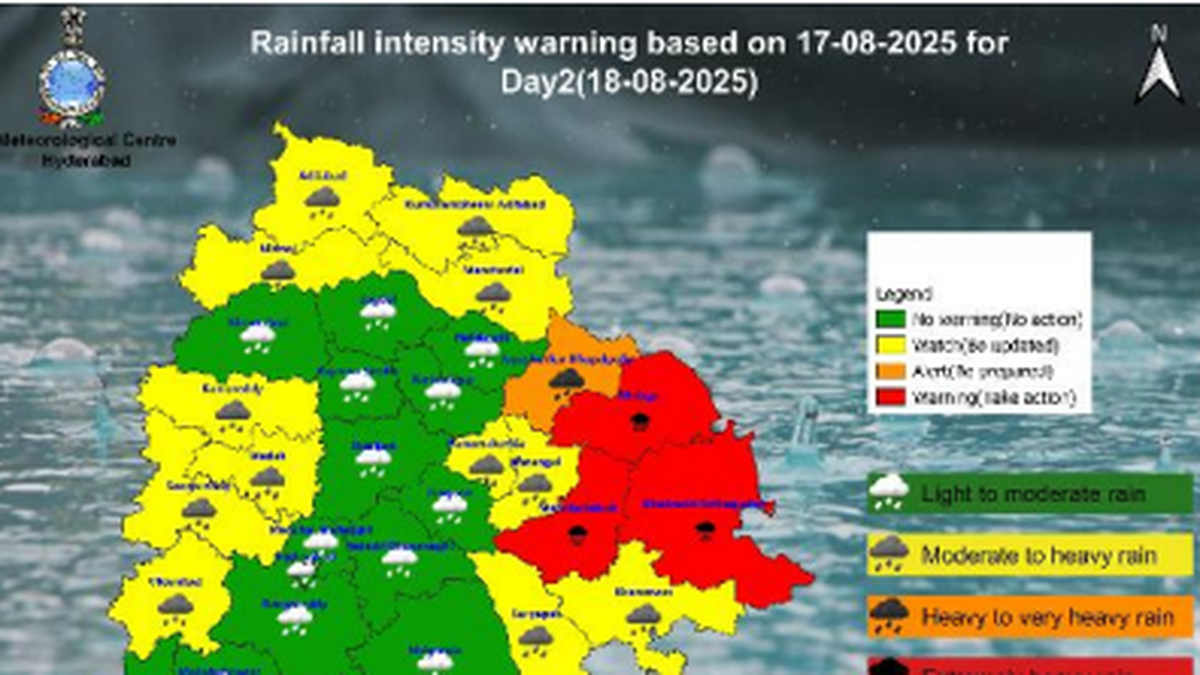
The India Meteorological Department (IMD) has issued severe weather warnings for several districts in Telangana, India, highlighting the vulnerability of the region to extreme weather events. This event underscores the increasing frequency and intensity of such occurrences, driven by climate change and altered weather patterns. The red alert issued for Mulugu, Bhadradri Kothagudem, and Mahabubabad, indicating an expectation of very heavy to extremely heavy rainfall, signifies a high risk of significant disruption and potential damage. These warnings necessitate immediate preparedness measures and proactive steps to mitigate the anticipated impacts on local communities, infrastructure, and agriculture. The orange alert for Jayashankar Bhupalpally, signaling heavy to very heavy rainfall, demands a similar level of vigilance and readiness, although the expected severity of the impact is slightly lower than in the red alert zones. The spread of weather warnings across multiple districts demonstrates the widespread nature of the impending risk, calling for a coordinated response from various government agencies and local authorities. This situation emphasizes the need for effective communication of weather forecasts and advisories to the public, empowering individuals to take necessary precautions and protect themselves and their property. The IMD's bulletin serves as a crucial source of information, but its effectiveness relies on the ability of local administrations to translate these warnings into actionable plans and disseminate them to vulnerable populations. This includes providing clear guidance on evacuation procedures, safety measures during heavy rainfall, and access to emergency services. Furthermore, the forecast of light to moderate rain with gusty winds in Hyderabad and its surrounding areas highlights the potential for localized flooding and disruption to daily life. Even moderate rainfall, when coupled with strong winds, can pose significant challenges, particularly in urban areas with inadequate drainage systems. This situation underscores the importance of maintaining and upgrading urban infrastructure to enhance resilience to extreme weather events. Regular inspections and maintenance of drainage systems, combined with improved urban planning, can significantly reduce the risk of flooding and minimize the disruption caused by heavy rainfall. The implications of these weather warnings extend beyond immediate safety concerns. Prolonged periods of heavy rainfall can have significant economic and social consequences, including damage to crops, disruption to transportation networks, and increased risk of waterborne diseases. In agricultural regions, excessive rainfall can lead to crop failure and significant losses for farmers, impacting food security and rural livelihoods. Similarly, disruption to transportation networks can hinder the movement of goods and services, affecting economic activity and supply chains. The increased risk of waterborne diseases, such as cholera and typhoid, necessitates enhanced public health measures, including water purification and sanitation programs. Addressing these challenges requires a multi-faceted approach that integrates disaster risk reduction, climate change adaptation, and sustainable development. Investing in early warning systems, improving infrastructure resilience, and promoting climate-smart agriculture are essential steps towards building a more resilient and sustainable future. Furthermore, strengthening community-based disaster preparedness initiatives can empower local communities to effectively respond to extreme weather events and minimize their impacts. This includes training community members in first aid, search and rescue, and emergency communication, as well as providing them with access to essential resources and equipment. The current weather situation in Telangana serves as a stark reminder of the increasing vulnerability of many regions to extreme weather events. Climate change is exacerbating these risks, leading to more frequent and intense rainfall, heatwaves, droughts, and other natural disasters. Addressing this challenge requires a concerted global effort to reduce greenhouse gas emissions and mitigate the impacts of climate change. At the same time, local governments and communities must take proactive steps to adapt to the changing climate and build resilience to extreme weather events. This includes investing in infrastructure improvements, promoting sustainable land management practices, and strengthening disaster preparedness and response capabilities. By working together, we can create a more resilient and sustainable future for all.
The context provided by the weather forecast also invites a deeper reflection on the role of technology in mitigating the impact of such natural calamities. The India Meteorological Department's (IMD) ability to predict and disseminate information about the impending heavy rainfall is a testament to the advancements in weather forecasting technology. Satellite imagery, sophisticated weather models, and a network of ground-based sensors all contribute to the accuracy and timeliness of these predictions. However, the effectiveness of this technology hinges on its accessibility and usability by the general public. Ensuring that weather alerts and warnings reach the most vulnerable populations, particularly those in remote or underserved areas, is a critical challenge. This requires leveraging a variety of communication channels, including mobile technology, radio broadcasts, and community outreach programs. Furthermore, the information must be presented in a clear and concise manner, avoiding technical jargon and focusing on actionable steps that individuals can take to protect themselves and their property. The use of artificial intelligence (AI) and machine learning (ML) can further enhance the accuracy and efficiency of weather forecasting. AI algorithms can analyze vast amounts of data from various sources to identify patterns and predict future weather conditions with greater precision. ML models can also be used to optimize disaster response strategies, such as identifying the most vulnerable areas and allocating resources effectively. In addition to forecasting, technology can play a crucial role in monitoring and managing the aftermath of extreme weather events. Remote sensing technologies, such as drones and satellites, can be used to assess the extent of damage and identify areas that require immediate assistance. Geographic Information Systems (GIS) can be used to map affected areas and coordinate relief efforts. Social media platforms can also be used to gather information about the impact of the disaster and connect affected individuals with assistance. However, it is important to address the potential risks associated with the use of technology in disaster management. Data privacy and security are critical concerns, particularly when collecting and sharing information about vulnerable populations. It is also important to ensure that technology is used in a responsible and ethical manner, avoiding the spread of misinformation and prioritizing the needs of the most vulnerable. The development and deployment of technology for disaster management should be guided by a set of ethical principles that prioritize human well-being and promote equity and inclusion. Furthermore, it is important to invest in the training and education of personnel who will be using these technologies, ensuring that they have the skills and knowledge necessary to operate them effectively and responsibly. The integration of technology into disaster management is not a silver bullet, but it can significantly enhance our ability to predict, prepare for, and respond to extreme weather events. By leveraging the power of technology in a responsible and ethical manner, we can build more resilient communities and protect vulnerable populations from the devastating impacts of natural disasters.
Beyond the immediate weather crisis, it's essential to consider the long-term implications for urban planning and infrastructure development, especially in regions like Hyderabad which are experiencing rapid growth. Unplanned urbanization and inadequate infrastructure contribute significantly to the vulnerability of cities to extreme weather events. The current situation highlights the urgent need for sustainable urban planning practices that prioritize resilience and minimize the impact of climate change. This includes investing in green infrastructure, such as parks and green roofs, to absorb excess rainwater and reduce the risk of flooding. Implementing sustainable drainage systems (SuDS) can also help to manage stormwater runoff and prevent urban flooding. SuDS include a variety of techniques, such as permeable pavements, swales, and rain gardens, that mimic natural drainage patterns and reduce the burden on conventional drainage systems. Furthermore, it is crucial to ensure that new construction projects are designed to withstand the impacts of extreme weather events. This includes incorporating climate-resilient building materials and designing buildings to withstand high winds and flooding. Building codes and regulations should be updated to reflect the latest scientific knowledge about climate change and its potential impacts. Investing in public transportation systems can also help to reduce the vulnerability of cities to extreme weather events. Reliable public transportation systems can provide alternative modes of transportation during periods of heavy rainfall or flooding, reducing the reliance on private vehicles and minimizing traffic congestion. Furthermore, promoting compact, mixed-use development can reduce the need for long commutes and minimize the environmental impact of transportation. Engaging local communities in the planning process is essential for ensuring that urban development projects meet their needs and priorities. Community participation can help to identify local vulnerabilities and develop solutions that are tailored to the specific context. Furthermore, it can help to build trust and support for urban development projects, increasing the likelihood of their success. The challenges of sustainable urban planning are complex and require a multi-faceted approach that integrates environmental, social, and economic considerations. However, by prioritizing resilience and sustainability, we can create cities that are more livable, equitable, and resilient to the impacts of climate change. This requires a long-term commitment to investing in infrastructure improvements, promoting sustainable land management practices, and engaging local communities in the planning process. The experience of Telangana serves as a valuable case study for other regions that are facing similar challenges. By learning from the successes and failures of others, we can accelerate the transition to a more sustainable and resilient future.
The ethical dimensions of disaster response are frequently overlooked in the urgency of the moment, yet they are paramount to ensuring equitable and just outcomes. Who receives aid first? How are resources allocated? What voices are amplified, and which are silenced? These are questions that demand careful consideration and proactive planning. Disaster response should be guided by the principles of fairness, impartiality, and non-discrimination. Vulnerable populations, such as the elderly, people with disabilities, and marginalized communities, should be prioritized in the allocation of resources and services. Efforts should be made to ensure that aid reaches those who need it most, regardless of their race, ethnicity, religion, or socioeconomic status. Furthermore, it is crucial to respect the dignity and autonomy of affected individuals. Aid should be provided in a manner that empowers people to rebuild their lives and livelihoods, rather than creating dependency. It is also important to ensure that affected individuals have access to accurate and timely information, so that they can make informed decisions about their own safety and well-being. Transparency and accountability are essential for building trust and ensuring that aid is used effectively. Aid organizations should be transparent about their operations and finances, and they should be accountable to the people they serve. Mechanisms should be established for addressing complaints and grievances, and for ensuring that aid is distributed fairly and equitably. The role of local communities in disaster response is often underestimated. Local communities are the first responders in most disasters, and they have valuable knowledge and experience that can inform response efforts. Disaster response should be community-led and community-driven, with local communities playing a central role in planning, implementation, and monitoring. Furthermore, it is crucial to address the underlying causes of vulnerability to disasters. Poverty, inequality, and environmental degradation all contribute to the risk of disasters and their impacts. Addressing these underlying causes requires a long-term commitment to sustainable development and social justice. Disaster response should be integrated into broader efforts to promote social and economic equity, and to protect the environment. The ethical challenges of disaster response are complex and multifaceted. There are no easy answers, and difficult choices must often be made under pressure. However, by adhering to the principles of fairness, impartiality, and non-discrimination, we can ensure that disaster response efforts are guided by the values of justice and human dignity. The situation in Telangana underscores the importance of considering the ethical dimensions of disaster response, and of developing strategies that promote equitable and just outcomes. By learning from this experience, we can improve our ability to respond to future disasters in a way that is both effective and ethical.
In conclusion, the weather forecast for Telangana, with its red and orange alerts, represents more than just a temporary meteorological event; it's a microcosm of larger challenges facing communities around the world due to climate change, urbanization, and socioeconomic disparities. The incident calls for a multi-faceted response encompassing immediate disaster preparedness and long-term strategic planning. The role of the IMD and its ability to provide accurate weather forecasting is paramount, but equally important is the translation of these forecasts into actionable information that reaches the most vulnerable populations. This requires leveraging technology effectively, but with a keen awareness of the ethical considerations surrounding data privacy and equitable access to information. Sustainable urban planning emerges as a critical necessity. Cities like Hyderabad must prioritize green infrastructure, sustainable drainage systems, and climate-resilient building designs to mitigate the impact of extreme weather events. Engaging local communities in the planning process is crucial to ensure that developments meet their needs and promote resilience. The ethical dimensions of disaster response must also be at the forefront. Principles of fairness, impartiality, and non-discrimination should guide resource allocation and aid distribution. Local communities should be empowered to play a central role in response efforts, recognizing their inherent knowledge and capacity. Addressing the underlying causes of vulnerability, such as poverty, inequality, and environmental degradation, is crucial for building long-term resilience. Ultimately, the Telangana situation serves as a call to action. It underscores the need for a global commitment to reducing greenhouse gas emissions and mitigating the impacts of climate change. Simultaneously, local governments and communities must take proactive steps to adapt to the changing climate, invest in infrastructure improvements, and strengthen disaster preparedness capabilities. By embracing a holistic approach that integrates environmental sustainability, social equity, and ethical governance, we can build a more resilient and just future for all. The convergence of accurate forecasting, responsible technology utilization, sustainable planning, and ethical response strategies offers a pathway towards minimizing the devastating consequences of extreme weather events and creating communities that can thrive in the face of adversity. The learnings from Telangana can serve as a valuable roadmap for other regions grappling with similar challenges, fostering a collective effort towards a more resilient and sustainable world.
Source: Very heavy to extremely heavy rainfall forecast in 3 districts, orange alert in one in Telangana