
 |
|
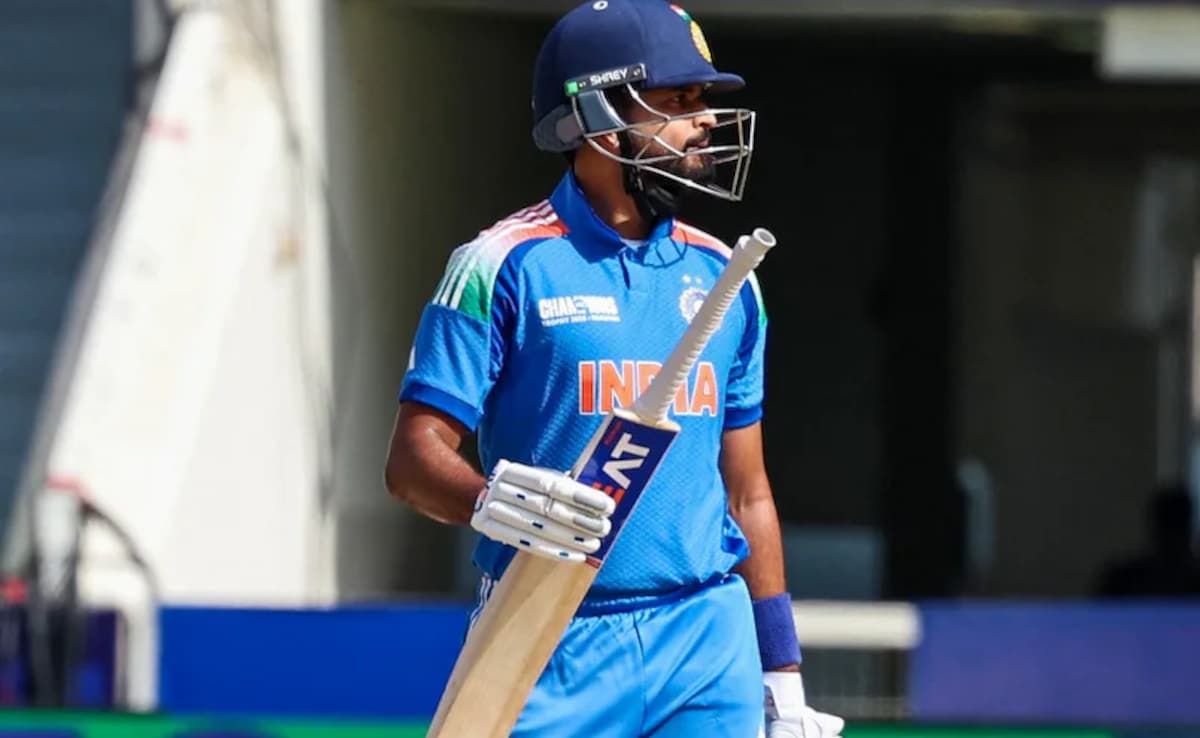
The exclusion of Shreyas Iyer from the Asia Cup 2025 squad has ignited a wave of debate within the cricketing fraternity. This controversy stems not only from Iyer's perceived talent and prior contributions to the Indian team but also from the circumstances surrounding his recent decisions and the subsequent reactions to his omission. The core narrative revolves around Iyer's reported refusal to captain the West Zone team in the Duleep Trophy, a decision that some interpret as prioritizing his personal training regimen over domestic commitments. Following this, the selectors opted to exclude him from the Asia Cup squad, a move that has been met with considerable criticism, most notably from former Indian cricketer Sanjay Manjrekar. Manjrekar's impassioned response highlights the perceived unfairness of Iyer's exclusion, particularly in light of his strong performances in previous series and the Indian Premier League (IPL). The situation raises complex questions about the balance between individual ambition, team priorities, and the selectors' evaluation criteria. The decision-making process behind squad selection is often opaque, leaving room for speculation and fueling public discourse. In Iyer's case, the timing of his captaincy refusal, coupled with his subsequent exclusion, has led many to believe that his actions played a significant role in the selectors' decision. This perception is further amplified by the fact that other players who have faced similar criticisms regarding domestic cricket commitment have been given opportunities in the national team. Therefore, the controversy surrounding Iyer's exclusion transcends a simple question of talent and performance; it delves into the nuances of team dynamics, individual responsibility, and the selectors' overarching vision for the Indian cricket team. Understanding the full context requires examining Iyer's recent performance history, the rationale behind his decision to decline the captaincy, and the selectors' justification for leaving him out of the Asia Cup squad. This detailed analysis is crucial for comprehending the complexities of the situation and evaluating the merits of the arguments presented by both Iyer's supporters and his detractors. The saga surrounding Shreyas Iyer underscores the intense scrutiny that Indian cricketers face and the far-reaching implications of their decisions, both on and off the field.
Shreyas Iyer's decision to decline the captaincy of the West Zone team in the Duleep Trophy is a crucial piece of the puzzle in understanding the controversy surrounding his Asia Cup exclusion. According to reports, Iyer turned down the opportunity to lead the team, citing his desire to focus on white-ball training with his personal coach, Pravin Amre. This decision suggests that Iyer prioritized his preparations for the Asia Cup, anticipating a potential call-up to the national squad. However, his subsequent exclusion from the Asia Cup squad raises questions about the wisdom of his decision and the selectors' perception of his commitment to domestic cricket. While Iyer's decision to prioritize personal training may seem unconventional, it is important to consider the context in which it was made. The Asia Cup is a prestigious tournament, and a strong performance could significantly enhance a player's chances of securing a place in the Indian team for the upcoming World Cup. Given Iyer's desire to represent his country on the international stage, his decision to focus on white-ball training can be seen as a strategic move aimed at maximizing his chances of success. Furthermore, Iyer may have believed that participating in the Duleep Trophy, which is a red-ball tournament, would not be the most effective way to prepare for the Asia Cup, which is a white-ball tournament. The different formats require different skill sets and approaches, and Iyer may have felt that focusing on white-ball training would be more beneficial in the long run. However, the selectors may have viewed Iyer's decision differently. They may have interpreted it as a lack of commitment to domestic cricket, which is often seen as a pathway to national team selection. The selectors may also have felt that Iyer's decision set a bad precedent, potentially encouraging other players to prioritize personal training over domestic commitments. Ultimately, the rationale behind Iyer's decision and the selectors' interpretation of it are subject to debate. There is no definitive answer as to whether Iyer made the right choice, and the selectors' decision to exclude him from the Asia Cup squad can be seen as a reflection of their own priorities and values.
Sanjay Manjrekar's strong reaction to Shreyas Iyer's Asia Cup exclusion adds another layer of complexity to the ongoing debate. Manjrekar, a respected former cricketer and commentator, expressed his shock and disappointment at the selectors' decision, arguing that Iyer deserved a place in the squad based on his recent performances and potential impact. Manjrekar's critique centers on the perceived inconsistency in the selectors' decision-making. He points out that Iyer was previously left out of the team due to concerns about his commitment to domestic cricket, but that this exclusion had the desired effect of motivating him to improve his performance. Manjrekar argues that Iyer responded positively to the challenge, demonstrating his commitment by performing well in the England at-home ODI series and carrying that form into the IPL. Manjrekar highlights Iyer's impressive statistics in the IPL, noting his high average and strike rate, as well as his ability to change the game with his batting. He argues that Iyer's performances warranted a place in the Asia Cup squad, and that his exclusion is unfair given his efforts to address the selectors' previous concerns. Manjrekar's criticism also touches on the broader issue of rewarding performance. He suggests that Iyer's exclusion sends the wrong message to other players, implying that consistent performance is not always enough to guarantee selection. Manjrekar's comments have resonated with many cricket fans, who share his view that Iyer deserved a chance to prove himself in the Asia Cup. His criticism has also put pressure on the selectors to justify their decision and provide a clear explanation for Iyer's exclusion. Manjrekar's voice is influential in the cricketing world, and his strong stance on this issue has amplified the debate surrounding Iyer's exclusion. His intervention has forced a re-evaluation of the selection process and has highlighted the importance of rewarding performance and recognizing the efforts of players who have responded positively to challenges. Manjrekar's perspective provides a counterpoint to the official narrative and sheds light on the human element of squad selection.
The absence of Shreyas Iyer from the Asia Cup squad raises pertinent questions regarding the selection criteria and the weightage given to different factors. It necessitates a comprehensive analysis of the team's requirements, the available alternatives, and Iyer's suitability in the current context. The selectors' primary responsibility is to assemble a squad that maximizes the team's chances of success in the Asia Cup. This requires a careful assessment of various factors, including player form, skill sets, team balance, and tactical considerations. In Iyer's case, the selectors may have felt that his recent form was not sufficient to warrant a place in the squad. They may have been concerned about his consistency or his ability to perform under pressure. Alternatively, the selectors may have felt that other players in the squad offered a better skill set or fit the team's tactical requirements more effectively. For example, they may have preferred players who are more versatile or who are better suited to playing in specific conditions. The selectors may also have considered the team's balance when making their decision. They may have felt that including Iyer would disrupt the team's composition or create an imbalance in the batting or bowling lineup. Furthermore, the selectors may have taken into account Iyer's injury history and his ability to withstand the rigors of international cricket. If Iyer has a history of injuries, the selectors may have been hesitant to include him in the squad, fearing that he could break down during the tournament. It is also important to consider the alternatives to Iyer in the squad. The selectors may have felt that other players were more deserving of a place in the squad based on their recent performances and potential impact. These players may have been in better form than Iyer or may have offered a different skill set that the selectors valued more. Ultimately, the selectors' decision to exclude Iyer was likely based on a combination of factors. They may have considered his form, skill set, team balance, injury history, and the available alternatives. The weightage given to each factor is subjective and may vary depending on the specific circumstances. The selectors' decision should be viewed in the context of their overarching goal of assembling a squad that gives the team the best chance of success in the Asia Cup.
The Shreyas Iyer controversy underscores the intricate relationship between domestic cricket, international aspirations, and the selectors' perception of a player's commitment. It highlights the pressure that cricketers face to balance their personal ambitions with the demands of team selection and the expectations of the cricketing fraternity. Domestic cricket plays a crucial role in identifying and nurturing talent for the national team. It provides a platform for players to showcase their skills, gain experience, and prove their worth to the selectors. However, the pressure to perform in domestic cricket can be intense, especially for players who are on the fringes of national team selection. These players often feel that they need to excel in domestic cricket to earn a call-up to the national squad. International aspirations can also influence a player's decisions and priorities. Many cricketers dream of representing their country on the international stage and view it as the ultimate achievement in their careers. This desire can motivate players to work hard, improve their skills, and make sacrifices to achieve their goals. However, it can also lead to conflicts of interest, especially when personal ambitions clash with the demands of team selection. The selectors play a critical role in bridging the gap between domestic cricket and international aspirations. They are responsible for identifying talented players in domestic cricket and giving them opportunities to prove themselves on the international stage. The selectors must also assess a player's commitment, attitude, and ability to perform under pressure. Their decisions can have a significant impact on a player's career and can shape the future of Indian cricket. The Shreyas Iyer controversy highlights the complexities of the selection process and the challenges that selectors face in balancing various factors. It underscores the importance of clear communication, transparent criteria, and consistent decision-making. The controversy also serves as a reminder that the selection process is not always fair or objective, and that factors beyond performance can influence the selectors' decisions. Ultimately, the relationship between domestic cricket, international aspirations, and the selectors' perception of a player's commitment is a dynamic and evolving one. It is shaped by various factors, including the individual player's circumstances, the team's requirements, and the selectors' own biases and preferences.
The broader implications of the Shreyas Iyer situation extend beyond his individual case and touch upon the principles of fairness, transparency, and effective communication within the Indian cricketing system. The perception of unfair treatment can erode trust and create a sense of disillusionment among players, potentially impacting team morale and performance. Transparency in the selection process is crucial for building confidence and ensuring that players understand the criteria used to evaluate them. Clear communication between the selectors and the players is essential for addressing concerns, clarifying expectations, and providing constructive feedback. Effective communication can help to prevent misunderstandings, resolve conflicts, and foster a positive team environment. The Shreyas Iyer controversy highlights the need for the Board of Control for Cricket in India (BCCI) to review its selection policies and procedures to ensure that they are fair, transparent, and consistently applied. The BCCI should also consider implementing measures to improve communication between the selectors and the players. This could include providing regular feedback to players, holding meetings to discuss selection policies, and establishing a grievance mechanism for players who feel that they have been unfairly treated. The BCCI should also strive to create a culture of openness and accountability within the Indian cricketing system. This would involve promoting transparency in decision-making, encouraging players to speak out about their concerns, and holding selectors accountable for their choices. By fostering a culture of fairness, transparency, and effective communication, the BCCI can create a more positive and supportive environment for Indian cricketers. This would help to attract and retain talented players, improve team morale, and enhance the overall performance of Indian cricket. The Shreyas Iyer controversy serves as a valuable lesson for the BCCI and underscores the importance of continuous improvement in all aspects of the Indian cricketing system. By addressing the issues highlighted by this controversy, the BCCI can create a more equitable and successful future for Indian cricket.
Finally, it is important to acknowledge the subjective nature of sporting decisions and the potential for reasonable disagreement. While the objectivity of performance metrics is often emphasized, the evaluation of a player's suitability for a particular team or role inherently involves subjective judgment. Selectors must consider a myriad of factors, including team dynamics, strategic requirements, and intangible qualities that are difficult to quantify. Therefore, it is inevitable that some selection decisions will be met with criticism and that reasonable individuals may hold differing opinions. The debate surrounding Shreyas Iyer's exclusion from the Asia Cup squad exemplifies this inherent subjectivity. While some may argue that his past performances and potential warrant inclusion, others may prioritize different attributes or believe that alternative players offer a better fit for the team's needs. It is crucial to recognize that the selectors' decision is not necessarily a reflection of malice or incompetence, but rather a product of their best judgment based on the available information and their understanding of the team's requirements. Constructive criticism and open dialogue are essential for fostering a healthy sporting environment, but it is equally important to acknowledge the limitations of objective analysis and the role of subjective judgment in decision-making. The focus should be on promoting a culture of respect, understanding, and continuous improvement, rather than engaging in unproductive accusations or personal attacks. The Shreyas Iyer controversy serves as a reminder of the inherent subjectivity in sporting decisions and the importance of fostering a balanced and nuanced perspective. By recognizing the limitations of objective analysis and acknowledging the role of subjective judgment, we can promote a more constructive and respectful dialogue about sporting matters.
Source: Shreyas Iyer 'Declined' Captaincy Ahead Of Asia Cup 2025 Snub - Report Makes Big Claim