
 |
|
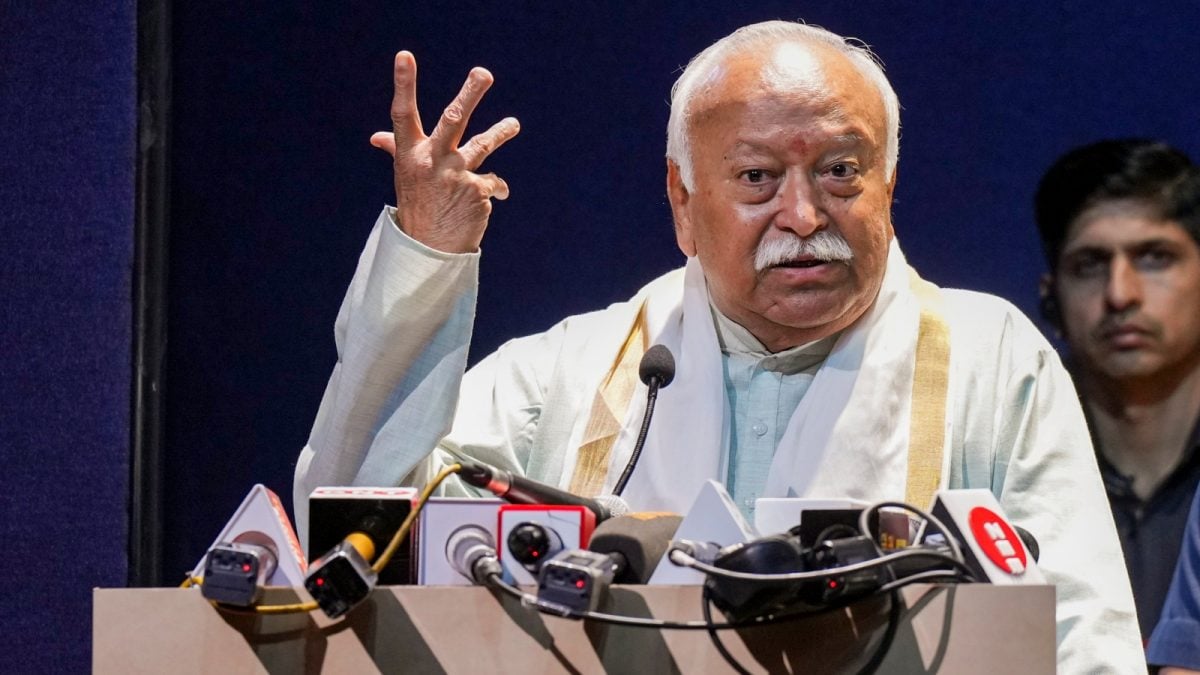
Mohan Bhagwat, the chief of the Rashtriya Swayamsevak Sangh (RSS), has articulated a compelling vision for the future of Indian education and civil services training, emphasizing the need for decolonization and a return to indigenous wisdom. His address underscores a growing sentiment within certain segments of Indian society that the nation's educational and administrative systems, heavily influenced by colonial legacies, require fundamental reform to better serve the needs and aspirations of a modern, independent India. Bhagwat’s call to action is rooted in the belief that the current system, with its emphasis on Western paradigms and practices, fails to adequately cultivate a sense of national identity and purpose among its students and civil servants. The core of Bhagwat's argument lies in the assertion that India's education system has been unduly shaped by the colonial experience, leading to a disconnect between the knowledge imparted and the cultural values and societal needs of the nation. He contends that the continued adherence to colonial models perpetuates a sense of intellectual dependency and hinders the development of a truly self-reliant and innovative society. By advocating for the integration of traditional Indian knowledge systems, such as the Gurukul system, Bhagwat seeks to restore a sense of cultural pride and foster a deeper understanding of India's rich intellectual heritage. This integration, he believes, will equip students with a more holistic and relevant education, enabling them to contribute meaningfully to the nation's progress. Bhagwat’s critique of civil services training is particularly pointed. He questions the relevance of practices such as teaching “drinking etiquette” to IAS and IPS trainees, arguing that these are relics of colonial-era social norms that have little bearing on the duties and responsibilities of modern civil servants. He suggests that such practices are more appropriate for IFS officers, whose roles involve diplomatic engagement and interaction with foreign cultures. Instead, Bhagwat emphasizes the importance of instilling in civil servants a strong sense of ethical conduct, public service, and national commitment. He believes that true education and good manners are universal values that should be cultivated in all individuals, regardless of their professional roles. This sentiment echoes broader concerns about the integrity and accountability of India's civil service, and the need to ensure that it is staffed by individuals who are genuinely dedicated to serving the public interest. The emphasis on decolonizing the use of English is a crucial aspect of Bhagwat's vision. He acknowledges the importance of English as a functional language for global communication and professional advancement, but he cautions against allowing it to become a vehicle for cultural assimilation. Bhagwat argues that Indians should learn English without sacrificing their national identity or adopting Western cultural values. He stresses that India's unique cultural heritage and values should be preserved and promoted, rather than diluted by the uncritical adoption of foreign cultural norms. This perspective aligns with a broader movement within India to reclaim and celebrate its cultural identity in the face of globalization. Bhagwat's endorsement of the National Education Policy (NEP) as a positive step towards educational reform is significant. He highlights the NEP's “five-dimensional education” approach as a promising framework for creating a more holistic and relevant education system. The NEP aims to integrate various aspects of Indian culture and knowledge into the curriculum, promote critical thinking and creativity, and provide students with a broader range of skills and competencies. Bhagwat's emphasis on connecting mainstream education with the ancient Gurukul system further underscores his commitment to integrating traditional Indian wisdom into the modern education system. He draws a parallel between the Gurukul system and Finland's highly regarded education model, suggesting that both share a similar holistic philosophy. The Gurukul system, with its emphasis on personalized learning, character development, and community engagement, is seen as a model for fostering well-rounded individuals who are both knowledgeable and ethically grounded. Bhagwat's perspective on the RSS's organizational structure is also noteworthy. His clarification that the Sangh has no subordinate bodies, and that all affiliated organizations are self-sufficient and autonomous, underscores the decentralized nature of the RSS and its network of affiliated organizations. This decentralized structure allows for greater flexibility and adaptability in addressing local needs and challenges. It also reflects the RSS's emphasis on individual initiative and voluntary participation. Bhagwat's vision for Indian education and civil services training is undoubtedly ambitious and multifaceted. It reflects a deep-seated desire to reclaim India's cultural identity and create a system that is both modern and rooted in traditional wisdom. While his views may not be universally shared, they represent an important perspective on the challenges and opportunities facing India's education system and its civil service. The success of Bhagwat's vision will depend on the ability of policymakers, educators, and civil society to translate his ideas into concrete action and create a system that is truly reflective of India's unique cultural heritage and aspirations. The task of decolonizing education and civil services training is a complex and multifaceted one, requiring a careful and nuanced approach. It involves not only reforming the curriculum and training programs, but also changing the mindset of educators, civil servants, and the public at large. It requires a commitment to critical thinking, intellectual honesty, and a willingness to challenge established norms and practices. The ultimate goal is to create a system that is both effective and equitable, and that empowers all Indians to reach their full potential. The debate surrounding decolonization is not merely about rejecting Western influences, but rather about critically examining them and adapting them to the specific needs and context of India. It is about creating a system that is both modern and relevant, and that reflects the unique cultural identity and aspirations of the Indian nation. The process will also need to address the practical challenges of implementation, such as the availability of resources, the training of teachers, and the development of appropriate curriculum materials. It will require a collaborative effort involving government, educational institutions, civil society organizations, and the private sector. The journey towards decolonization is a long and arduous one, but it is essential for the creation of a truly independent and self-reliant India.
Bhagwat's emphasis on integrating traditional Indian wisdom with modern education aligns with the broader global trend of recognizing the value of indigenous knowledge systems. Across various fields, from medicine to agriculture to environmental management, there is a growing recognition that traditional practices often hold valuable insights that can complement modern approaches. In the context of education, incorporating traditional Indian knowledge can provide students with a deeper understanding of their cultural heritage, foster a sense of belonging, and equip them with unique skills and perspectives that can be applied to contemporary challenges. However, it is crucial to approach the integration of traditional knowledge in a critical and nuanced manner. Not all traditional practices are necessarily beneficial or relevant in the modern context. It is important to carefully evaluate the validity and applicability of traditional knowledge before incorporating it into the curriculum. Furthermore, it is essential to avoid romanticizing or idealizing the past. The integration of traditional knowledge should be based on a realistic and evidence-based understanding of both its strengths and limitations. The challenge lies in striking a balance between preserving and celebrating India's cultural heritage while also embracing the opportunities and advancements of the modern world. The NEP's emphasis on holistic education, critical thinking, and creativity provides a promising framework for achieving this balance. By encouraging students to explore their cultural roots, question conventional wisdom, and develop their own unique perspectives, the NEP can help foster a generation of individuals who are both grounded in their traditions and well-equipped to navigate the complexities of the 21st century. Bhagwat's call for a shift in civil services training is equally significant. The civil service plays a crucial role in shaping the development and governance of India. It is essential that civil servants are not only technically competent but also possess a strong sense of ethical conduct, public service, and national commitment. The current system of civil services training has often been criticized for being overly bureaucratic, hierarchical, and focused on rote learning. There is a need for a more dynamic and innovative approach that emphasizes critical thinking, problem-solving, and communication skills. Furthermore, it is crucial to instill in civil servants a deep understanding of the challenges facing India, such as poverty, inequality, and environmental degradation. They must be equipped with the knowledge and skills to address these challenges effectively and efficiently. The emphasis on decolonizing the use of English is a complex and sensitive issue. English has become a global language of communication and is essential for professional advancement in many fields. However, it is important to ensure that the dominance of English does not lead to the marginalization of other Indian languages or the erosion of India's cultural identity. A balanced approach is needed that promotes the use of English as a functional language while also preserving and celebrating India's linguistic diversity. This can be achieved through a variety of measures, such as promoting multilingualism in education, supporting the development of Indian-language content, and encouraging the use of Indian languages in government and business. The key is to empower Indians to communicate effectively in both English and their native languages, thereby fostering a sense of cultural pride and national identity.
The ongoing debate surrounding decolonization in India is part of a larger global conversation about the legacy of colonialism and its impact on societies around the world. Many countries that were formerly colonized are grappling with the challenge of reclaiming their cultural identity, reforming their institutions, and addressing the economic and social inequalities that were created by colonial rule. The process of decolonization is not simply about removing physical symbols of colonialism, such as statues and street names. It is about fundamentally transforming the way that people think, the way that institutions operate, and the way that society is organized. It requires a critical examination of the assumptions, values, and practices that were imposed by colonial powers and a conscious effort to create a more just and equitable society. In the context of India, the decolonization process is particularly complex due to the country's long and diverse history. India has been influenced by a variety of cultures and civilizations over the centuries, and it is difficult to disentangle the various strands of influence. Furthermore, the colonial experience had a profound and lasting impact on Indian society, shaping its institutions, its economy, and its culture. The challenge is to create a new synthesis that combines the best of India's traditional heritage with the best of the modern world. This requires a nuanced and balanced approach that avoids both blind imitation of the West and uncritical rejection of modernity. It is essential to learn from the mistakes of the past and to create a future that is based on the principles of justice, equality, and sustainability. Bhagwat's vision for Indian education and civil services training provides a valuable starting point for this process. His emphasis on integrating traditional Indian wisdom with modern education, reforming civil services training, and decolonizing the use of English can help to create a more just and equitable society that is both rooted in its traditions and well-equipped to meet the challenges of the 21st century. The success of this vision will depend on the willingness of policymakers, educators, and civil society to engage in a constructive dialogue and to work together to create a future that is worthy of India's rich and diverse heritage. It requires a commitment to critical thinking, intellectual honesty, and a willingness to challenge established norms and practices. The ultimate goal is to create a society that is both prosperous and just, and that empowers all Indians to reach their full potential. The journey towards decolonization is a long and arduous one, but it is essential for the creation of a truly independent and self-reliant India. The debate must continue and evolve, incorporating diverse perspectives and addressing the practical challenges of implementation. Only then can India truly shed the vestiges of its colonial past and forge a future that is both prosperous and just, reflecting its unique cultural identity and aspirations.
Source: RSS Chief Mohan Bhagwat Calls For Decolonisation Of Education & Civil Services Training