
 |
|
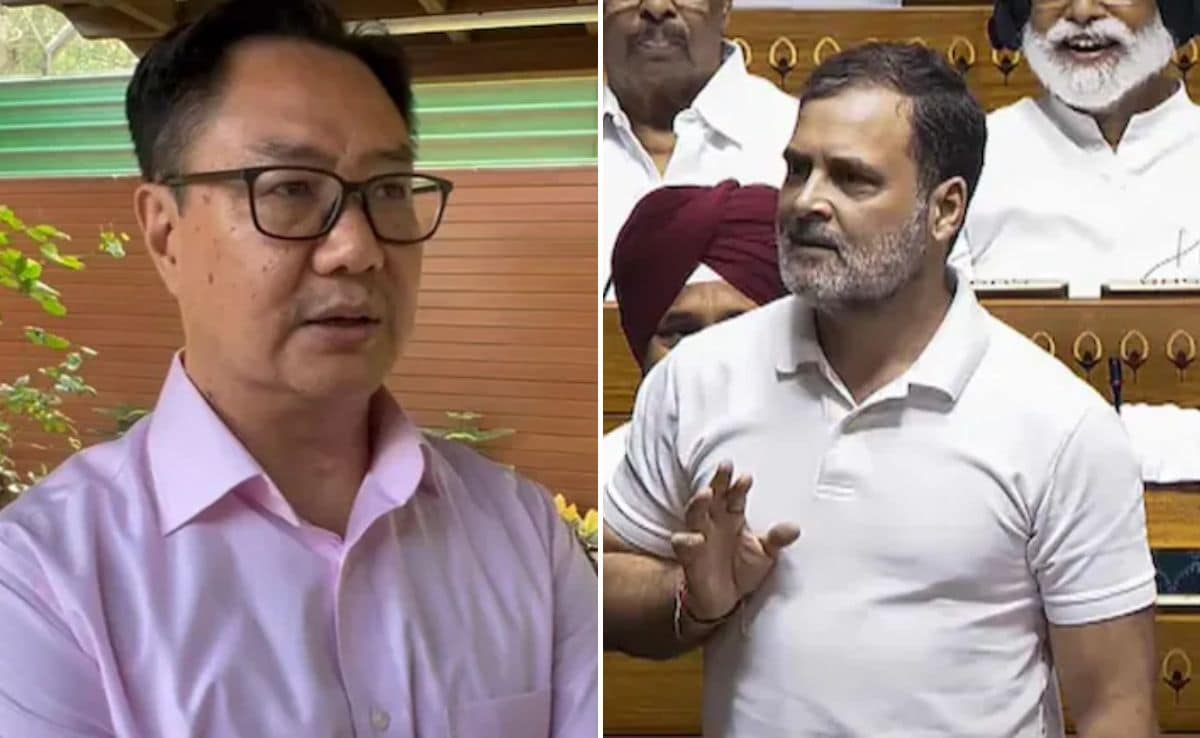
The political landscape in India witnessed a significant escalation in tensions as Union Minister Kiren Rijiju launched a scathing attack on Rahul Gandhi, accusing him of making “anti-India” remarks and disrupting parliamentary proceedings. This condemnation came in response to Gandhi's allegations of the Election Commission's involvement in “vote theft” to benefit the Bharatiya Janata Party (BJP). The accusations and counter-accusations have stirred considerable debate, raising questions about the integrity of the electoral process and the conduct of political discourse in the country. Rijiju's criticism was not limited to Gandhi's statements but extended to his behavior within Parliament, where he claimed Gandhi was causing unnecessary disruptions that ultimately harmed the Opposition's ability to raise important issues. Rijiju argued that Gandhi's actions were unacceptable for a Leader of the Opposition, suggesting a lack of responsibility and a disregard for parliamentary norms. He also pointed out that even some Opposition leaders had condemned Gandhi's statements, highlighting a division within the opposition ranks regarding the approach to challenging the ruling party. The Union Minister emphasized that continuous disruptions in Parliament were detrimental to the Opposition, preventing them from effectively representing their constituents and addressing critical issues under established parliamentary rules. This situation underscores the importance of maintaining order and decorum in legislative bodies to ensure constructive dialogue and effective governance.
Rahul Gandhi's allegations against the Election Commission were particularly serious, claiming the existence of “open-and-shut proof” of their involvement in manipulating votes to favor the BJP. He asserted that this evidence would be revealed publicly, exposing the addition of one crore fake voters in states like Madhya Pradesh and Maharashtra. Gandhi's rhetoric was strong, describing the alleged evidence as a “political atom bomb” and warning of consequences for Election Commission officials found responsible. He accused them of treason and vowed to pursue action against them, regardless of their current or past positions. The gravity of these allegations cannot be understated, as they directly challenge the impartiality and credibility of the Election Commission, a cornerstone of India's democratic process. Such accusations, if substantiated, could undermine public trust in the electoral system and lead to widespread unrest. However, without concrete evidence, these claims remain highly contentious and risk being perceived as political maneuvering.
The Election Commission responded swiftly and vehemently, dismissing Gandhi's allegations as “baseless” and “irresponsible.” The poll body urged its officials to continue their work in a fair and transparent manner, despite the daily threats and accusations. This strong rebuttal highlights the Commission's determination to defend its integrity and maintain public confidence in its operations. The Election Commission plays a crucial role in ensuring free and fair elections, and its independence is vital for a healthy democracy. Accusations of bias and manipulation, especially from prominent political figures, can erode public trust and potentially destabilize the electoral process. Therefore, the Commission's firm response is essential to counter these claims and reaffirm its commitment to upholding the principles of electoral integrity. The Commission's statement also implicitly criticized Gandhi's approach, suggesting that his unsubstantiated allegations are disruptive and undermine the credibility of the electoral process.
The controversy also extended to the deployment of Central Industrial Security Force (CISF) personnel in the Rajya Sabha, with Congress President Mallikarjun Kharge raising objections. Minister Rijiju clarified that this deployment was a response to Parliament members' concerns over security and was intended to maintain order in the House. He emphasized that the CISF's actions would be limited to addressing disruptive behavior, such as members standing on treasury benches or climbing tables. This explanation aimed to address concerns about potential restrictions on MPs' freedom of speech, assuring that the CISF would only intervene when members crossed established boundaries of conduct. The incident underscores the delicate balance between ensuring security and preserving the rights and privileges of parliamentarians. The use of security forces within the legislative body is a sensitive issue, and any perception of undue interference could raise concerns about the independence and autonomy of the legislature. Therefore, transparency and clear communication regarding the role and responsibilities of the CISF are crucial to maintain trust and prevent misunderstandings.
The broader context of this political clash involves the ongoing tensions between the ruling BJP and the opposition Congress party. The accusations and counter-accusations are indicative of a deeply polarized political environment, where trust between the two major parties is low. The stakes are high, particularly as India approaches future elections. Allegations of electoral malpractice and partisan bias can have a significant impact on voter confidence and participation. It is essential for all political actors to engage in responsible and constructive dialogue, avoiding inflammatory rhetoric and unsubstantiated claims that could undermine the democratic process. The media also has a crucial role to play in reporting on these issues objectively and providing accurate information to the public. By holding both sides accountable and scrutinizing their claims, the media can help ensure that the public is well-informed and can make informed decisions. Ultimately, the health of India's democracy depends on the commitment of all stakeholders to uphold the principles of fairness, transparency, and respect for the rule of law.
Furthermore, the impact of social media on political discourse cannot be ignored. In today's digital age, allegations and counter-allegations can spread rapidly through social media platforms, often amplified by partisan actors. This can lead to the creation of echo chambers, where individuals are only exposed to information that confirms their existing beliefs. The spread of misinformation and disinformation can further erode public trust in institutions and exacerbate political divisions. It is therefore essential for individuals to be critical consumers of information and to verify the accuracy of claims before sharing them online. Social media companies also have a responsibility to combat the spread of harmful content and to promote informed and responsible online engagement. By working together, individuals, media organizations, and social media companies can help to foster a more constructive and informed political discourse. The challenge lies in striking a balance between freedom of expression and the need to prevent the spread of misinformation and hate speech.
In conclusion, the clash between Kiren Rijiju and Rahul Gandhi highlights the deep political divisions and concerns surrounding electoral integrity in India. Gandhi's allegations against the Election Commission and Rijiju's condemnation of Gandhi's remarks and actions have created a volatile political atmosphere. The Election Commission's strong rebuttal and the clarification regarding the deployment of CISF personnel in the Rajya Sabha further contribute to the complexity of the situation. Moving forward, it is essential for all political actors to engage in responsible dialogue, avoid unsubstantiated claims, and uphold the principles of fairness and transparency. The media and social media platforms also have a crucial role to play in promoting informed public discourse and combating the spread of misinformation. Only through a collective commitment to these principles can India ensure the continued health and stability of its democracy. The need for a fact-based and nuanced discussion is paramount to address the underlying issues and rebuild trust in the electoral system. This requires a willingness from all parties to engage in good faith and to prioritize the long-term interests of the country over short-term political gains.
The issue also underscores the importance of electoral reforms. While the Election Commission has taken steps to improve the integrity of the electoral process, there is always room for further improvement. Some potential reforms could include stricter regulations on campaign finance, enhanced voter education programs, and the use of technology to prevent voter fraud. These reforms would not only help to address concerns about electoral integrity but would also strengthen public trust in the democratic process. It is crucial for the government, the Election Commission, and civil society organizations to work together to identify and implement these reforms. The goal should be to create an electoral system that is fair, transparent, and accessible to all citizens.
Furthermore, the incident serves as a reminder of the importance of ethical conduct in politics. Politicians have a responsibility to uphold the highest standards of integrity and to avoid making unsubstantiated allegations that could undermine public trust in institutions. They should also be mindful of the potential consequences of their words and actions, particularly in a polarized political environment. By demonstrating ethical leadership, politicians can help to foster a more constructive and respectful political discourse. This requires a commitment to truthfulness, transparency, and accountability. It also requires a willingness to engage in dialogue with those who hold different views and to find common ground whenever possible. The future of India's democracy depends on the ability of its leaders to rise above partisan divisions and to work together for the common good.
Finally, the incident highlights the need for a more robust system of checks and balances to ensure accountability in the electoral process. This could include strengthening the powers of the Election Commission, establishing an independent body to investigate allegations of electoral malpractice, and providing greater access to information for voters and civil society organizations. A robust system of checks and balances would not only help to prevent electoral fraud but would also deter politicians from making unsubstantiated allegations that could undermine public trust in the electoral system. It is essential for all stakeholders to work together to create such a system, ensuring that India's democracy remains strong and vibrant for generations to come. The challenges are significant, but the rewards are even greater. By working together to strengthen the electoral process and promote ethical conduct in politics, India can continue to be a beacon of democracy in the world.
Source: Kiren Rijiju Slams Rahul Gandhi Over "Anti-India" Remarks On Poll Body