
 |
|
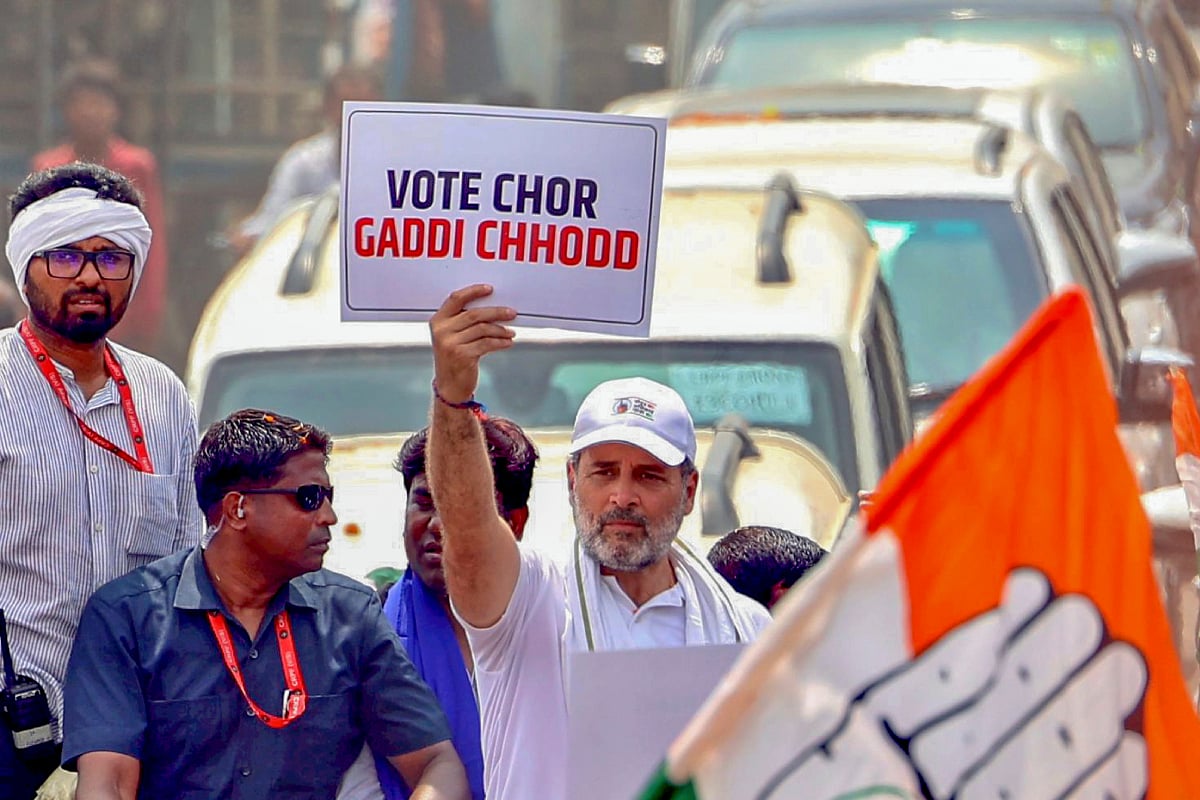
The political landscape of India has been stirred once again by a controversial claim made by Congress leader Rahul Gandhi. Addressing a rally in Muzaffarpur, Bihar, Gandhi alleged that Prime Minister Narendra Modi had promptly complied with a directive from former US President Donald Trump to halt a military conflict with Pakistan. According to Gandhi, Trump asserted that he instructed Modi to cease hostilities within 24 hours, and Modi purportedly obeyed within a mere five hours. This accusation has ignited a firestorm of debate and scrutiny, raising critical questions about India's sovereignty, its foreign policy decision-making processes, and the nature of its relationship with the United States. The implications of Gandhi's claim, if substantiated, could be far-reaching, potentially affecting India's standing on the global stage and its domestic political dynamics. The context of Gandhi's statement is crucial to understanding its significance. He was speaking at a rally as part of the "Voter Adhikar Yatra" in Bihar, a state with considerable political weight in India. Sharing the stage with prominent INDIA bloc partners, including M K Stalin of the DMK and Tejashwi Yadav of the RJD, Gandhi strategically positioned his allegation within a broader narrative of challenging the Modi government's policies and leadership. This timing and platform suggest that the claim was intended to resonate with voters and galvanize support for the opposition alliance. Gandhi's direct quotation of Trump is a key element of his allegation. He stated, "You know what Trump has said today? He has said that at the height of tensions with Pakistan, he called up Modi and peremptorily told him to stop the fight within 24 hours. And Modi obeyed promptly. He was given 24 hours, but he did as directed by Trump in five hours." This direct attribution to Trump lends credibility to Gandhi's claim, even though the veracity of Trump's assertion remains a point of contention. Gandhi's reference to a video of Trump addressing a cabinet meeting at the White House further supports the claim, implying that there is tangible evidence of Trump's statement. However, the content and context of the video are not explicitly detailed in the article, leaving room for interpretation and potential misrepresentation. The Modi government has vehemently rejected Trump's claim, asserting that India and Pakistan halted their military actions following direct talks between their militaries, without any mediation by the United States. This official denial directly contradicts Trump's narrative and raises doubts about the accuracy of Gandhi's allegation. The government's assertion emphasizes India's autonomy in resolving its disputes with Pakistan, suggesting that it would not be swayed by external pressure from the United States or any other nation. The conflicting narratives presented by Trump and the Modi government highlight the complex and often opaque nature of international relations and diplomatic negotiations. It is possible that Trump's claim is an exaggeration or a misrepresentation of events, intended to portray himself as a decisive and influential figure in global affairs. Alternatively, it is possible that the Modi government is downplaying the extent of US involvement in de-escalating tensions with Pakistan to maintain an image of self-reliance and independent decision-making. The media's role in disseminating and interpreting these conflicting narratives is also a critical aspect of the story. Gandhi criticized the media for allegedly prioritizing the interests of Modi and his "friendly business tycoons" over the concerns of the general public. This accusation suggests that Gandhi believes the media is biased in favor of the ruling party and is not adequately scrutinizing the government's actions or reporting on dissenting voices. The media's coverage of this issue has been closely watched, with different outlets offering varying perspectives on the veracity of Gandhi's claim and its potential implications. Some media organizations have emphasized the government's denial and questioned the reliability of Trump's statements, while others have focused on Gandhi's allegations and explored the potential ramifications of US influence on India's foreign policy. The broader context of India-Pakistan relations is also essential to understanding the significance of this controversy. The two nations have a long and fraught history, marked by multiple wars and ongoing territorial disputes, particularly over the region of Kashmir. Tensions between India and Pakistan often flare up, leading to military skirmishes and heightened security concerns. The prospect of a military conflict between the two nuclear-armed states is a major concern for the international community, as it could have devastating consequences for the region and beyond. Any intervention by the United States or other external actors in managing India-Pakistan relations is therefore viewed with both interest and apprehension. On one hand, external mediation could help to de-escalate tensions and prevent further conflict. On the other hand, it could also be seen as an infringement on India's sovereignty and an attempt to exert undue influence on its foreign policy. The debate over Trump's alleged intervention in the India-Pakistan conflict raises fundamental questions about the role of external powers in resolving international disputes and the balance between sovereignty and intervention. The implications of Gandhi's claim extend beyond the immediate context of India-Pakistan relations and touch upon broader issues of India's foreign policy alignment and its relationship with the United States. India has traditionally pursued a policy of non-alignment, seeking to maintain its independence from major power blocs and to forge its own path in international affairs. However, in recent years, India has increasingly aligned itself with the United States, particularly in areas of defense and security cooperation. This growing partnership has been driven by shared concerns about China's rising power and influence in the Indo-Pacific region. Gandhi's allegation that Modi readily obeyed Trump's directive could be interpreted as a criticism of this closer alignment with the United States, suggesting that India is becoming too dependent on US support and is sacrificing its independence in foreign policy decision-making. The controversy surrounding Gandhi's claim is likely to continue to unfold in the coming weeks and months, as more information emerges and different perspectives are offered. It is crucial for the public to critically evaluate the evidence and arguments presented by all sides, and to consider the broader context of India-Pakistan relations, India's foreign policy alignment, and the role of external powers in resolving international disputes. The outcome of this controversy could have significant implications for India's domestic politics and its standing on the global stage. Ultimately, the truth behind Trump's claim and the extent of US influence on India's foreign policy may remain a matter of debate and interpretation. However, the controversy has already served to highlight the complex and often opaque nature of international relations and the importance of transparency and accountability in government decision-making. It also underscores the need for a robust and independent media to scrutinize the actions of political leaders and to inform the public about issues of national and international importance. The ramifications of this event extend far beyond the immediate headlines. It casts a shadow on India's perception of its own agency in international affairs. The narrative, whether true or false, introduces an element of doubt about India's ability to act independently and decisively. This can be particularly damaging in a region where perceptions of power and influence are paramount. Furthermore, the allegation has the potential to polarize Indian society even further. Those who support the Modi government are likely to dismiss the claim as a politically motivated attack, while those who oppose the government may seize upon it as evidence of subservience to foreign powers. This division can undermine national unity and make it more difficult to address other pressing challenges facing the country. The controversy also raises questions about the role of the United States in South Asia. While the US has long been involved in the region, its influence has often been viewed with suspicion by both India and Pakistan. The allegation that Trump directly intervened in the conflict between the two countries could reinforce these concerns and lead to calls for greater regional autonomy. In addition, the controversy could have implications for the future of US-India relations. If the allegation is proven true, it could damage trust between the two countries and make it more difficult to cooperate on other issues of mutual concern, such as counterterrorism and climate change. On the other hand, if the allegation is disproven, it could strengthen the relationship by demonstrating that the two countries are able to withstand political challenges. Regardless of the ultimate outcome, the controversy surrounding Gandhi's claim serves as a reminder of the complex and multifaceted nature of international relations. It highlights the importance of understanding the perspectives of all parties involved and of carefully considering the potential consequences of any action taken. It also underscores the need for strong and independent institutions to hold political leaders accountable and to ensure that decisions are made in the best interests of the country. The long-term effects of this incident will depend on a variety of factors, including the credibility of the sources involved, the extent to which the allegations are investigated, and the political context in which the events unfold. However, one thing is clear: the controversy has already left a lasting mark on the political landscape of India and has raised important questions about the country's role in the world. The incident also exposes the delicate balance that India must strike between asserting its independence and engaging with the international community. As a rising global power, India has a responsibility to contribute to the maintenance of peace and stability in the region and beyond. However, it must also be careful to avoid being drawn into conflicts that are not in its own national interest. The controversy surrounding Gandhi's claim serves as a valuable lesson in the complexities of foreign policy and the challenges of navigating a multipolar world. It is a reminder that even the most powerful nations are not immune to external pressures and that strong leadership is essential to protect national interests and promote peace and prosperity. Ultimately, the success of India's foreign policy will depend on its ability to maintain its independence, engage constructively with the international community, and act in accordance with its own values and principles.
Analyzing the claims made by Rahul Gandhi, several key considerations come into play. First, the source of the information is crucial. Gandhi attributes the claim to Donald Trump, a figure known for his often-unorthodox and sometimes controversial statements. Trump's assertions should be approached with a degree of skepticism, given his history of exaggerations and self-promotion. However, the fact that Gandhi cites Trump directly adds a layer of complexity to the situation. If Trump indeed made such a claim, it could indicate a deliberate attempt to portray himself as a powerful mediator on the world stage. Alternatively, it could be a misrepresentation or exaggeration of events. Second, the timing of Gandhi's allegation is significant. He made the claim during a rally in Bihar, a state where the opposition is seeking to gain ground against the ruling party. The allegation could be seen as a strategic move to undermine the Modi government's credibility and appeal to voters who may be skeptical of the government's foreign policy decisions. The fact that Gandhi was joined by prominent INDIA bloc partners further suggests that the allegation is part of a broader political strategy. Third, the Modi government's response to the allegation is crucial. The government has vehemently denied Trump's claim, asserting that India and Pakistan halted their military actions following direct talks between their militaries, without any mediation by the United States. This denial is consistent with the government's long-standing policy of asserting India's independence in foreign policy decision-making. However, the government's denial does not necessarily disprove Trump's claim. It is possible that the government is downplaying the extent of US involvement in de-escalating tensions with Pakistan to maintain an image of self-reliance and independent action. Fourth, the media's role in covering the controversy is critical. Gandhi has accused the media of bias in favor of the Modi government, suggesting that the media may not be adequately scrutinizing the government's actions or reporting on dissenting voices. The media's coverage of the controversy has been closely watched, with different outlets offering varying perspectives on the veracity of Gandhi's claim and its potential implications. It is important for the public to critically evaluate the information presented by the media and to seek out diverse sources of information to form their own informed opinions. Fifth, the broader context of India-Pakistan relations must be taken into account. The two countries have a long and fraught history, marked by multiple wars and ongoing territorial disputes. Tensions between India and Pakistan often flare up, leading to military skirmishes and heightened security concerns. Any intervention by the United States or other external actors in managing India-Pakistan relations is therefore viewed with both interest and apprehension. It is possible that Trump's alleged intervention was part of a broader effort by the United States to de-escalate tensions between India and Pakistan and to prevent further conflict. However, it is also possible that Trump's intervention was motivated by other factors, such as a desire to enhance his own political standing or to exert undue influence on India's foreign policy. Finally, the potential implications of the controversy for India's foreign policy alignment must be considered. India has traditionally pursued a policy of non-alignment, seeking to maintain its independence from major power blocs and to forge its own path in international affairs. However, in recent years, India has increasingly aligned itself with the United States, particularly in areas of defense and security cooperation. Gandhi's allegation that Modi readily obeyed Trump's directive could be interpreted as a criticism of this closer alignment with the United States, suggesting that India is becoming too dependent on US support and is sacrificing its independence in foreign policy decision-making. The controversy surrounding Gandhi's claim is likely to continue to unfold in the coming weeks and months, as more information emerges and different perspectives are offered. It is crucial for the public to critically evaluate the evidence and arguments presented by all sides, and to consider the broader context of India-Pakistan relations, India's foreign policy alignment, and the role of external powers in resolving international disputes. The outcome of this controversy could have significant implications for India's domestic politics and its standing on the global stage. The incident highlights the constant tension between a nation's desire for autonomy and the realities of global interdependence. In an increasingly interconnected world, no nation can truly act in complete isolation. The need for cooperation, alliances, and sometimes even accepting external influence is undeniable. However, the key lies in maintaining a balance – ensuring that these engagements do not compromise national sovereignty or undermine the decision-making processes. The case in question prompts a reflection on the ethics of international diplomacy. If Trump's claim is true, it raises questions about the appropriateness of one leader directly dictating the actions of another, especially in matters of national security. Such interventions can be perceived as undermining the targeted nation's authority and creating a sense of resentment. Diplomacy, at its best, should involve dialogue, negotiation, and mutual respect, rather than unilateral directives. Furthermore, the incident underscores the importance of transparency in government. The public has a right to know the extent of foreign influence on their government's decisions, especially when it comes to matters of national security. Secrecy and opacity can breed distrust and lead to speculation, as has been the case with this controversy. Openness and accountability are essential for maintaining public trust and ensuring that governments act in the best interests of their citizens. The incident also provides an opportunity to reflect on the role of the media in a democratic society. Gandhi's accusation that the media is biased in favor of the Modi government raises serious concerns about the state of press freedom in India. A free and independent media is essential for holding governments accountable and informing the public about important issues. When the media is compromised, it undermines the democratic process and makes it more difficult for citizens to make informed decisions. Finally, the incident highlights the importance of critical thinking and media literacy. In an era of information overload, it is essential for citizens to be able to critically evaluate the information they receive and to distinguish between fact and fiction. This requires developing strong analytical skills and being aware of the potential for bias and manipulation. By becoming more informed and discerning consumers of information, citizens can play a more active and engaged role in shaping their societies.
The reactions to Rahul Gandhi's allegations were swift and varied, reflecting the deeply polarized political climate in India. Supporters of the Congress party and other opposition groups seized upon the claim as further evidence of the Modi government's alleged subservience to foreign powers. They argued that the incident demonstrated a lack of transparency and accountability in the government's foreign policy decision-making processes. Critics of the Modi government also highlighted the potential damage to India's international standing if it were perceived as being easily influenced by external actors. They argued that India needs to assert its independence and pursue a foreign policy that is guided by its own national interests. On the other hand, supporters of the Modi government vehemently defended the Prime Minister and dismissed Gandhi's allegations as baseless and politically motivated. They argued that the government has consistently acted in India's best interests and has not been unduly influenced by any foreign power. They also accused Gandhi of spreading misinformation and trying to undermine the government's credibility. The government's official response was to reiterate its denial of Trump's claim and to emphasize that India and Pakistan halted their military actions following direct talks between their militaries, without any mediation by the United States. Some analysts suggested that the controversy could be a distraction from other pressing issues facing the country, such as the economic slowdown and the ongoing COVID-19 pandemic. They argued that political leaders should focus on addressing these challenges rather than engaging in petty squabbles. However, others argued that the controversy raises important questions about India's foreign policy alignment and its relationship with the United States. They argued that the incident should prompt a broader debate about the country's strategic direction and its role in the world. The international community largely remained silent on the issue, with most countries refraining from commenting on the allegations. This silence could be interpreted as a sign that other nations are wary of getting involved in India's domestic politics or that they are unsure of the veracity of the claims. However, some observers noted that the controversy could potentially damage India's reputation as a reliable and independent actor on the world stage. The incident also had a significant impact on social media, with users on both sides of the political spectrum expressing their opinions and sharing their perspectives on the allegations. The hashtag #TrumpToldModi trended on Twitter for several days, with users posting memes, jokes, and serious commentary about the controversy. The online debate often became heated and polarized, reflecting the deep divisions in Indian society. Moving forward, it will be important to closely monitor how the controversy unfolds and to assess its potential impact on India's domestic politics and its foreign policy. The credibility of the sources involved, the extent to which the allegations are investigated, and the political context in which the events unfold will all play a crucial role in shaping the outcome. It is also important to remember that the incident is just one piece of a larger puzzle and that India's foreign policy is influenced by a wide range of factors, including its historical traditions, its economic interests, its security concerns, and its relationships with other countries. In conclusion, the controversy surrounding Rahul Gandhi's allegations has brought to the forefront important questions about India's independence in foreign policy decision-making, its relationship with the United States, and the role of transparency and accountability in government. The incident serves as a reminder of the complex and multifaceted nature of international relations and the importance of critical thinking and media literacy in navigating an increasingly interconnected world. The long-term implications of this controversy remain to be seen, but it is clear that it has already left a lasting mark on the political landscape of India.
The controversy surrounding Rahul Gandhi's allegations regarding Prime Minister Narendra Modi's alleged compliance with former US President Donald Trump's directives regarding the conflict with Pakistan underscores the intricate interplay of domestic politics, international relations, and media narratives in shaping public perception and policy decisions. This incident highlights the challenges of maintaining national sovereignty while navigating the complexities of a globalized world, where external influences can significantly impact domestic affairs. One of the key takeaways from this controversy is the importance of verifying information and critically evaluating sources. In an era of information overload and the proliferation of misinformation, it is essential to approach claims with skepticism and to seek out diverse perspectives before forming an opinion. This is particularly crucial when dealing with politically charged issues that can easily be manipulated for partisan gain. The media plays a critical role in disseminating information and shaping public opinion, but it is also important to be aware of the potential for bias and agenda-setting. A free and independent press is essential for holding governments accountable and informing the public about important issues, but the media must also strive to be objective and impartial in its reporting. The controversy also underscores the importance of transparency and accountability in government. The public has a right to know the extent of foreign influence on their government's decisions, especially when it comes to matters of national security. Secrecy and opacity can breed distrust and lead to speculation, as has been the case with this incident. Openness and accountability are essential for maintaining public trust and ensuring that governments act in the best interests of their citizens. Furthermore, the controversy highlights the challenges of balancing national interests with international obligations. In an increasingly interconnected world, nations must often cooperate with each other to address common challenges, such as climate change, terrorism, and economic instability. However, this cooperation must not come at the expense of national sovereignty or the ability to pursue policies that are in the best interests of the country. Striking the right balance between national interests and international obligations requires careful diplomacy, strategic thinking, and a clear understanding of the country's values and priorities. The incident also serves as a reminder of the importance of maintaining strong and stable relationships with other countries. Diplomacy and communication are essential for resolving disputes and preventing misunderstandings. Building trust and fostering mutual respect can help to create a more peaceful and prosperous world. However, it is also important to be realistic about the challenges of international relations and to be prepared to defend national interests when necessary. Finally, the controversy underscores the importance of strong leadership and effective governance. In times of crisis, it is essential to have leaders who are capable of making difficult decisions and inspiring confidence in the public. Effective governance requires a clear vision, a commitment to transparency and accountability, and a willingness to listen to diverse perspectives. By upholding these principles, governments can build trust and create a more resilient and prosperous society. In conclusion, the controversy surrounding Rahul Gandhi's allegations serves as a valuable lesson in the complexities of modern governance and the challenges of navigating an increasingly interconnected world. By embracing critical thinking, promoting transparency and accountability, and fostering strong leadership, we can build a more just and sustainable future for all. The incident highlights the enduring tension between the desire for national sovereignty and the reality of global interdependence. As nations navigate the complex landscape of international relations, they must strive to balance their own interests with the need for cooperation and collaboration. The key lies in maintaining a clear sense of national identity and purpose, while remaining open to engagement and dialogue with the rest of the world.
The overarching theme of this incident revolves around the perception of national sovereignty and the extent to which a nation's decisions are influenced by external forces. The allegation that Prime Minister Modi readily complied with President Trump's directive raises questions about India's autonomy in foreign policy decision-making. This perception, whether accurate or not, can have significant ramifications for India's image on the global stage and its relationship with other nations. It is essential for India to project an image of strength and independence, demonstrating its ability to act decisively in its own national interests. However, it is equally important to engage with the international community and to collaborate on addressing common challenges. Striking the right balance between these two objectives requires careful diplomacy and strategic thinking. The controversy also highlights the importance of media literacy and critical thinking in the digital age. The proliferation of misinformation and the spread of biased news can easily distort public perception and undermine trust in institutions. It is essential for individuals to develop the skills to critically evaluate information and to distinguish between fact and fiction. This requires a willingness to seek out diverse perspectives and to challenge one's own assumptions. Education plays a crucial role in fostering media literacy and critical thinking skills. By equipping individuals with the tools to navigate the complexities of the digital world, we can empower them to make informed decisions and to participate more effectively in democratic processes. Furthermore, the incident underscores the need for greater transparency and accountability in government. The public has a right to know how decisions are made and who is influencing those decisions. Secrecy and opacity can breed distrust and create an environment in which misinformation can thrive. Transparency and accountability are essential for maintaining public trust and ensuring that governments act in the best interests of their citizens. This requires a commitment to open communication, a willingness to engage with the public, and a robust system of checks and balances to prevent abuse of power. The incident also raises questions about the nature of leadership and the qualities that are essential for effective governance. In times of crisis, it is essential to have leaders who are capable of making difficult decisions and inspiring confidence in the public. This requires a combination of vision, integrity, and a commitment to serving the public good. Leaders must be able to communicate effectively, to listen to diverse perspectives, and to build consensus around common goals. They must also be willing to take responsibility for their actions and to be held accountable for their decisions. Ultimately, the controversy surrounding Rahul Gandhi's allegations serves as a reminder of the importance of upholding democratic values and principles. Freedom of speech, freedom of the press, and the right to dissent are essential for a healthy and functioning democracy. These rights must be protected and defended, even when they are used to challenge those in power. By upholding these values, we can create a society in which all voices are heard and in which decisions are made in the best interests of the people. The lessons learned from this incident can help us to build a more resilient and just society, one that is capable of navigating the challenges of the 21st century and of creating a better future for all. The events serve as a reminder that constant vigilance is required to safeguard national sovereignty and to uphold democratic values. The incident highlights the need for a multi-faceted approach that encompasses critical thinking, media literacy, transparency, accountability, and strong leadership. By embracing these principles, we can create a society that is both resilient and just.
The entire episode surrounding Rahul Gandhi's claim is a case study in the dynamics of political communication, particularly in the context of international relations and national security. The way the allegation was framed, the timing of its release, and the subsequent reactions from various stakeholders all contribute to a complex narrative that transcends the simple question of whether or not the claim is true. One of the key aspects of political communication is the use of rhetoric to persuade and influence public opinion. Gandhi's framing of the issue as Prime Minister Modi "obeying" President Trump is a clear example of rhetoric designed to evoke a negative response and to portray the Modi government as subservient to foreign powers. This type of rhetoric is often used in political discourse to mobilize support and to delegitimize opponents. However, it is important to recognize that rhetoric can also be misleading and that it is essential to critically evaluate the underlying facts before forming an opinion. Another important aspect of political communication is the timing of information releases. The fact that Gandhi made his allegation during a political rally in Bihar suggests that the timing was deliberate and that the goal was to maximize the impact of the claim on the local electorate. Political campaigns often strategically release information at key moments in order to influence voter behavior and to gain an advantage over their opponents. However, it is important to question the motives behind such releases and to consider whether the information is being presented in a fair and balanced manner. The reactions from various stakeholders, including the government, the media, and the public, also play a crucial role in shaping the narrative. The government's denial of the claim is a predictable response, as any admission of foreign influence would be politically damaging. The media's coverage of the issue is often shaped by their own biases and agendas, which can influence the way the story is presented to the public. The public's reaction is often influenced by their pre-existing beliefs and attitudes, which can make it difficult to persuade them to change their minds. In the context of international relations, political communication plays a critical role in shaping perceptions and building trust between nations. Effective communication can help to prevent misunderstandings and to foster cooperation on common challenges. However, miscommunication and mistrust can easily escalate tensions and lead to conflict. Therefore, it is essential for political leaders to communicate clearly and honestly and to be mindful of the potential impact of their words on international relations. The incident surrounding Rahul Gandhi's claim also highlights the challenges of managing information in the digital age. The rapid spread of information through social media and other online platforms can make it difficult to control the narrative and to prevent the spread of misinformation. It is therefore essential to develop strategies for countering misinformation and for promoting accurate and reliable information. This requires a collaborative effort involving governments, the media, civil society organizations, and individual citizens. In conclusion, the episode surrounding Rahul Gandhi's claim is a complex case study in the dynamics of political communication. By understanding the various elements involved, we can better navigate the complexities of the modern political landscape and make more informed decisions. The incident serves as a reminder that political communication is not simply about conveying information, but also about shaping perceptions and influencing behavior. It is essential to be aware of the potential for manipulation and to critically evaluate the information we receive before forming an opinion. The events also demonstrate the power of rhetoric, the importance of timing, and the influence of various stakeholders in shaping the narrative. By understanding these dynamics, we can become more informed and engaged citizens and contribute to a more democratic and transparent society. The claim provides a valuable insight into the complexities of political communication and the challenges of managing information in the digital age.
Source: 'Trump gave Modi 24 hours to stop fight with Pakistan, he obeyed in 5,' says Rahul Gandhi