
 |
|
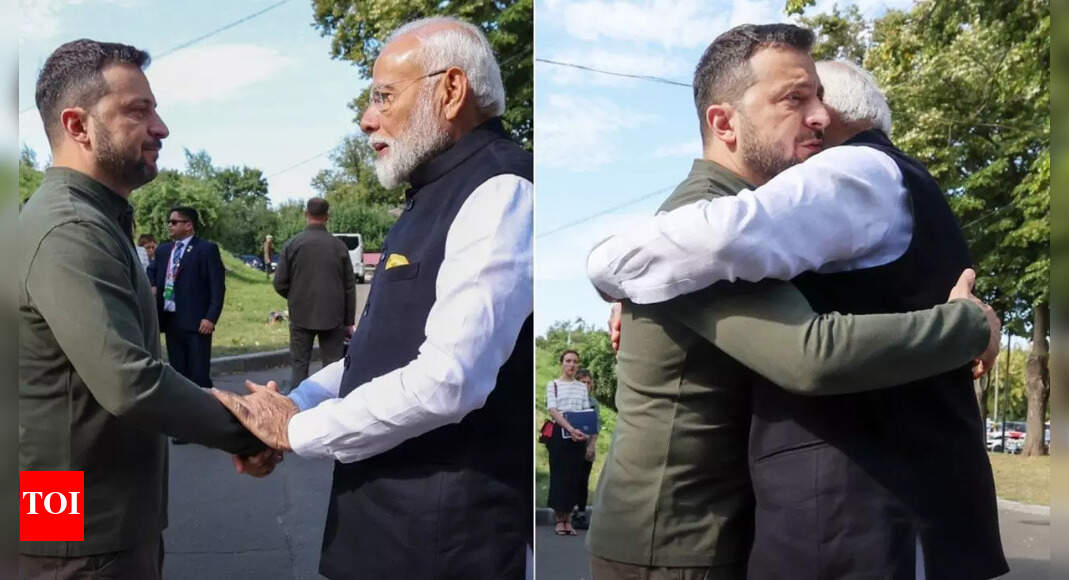
The invitation extended by Prime Minister Narendra Modi to Ukrainian President Volodymyr Zelenskyy marks a significant development in the ongoing engagement between India and Ukraine amidst the protracted Russia-Ukraine conflict. This invitation, revealed by Ukraine's Ambassador Oleksandr Polishchuk, underscores India's growing diplomatic role in the international arena and its potential to contribute to peace efforts. The envoy's remarks highlighting India's 'not neutral' stance, favoring peace, diplomacy, and political dialogue, further illuminates the nuances of India's position on the conflict. India's historical and strategic ties with Russia, coupled with its commitment to multilateralism and peaceful conflict resolution, position it as a potential mediator between the warring parties. The acceptance of this role, however, requires careful navigation and a nuanced understanding of the complex geopolitical dynamics at play. The timing of the invitation, coinciding with Ukraine's National Flag Day and preceding India's Independence Day, suggests a concerted effort to strengthen bilateral ties and foster a conducive environment for dialogue. The ambassador's call for India to assume a more active role in resolving the conflict highlights the international community's expectation of India's involvement, given its strategic importance and its relationship with both Russia and Ukraine. The invitation and its subsequent implications necessitate a comprehensive analysis of India's foreign policy objectives, its strategic interests in the region, and its potential to influence the trajectory of the Russia-Ukraine conflict. The intricacies of India's relationship with Russia, rooted in historical ties, defense cooperation, and economic partnerships, demand a balanced approach that prioritizes India's national interests while contributing to global peace and stability. The potential visit of President Zelenskyy to India would provide a platform for direct dialogue and a deeper understanding of the perspectives of both countries. It also presents an opportunity for India to articulate its vision for a peaceful resolution of the conflict and to offer its assistance in facilitating negotiations between the warring parties. The success of such an endeavor hinges on India's ability to leverage its diplomatic influence and its credibility as a neutral mediator. The international community is keenly observing India's engagement in the Russia-Ukraine conflict, recognizing its potential to play a pivotal role in shaping the future of the region. The invitation to President Zelenskyy signifies a crucial step in this direction and underscores India's commitment to contributing to a peaceful and stable global order.
India's position on the Russia-Ukraine conflict has been characterized by a delicate balance between maintaining its strategic partnership with Russia and upholding its commitment to international law and principles of sovereignty and territorial integrity. While India has refrained from explicitly condemning Russia's actions, it has consistently called for a peaceful resolution of the conflict through dialogue and diplomacy. This nuanced approach reflects India's recognition of the complex geopolitical realities and its desire to avoid alienating Russia, a long-standing ally and a major supplier of defense equipment. However, India's emphasis on peace and its willingness to engage with both sides of the conflict have also positioned it as a potential mediator. The Ukrainian ambassador's statement acknowledging India's 'not neutral' stance, while emphasizing its support for peace and dialogue, suggests a growing understanding of India's position and a recognition of its potential to contribute to a peaceful resolution. The invitation to President Zelenskyy can be interpreted as a signal of India's willingness to play a more active role in facilitating dialogue and promoting a peaceful settlement. The success of this endeavor, however, requires careful consideration of the underlying causes of the conflict, the competing interests of the parties involved, and the broader geopolitical implications. India's historical ties with Russia, coupled with its growing strategic partnership with the United States and other Western powers, present both opportunities and challenges. Navigating these complex relationships requires a delicate balancing act and a clear articulation of India's national interests. The potential visit of President Zelenskyy would provide an opportunity for India to engage directly with the Ukrainian leadership and to gain a deeper understanding of their perspective on the conflict. It would also allow India to reiterate its commitment to a peaceful resolution and to offer its assistance in facilitating negotiations. The international community is closely watching India's engagement in the Russia-Ukraine conflict, recognizing its potential to influence the trajectory of the crisis. India's ability to leverage its diplomatic influence and its credibility as a neutral mediator will be crucial in shaping the outcome of the conflict and promoting a more stable and peaceful global order.
The Russia-Ukraine conflict has had far-reaching consequences for the global economy, international security, and geopolitical stability. The conflict has disrupted global supply chains, led to increased energy prices, and exacerbated food insecurity, particularly in developing countries. It has also raised concerns about the potential for escalation and the use of nuclear weapons. India, as a major emerging economy and a responsible global actor, has a vested interest in promoting a peaceful resolution of the conflict and mitigating its adverse consequences. The invitation to President Zelenskyy reflects India's commitment to playing a constructive role in addressing this global challenge. The potential visit of President Zelenskyy would provide an opportunity for India to engage in direct dialogue with the Ukrainian leadership and to explore ways to de-escalate the conflict and promote a peaceful settlement. India's diplomatic engagement with both Russia and Ukraine, coupled with its commitment to multilateralism and its adherence to international law, position it as a potential mediator between the warring parties. However, the success of this endeavor requires careful consideration of the underlying causes of the conflict, the competing interests of the parties involved, and the broader geopolitical implications. India's historical ties with Russia, its growing strategic partnership with the United States, and its commitment to non-alignment present both opportunities and challenges. Navigating these complex relationships requires a nuanced approach that prioritizes India's national interests while contributing to global peace and stability. The international community expects India to play a more active role in resolving the Russia-Ukraine conflict, given its strategic importance and its relationship with both countries. The invitation to President Zelenskyy signifies a crucial step in this direction and underscores India's commitment to contributing to a peaceful and stable global order. India's ability to leverage its diplomatic influence and its credibility as a neutral mediator will be crucial in shaping the outcome of the conflict and promoting a more stable and peaceful global order. This delicate balancing act requires carefully navigating the geopolitical landscape and considering the potential consequences of any actions taken. India’s continued emphasis on dialogue and diplomacy, while maintaining its strategic partnerships, showcases its commitment to finding a peaceful resolution to the conflict.
Furthermore, the Ukrainian ambassador's emphasis on India’s non-neutral stance, particularly its support for peace, dialogue, and political interaction, is a crucial point of understanding. It subtly signals that while India may not explicitly condemn Russia, it actively promotes a solution that respects Ukraine’s sovereignty and territorial integrity. This stance avoids direct confrontation with Russia while simultaneously aligning with international principles and humanitarian concerns. This strategy allows India to maintain its relationship with Russia, which is vital for its defense and energy needs, while also contributing to a potential peace process. This approach requires significant diplomatic skill and a deep understanding of the complex geopolitical landscape. The invitation to Zelenskyy could be interpreted as a way for India to demonstrate its commitment to peace while engaging with both sides of the conflict. The potential visit would allow for direct discussions on ways to de-escalate the situation and facilitate negotiations. India's position as a non-aligned nation with strong relationships with both Russia and the West positions it uniquely to play this role. India's ability to navigate these complex relationships will be critical to its success in contributing to a peaceful resolution. The international community is observing India’s actions closely, recognizing its potential to influence the outcome of the conflict. The invitation to Zelenskyy and the subsequent diplomatic engagement will be closely scrutinized as indicators of India’s commitment to peace and stability. The Ukrainian ambassador's statements also serve to reinforce the importance of India's role in any potential peace negotiations. By highlighting India's support for peace and dialogue, the ambassador encourages India to take a more proactive stance. This encouragement is significant as it acknowledges India's potential to influence Russia due to their strong relationship. India’s ability to leverage this relationship for peaceful purposes will be a key factor in determining its success as a mediator. The ambassador's remarks also underscore the importance of continued dialogue between India and Ukraine, fostering mutual understanding and paving the way for future cooperation. This engagement will be crucial for ensuring that India's efforts are aligned with Ukraine's interests and contribute to a sustainable and just resolution of the conflict.
The economic implications of the Russia-Ukraine conflict on India are also significant. The conflict has disrupted global supply chains, leading to increased prices for essential commodities like oil and fertilizers. This has had a direct impact on the Indian economy, contributing to inflation and affecting the livelihoods of ordinary citizens. A peaceful resolution of the conflict would help to stabilize global markets and reduce the economic burden on India. India’s efforts to promote a peaceful settlement are therefore not only driven by humanitarian concerns but also by its own economic self-interest. The invitation to Zelenskyy can be seen as part of a broader strategy to mitigate the economic fallout of the conflict and ensure the stability of the Indian economy. Furthermore, the conflict has created opportunities for India to diversify its trade and investment relationships. India has been actively seeking to expand its economic ties with countries in Europe, Africa, and Latin America, reducing its dependence on traditional partners. This diversification strategy is aimed at strengthening India’s economic resilience and ensuring its long-term growth. The invitation to Zelenskyy and the potential for increased cooperation with Ukraine could contribute to this diversification effort. The conflict has also highlighted the importance of self-reliance in strategic sectors like defense and energy. India has been actively pursuing policies to promote domestic manufacturing and reduce its dependence on imports. This focus on self-reliance is aimed at enhancing India’s strategic autonomy and ensuring its national security. A peaceful resolution of the conflict would create a more stable and predictable international environment, allowing India to focus on its own economic development and strategic priorities. In conclusion, the invitation to Zelenskyy is a multifaceted initiative with implications for India's foreign policy, its relationship with Russia and Ukraine, and its own economic and strategic interests. A successful engagement in promoting a peaceful resolution would enhance India's standing on the global stage and contribute to a more stable and prosperous world. However, navigating the complex geopolitical landscape and balancing competing interests will require careful planning and skillful diplomacy.