
 |
|
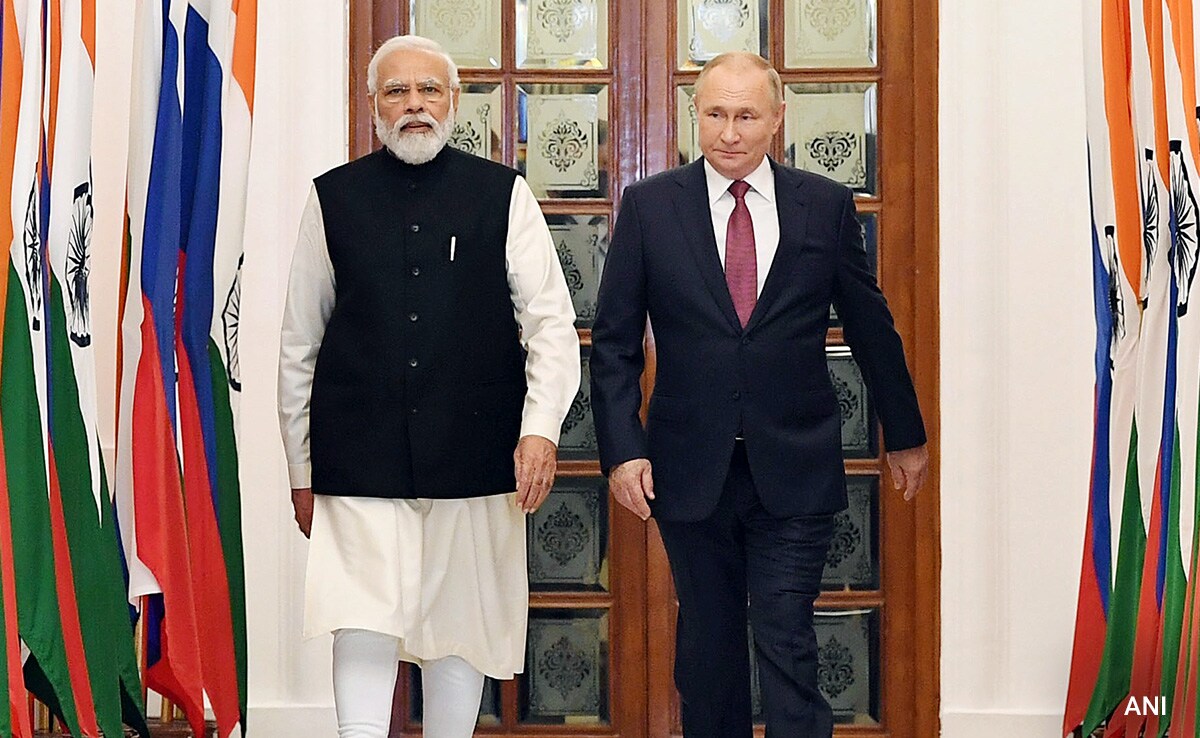
The phone conversation between Prime Minister Narendra Modi and President Vladimir Putin highlights the deepening ties between India and Russia amidst a complex global landscape marked by trade uncertainties and geopolitical tensions. The discussion, which included a review of bilateral agenda and an exchange of views on the situation in Ukraine, underscores the strategic importance of the India-Russia partnership. The fact that this conversation took place shortly after National Security Advisor Ajit Doval's visit to the Kremlin further emphasizes the ongoing high-level engagement between the two nations. One of the key takeaways from the interaction is the reaffirmation of the commitment to further deepen the India-Russia Special and Privileged Strategic Partnership. This partnership, which has evolved over decades, encompasses a wide range of areas, including defense, energy, trade, and investment. In the context of the current global environment, characterized by increasing geopolitical competition and economic uncertainty, the strengthening of the India-Russia partnership assumes even greater significance. The two countries share common interests in promoting a multipolar world order and in addressing global challenges such as terrorism, climate change, and energy security. The discussion on the situation in Ukraine is also noteworthy. While India has consistently called for a peaceful resolution of the conflict, it has also refrained from explicitly condemning Russia's actions. This nuanced position reflects India's strategic autonomy and its desire to maintain good relations with both Russia and the West. The fact that President Putin shared the latest developments on Ukraine with Prime Minister Modi suggests a level of trust and transparency between the two leaders. However, the global trade uncertainty stemming from US President Donald Trump's tariff announcements looms large in the backdrop of the Modi-Putin conversation. India has strongly opposed the imposition of additional tariffs on its exports to the US, arguing that these measures are unfair, unjustified, and unreasonable. The decision to impose tariffs on India for importing oil from Russia is particularly contentious, as it raises concerns about energy security. India has made it clear that its energy imports are based on market factors and are driven by the need to ensure the energy security of its 1.4 billion people. The Modi-Putin conversation also serves as a reminder of the historical ties between India and Russia. The two countries have a long history of cooperation and friendship, dating back to the Soviet era. This relationship has been nurtured and strengthened over the years, despite changes in the global geopolitical landscape. The upcoming visit by President Putin to India later this year will provide an opportunity to further consolidate the India-Russia partnership and to explore new areas of cooperation. This visit will also be a chance for the two leaders to exchange views on a wide range of global and regional issues. The last visit by the Russian President to India took place on December 6, 2021, during the 21st India-Russia Annual Summit in Delhi. These regular high-level interactions underscore the importance that both countries attach to their relationship. PM Modi, meanwhile, held two high-profile visits to Russia last year, attending the 22nd Russia-India Summit in July and later participated in the BRICS Summit held in Kazan in October. These visits further demonstrate the commitment of both leaders to maintaining close ties and to working together on issues of mutual interest. The India-Russia relationship is not without its challenges. One of the main challenges is the growing pressure from the US and other Western countries on India to distance itself from Russia. The US has expressed concerns about India's purchases of Russian weapons and its continued engagement with Russia on various issues. However, India has consistently maintained that its foreign policy is guided by its own national interests and that it will not be dictated to by any other country. India has also argued that its relationship with Russia is essential for maintaining regional stability and for addressing global challenges. The India-Russia partnership is a complex and multifaceted one, with deep historical roots and significant strategic implications. While the relationship faces certain challenges, it is likely to remain an important factor in the global geopolitical landscape for years to come. The conversation between Prime Minister Modi and President Putin is a testament to the enduring strength of this partnership and its importance in a rapidly changing world.
The context of the Trump tariff row adds another layer of complexity to the India-Russia relationship. The US decision to impose tariffs on Indian goods, particularly in response to India's energy imports from Russia, creates a dilemma for India. On one hand, India seeks to maintain good relations with the US, which is a major trading partner and a strategic ally. On the other hand, India needs to ensure its energy security and has long-standing ties with Russia in the energy sector. India's response to the US tariffs has been firm but measured. The government has made it clear that it views the tariffs as unfair and unjustified, but it has also expressed its willingness to engage in dialogue with the US to resolve the issue. India has also emphasized that its energy imports are based on market factors and are driven by the need to ensure the energy security of its population. The situation highlights the challenges that India faces in navigating the complex geopolitical landscape. India needs to balance its relationships with different countries and to pursue its own national interests while also contributing to global stability. The India-Russia partnership is particularly important in this context, as it provides India with a valuable strategic option and helps to diversify its relationships. The two countries share a common interest in promoting a multipolar world order and in resisting attempts by any one country to dominate the global stage. The Modi-Putin conversation is a sign that both countries are committed to maintaining their close ties despite the external pressures. The upcoming visit by President Putin to India will provide an opportunity to further strengthen the India-Russia partnership and to address the challenges that both countries face in the current global environment. It is also important to consider the broader implications of the Trump tariff row for the global trading system. The US decision to impose tariffs on India and other countries has raised concerns about the future of multilateral trade and the rules-based international order. India has been a strong advocate for free and fair trade and has consistently opposed protectionist measures. The country has also been actively involved in efforts to reform the World Trade Organization (WTO) and to strengthen the multilateral trading system. The Trump tariff row underscores the need for countries to work together to address global trade imbalances and to promote a more equitable and sustainable trading system. India has a key role to play in these efforts, given its growing economic weight and its commitment to multilateralism. The India-Russia partnership can also contribute to these efforts by promoting closer economic cooperation and by advocating for a more balanced and inclusive global trading system. Furthermore, the discussion on Ukraine provides a glimpse into the complex geopolitical calculations both nations must consider. India's continued commitment to a peaceful resolution, while not directly condemning Russia, demonstrates a desire to balance diplomatic engagement with practical considerations regarding its relationship with both Russia and other international actors. The specific mention of Putin's update to Modi suggests a level of trust or at least a perceived need to inform India of the situation, highlighting the significance Russia places on India's understanding, if not support, in the ongoing conflict.
The energy security aspect, particularly India's justification for importing oil from Russia despite potential US sanctions, underscores a crucial aspect of India's foreign policy: strategic autonomy. India prioritizes its own energy needs and makes decisions based on what it perceives as being in its best interest, irrespective of external pressures. This highlights a difference in perspective between the US, which may view these imports as a form of support for Russia, and India, which sees them as a necessary measure to sustain its economic growth and provide for its large population. The reference to India's 1.4 billion people underscores the immense scale of its energy requirements and the importance of securing reliable and affordable sources of energy. The fact that India is willing to risk potential friction with the US to maintain its energy ties with Russia demonstrates the importance it places on this relationship. This strategic autonomy is a key feature of India's foreign policy and is reflected in its approach to other global issues as well. India seeks to maintain good relations with all major powers and to avoid being drawn into any one particular bloc or alliance. This allows India to pursue its own interests and to play a more independent role in international affairs. The Modi-Putin conversation highlights the importance of understanding the different perspectives and priorities that shape the foreign policies of different countries. The US may view India's relationship with Russia as a challenge to its own interests, but India sees it as a necessary part of its broader strategic approach. The key to managing these differences is to engage in open and honest dialogue and to find ways to accommodate each other's concerns. The India-Russia partnership is a complex and evolving one, and it is likely to continue to play an important role in the global geopolitical landscape for years to come. The conversation between Prime Minister Modi and President Putin is a reminder of the enduring strength of this relationship and its importance in a rapidly changing world. This discussion also took place against the backdrop of broader geopolitical realignments, with increasing competition between major powers and a growing emphasis on regional partnerships. India and Russia have a shared interest in promoting a multipolar world order and in resisting attempts by any one country to dominate the global stage. This shared interest provides a strong foundation for their continued cooperation. The India-Russia partnership is not just about bilateral relations; it is also about shaping the future of the international system. The two countries have a common vision of a more equitable and just world order, and they are working together to achieve this vision. Ultimately, the conversation between Modi and Putin reflects the complexities of international relations and the need for countries to navigate a constantly evolving global landscape. The India-Russia relationship, while facing challenges, continues to be a significant factor in the international arena, underscoring the importance of strategic partnerships and independent foreign policy decisions.
Source: PM Modi, Putin Talk On Phone On Deepening Ties Amid Trump Tariff Row