
 |
|
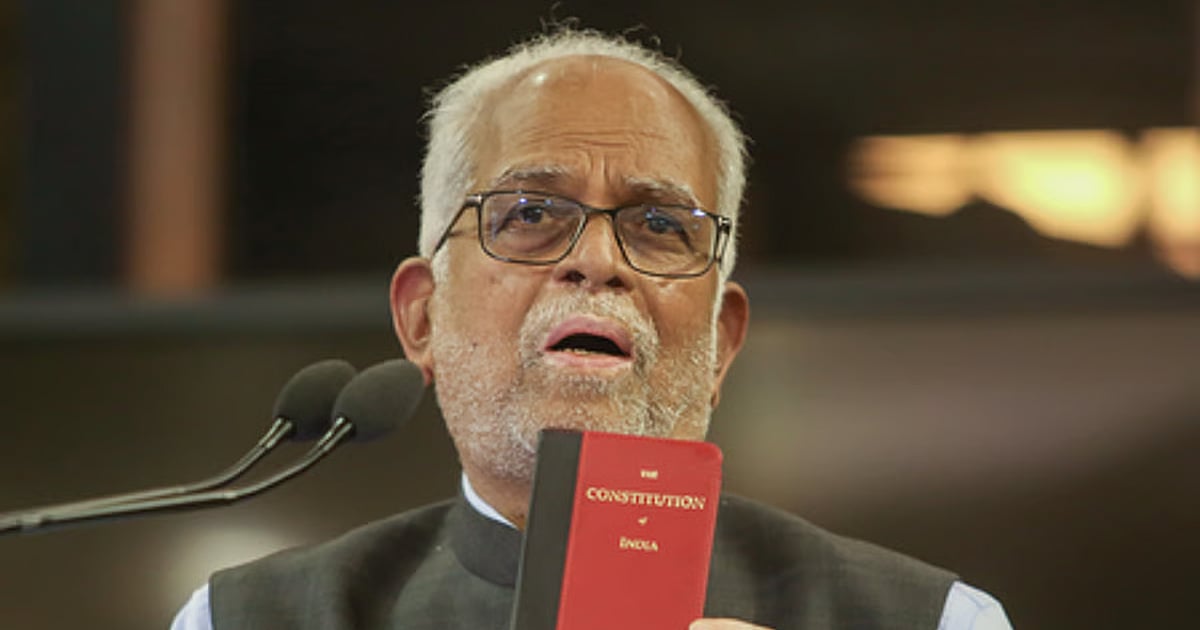
The upcoming vice-presidential election in India has taken a significant turn with the Communist Party of India (CPI) announcing its full support for Justice B Sudarshan Reddy, the joint opposition candidate. This endorsement is not merely a political maneuver but a statement of principle, rooted in the belief that Justice Reddy embodies the constitutional values and moral framework that are increasingly under threat in the current political climate. According to CPI General Secretary D Raja, Justice Reddy's candidacy represents a stand against what he perceives as the grave dangers posed by right-wing communal fascist forces. This framing of the election as a battle for the soul of the nation highlights the deep ideological divides that characterize contemporary Indian politics. The CPI's support for Justice Reddy underscores the party's commitment to safeguarding democratic principles and federalism, which they believe are being eroded by the ruling dispensation. Raja's emphasis on the critical nature of the election suggests a broader concern about the direction of the country and the need for individuals who will uphold the Constitution without fear or favor. The decision to back Justice Reddy reflects a strategic alignment within the opposition INDIA bloc, which seeks to present a united front against the dominant political force. By rallying behind a candidate who is perceived as a champion of constitutional values, the opposition hopes to resonate with a wider segment of the electorate and offer a compelling alternative to the current political trajectory. The meeting between Justice Reddy, Congress MP Dr. Mallu Ravi, and Left party leaders in Delhi signifies a concerted effort to build consensus and mobilize support for the vice-presidential election. The fact that the delegation engaged in discussions with both the CPI and the CPI-Marxist (CPM) demonstrates the importance of securing the backing of the entire Left bloc, which traditionally plays a significant role in shaping political discourse and mobilizing grassroots support. The vice-presidential election is not just about choosing an individual to occupy a constitutional post; it is also about sending a message about the values and principles that should guide the nation. The CPI's support for Justice Reddy is a clear indication that they believe he is the right person to uphold those values and serve as a check on any attempts to undermine the Constitution. This endorsement adds a new dimension to the election, transforming it into a referendum on the future of Indian democracy and the role of constitutional institutions in safeguarding fundamental rights and freedoms.
The significance of Justice Sudarshan Reddy's candidacy extends beyond the immediate political context of the vice-presidential election. His background as a jurist provides him with a unique perspective on the challenges facing the Indian legal system and the need to protect the independence of the judiciary. In a time when concerns have been raised about the erosion of judicial autonomy and the increasing politicization of legal appointments, Justice Reddy's presence in the vice-presidential office could serve as a crucial safeguard against any attempts to undermine the integrity of the courts. His commitment to the Constitution and its moral framework is not merely a matter of political rhetoric; it is a reflection of his deep understanding of the principles of justice and fairness that underpin the rule of law. By upholding constitutional values, Justice Reddy would be sending a powerful message to the nation that the Constitution is not just a document but a living instrument that must be protected and defended at all costs. His presence in the vice-presidential office would also serve as a symbol of hope for those who believe that the Constitution is the ultimate guarantor of their rights and freedoms. The support that Justice Reddy has garnered from the CPI and other Left parties underscores the importance of ideological alignment in the current political climate. The Left parties have consistently advocated for social justice, equality, and the protection of minority rights, and their endorsement of Justice Reddy suggests that they see him as a champion of these values. This alignment of interests could potentially lead to a broader coalition of forces that are committed to defending the Constitution and promoting a more inclusive and equitable society. The vice-presidential election, therefore, is not just about choosing an individual; it is about forging a common platform for those who believe in the principles of social justice and constitutionalism. The outcome of the election will have a profound impact on the future of Indian democracy, and the support that Justice Reddy has received from the CPI and other Left parties is a testament to the importance of upholding constitutional values in the face of political adversity.
The Indian National Developmental Inclusive Alliance (INDIA) bloc's strategy of building consensus around Justice Reddy's candidacy reveals a calculated approach to challenging the dominance of the ruling party. By bringing together a diverse range of political parties under a common banner, the INDIA bloc aims to present a united front and offer a credible alternative to the current government. The fact that Justice Reddy and Dr. Mallu Ravi engaged in discussions with Left party leaders in Delhi demonstrates the importance of securing the support of all segments of the opposition spectrum. The Left parties, with their long history of advocating for social justice and economic equality, bring a unique perspective to the political landscape. Their endorsement of Justice Reddy could potentially galvanize support among marginalized communities and those who feel disenfranchised by the current political system. The vice-presidential election, therefore, becomes a test of the INDIA bloc's ability to forge a cohesive coalition and present a compelling vision for the future of India. The success of this strategy will depend on the ability of the various parties to overcome their differences and unite around a common set of values and principles. The outcome of the election will not only determine who occupies the vice-presidential office but also shape the future of Indian politics and the balance of power between the ruling party and the opposition. The importance of Justice Reddy's candidacy lies not only in his legal expertise and his commitment to constitutional values but also in his potential to serve as a unifying force within the opposition INDIA bloc. His ability to bridge ideological divides and forge a common platform could prove crucial in the lead-up to the next general election. The vice-presidential election, therefore, serves as a crucial testing ground for the opposition's strategy of building consensus and challenging the dominance of the ruling party. The outcome of the election will provide valuable insights into the strengths and weaknesses of this strategy and shape the future of Indian politics for years to come.
Moreover, the narrative surrounding Justice Reddy's candidacy, particularly the CPI's characterization of the election as a defense against 'right-wing communal fascist forces,' warrants deeper examination. While this framing resonates with certain segments of the population who are concerned about the rise of Hindu nationalism and the erosion of secular values, it also risks alienating others who may not share the same ideological perspective. The effectiveness of this strategy will depend on the ability of the opposition to articulate a broader vision that appeals to a wider range of voters, including those who are not necessarily aligned with the Left's ideological stance. The INDIA bloc must carefully balance the need to mobilize its core supporters with the need to reach out to undecided voters who may be open to considering an alternative to the current government. The vice-presidential election, therefore, becomes a crucial test of the opposition's ability to craft a message that resonates with a diverse electorate and overcomes the limitations of narrow ideological appeals. The challenge lies in finding common ground on issues that transcend partisan divides and offer a compelling vision for the future of India. This could include focusing on issues such as economic inequality, social justice, and the protection of fundamental rights and freedoms. By framing the election as a referendum on these core values, the opposition can potentially broaden its appeal and attract voters who are not necessarily aligned with any particular political ideology. The success of this strategy will depend on the ability of the INDIA bloc to present a united front and articulate a clear and consistent message that resonates with the aspirations of the Indian people.
In conclusion, the CPI's support for Justice B Sudarshan Reddy in the vice-presidential election is a multifaceted development with implications that extend beyond the immediate political context. It represents a strategic alignment within the opposition INDIA bloc, a commitment to upholding constitutional values, and a broader concern about the direction of Indian democracy. The election has become a battleground for competing ideologies, with the CPI framing it as a defense against 'right-wing communal fascist forces.' However, the success of this strategy will depend on the ability of the opposition to articulate a broader vision that appeals to a wider range of voters and transcends narrow ideological appeals. The outcome of the election will not only determine who occupies the vice-presidential office but also shape the future of Indian politics and the balance of power between the ruling party and the opposition. Justice Reddy's candidacy serves as a crucial test of the opposition's ability to build consensus, forge a cohesive coalition, and present a compelling alternative to the current government. The vice-presidential election, therefore, is a pivotal moment in Indian politics, with far-reaching consequences for the future of the nation. The focus on constitutional values and the defense of democratic principles underscores the importance of this election in shaping the trajectory of Indian society. The outcome will be closely watched by observers both within and outside India, as it provides valuable insights into the state of Indian democracy and the challenges facing the nation in the 21st century. The debate surrounding Justice Reddy's candidacy highlights the deep divisions within Indian society and the need for a more inclusive and equitable political system. The future of India depends on the ability of its leaders to bridge these divides and forge a common vision for the nation based on the principles of social justice, equality, and the rule of law.