
 |
|
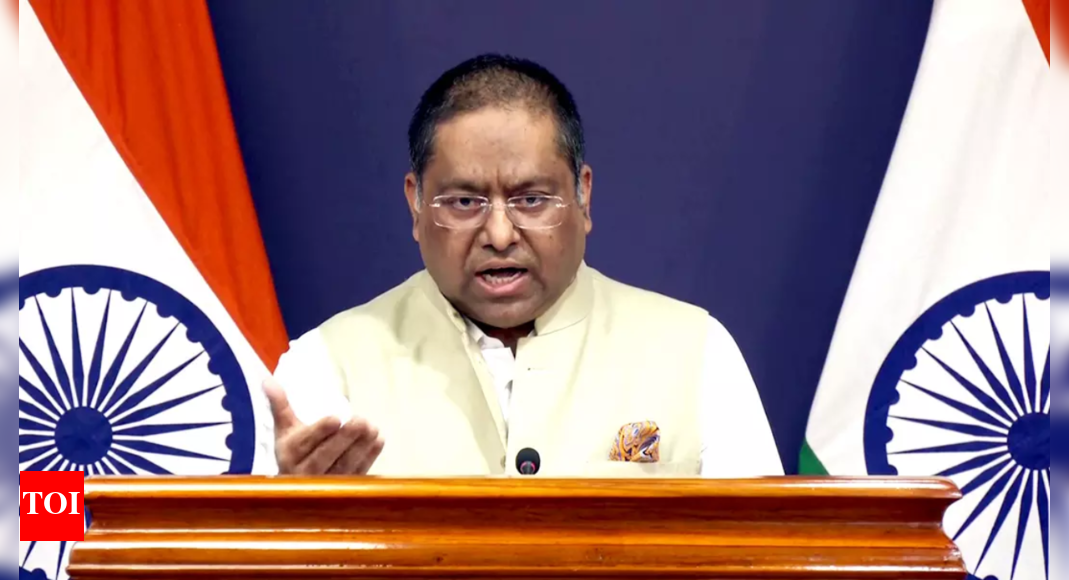
The escalating tensions between India and Pakistan have once again taken center stage, fueled by a recent exchange of heated rhetoric and thinly veiled threats. The Ministry of External Affairs (MEA) in India has issued a stern warning to Pakistan, cautioning against the continued use of anti-India sentiments and aggressive language. This warning comes in response to what the MEA describes as a “continuing pattern of reckless, war-mongering, and hateful comments from Pakistani leadership against India.” The specific trigger for this latest escalation appears to be remarks made by Pakistan's army chief, Asim Munir, which included a disturbing threat against India's Reliance Industries Ltd’s Jamnagar refinery in Gujarat, the largest single-site refining complex globally. Munir reportedly stated that if Pakistan were to face collapse, it would “take half the world down with us,” a statement interpreted as a potential nuclear threat, especially given the refinery's vital importance to the Indian economy and global energy markets. India’s response has been firm and unequivocal, underscoring the potential for “painful consequences” if Pakistan fails to moderate its rhetoric and refrain from any “misadventure.” This incident highlights the deeply entrenched animosity and mutual suspicion that continue to plague the relationship between the two nuclear-armed neighbors, despite numerous attempts at dialogue and reconciliation over the years. The situation is further complicated by the involvement of the Pakistani military in the country's nuclear decision-making process, a concern that India has repeatedly raised with international bodies. The MEA spokesperson, Randhir Jaiswal, pointedly noted that Munir's remarks only reinforce longstanding concerns about the lack of civilian oversight in Pakistan’s nuclear decision-making, alleging that the military operates “hand-in-glove” with terrorist organizations. This accusation further intensifies the distrust and adds another layer of complexity to an already volatile situation. The history of India-Pakistan relations is replete with conflicts, both overt and covert, dating back to the partition of the subcontinent in 1947. The unresolved dispute over Kashmir remains a major source of contention, with both countries claiming the region in its entirety. Cross-border terrorism, allegedly sponsored by Pakistan, has also been a persistent irritant in the relationship, leading to numerous diplomatic crises and military confrontations. The strategic implications of this ongoing tension are significant, not only for the region but also for the wider international community. The possibility of a nuclear conflict between India and Pakistan, however remote, is a constant concern that demands careful management and diplomatic engagement. The international community, particularly the United States and China, has a vested interest in maintaining stability in the region and preventing any escalation that could lead to catastrophic consequences. The role of these external actors in facilitating dialogue and mediation between India and Pakistan is crucial, but ultimately, the responsibility for de-escalation lies with the two countries themselves. The current exchange of threats and warnings underscores the urgent need for both India and Pakistan to adopt a more constructive and pragmatic approach to their relationship. This requires a willingness to address the root causes of their animosity, including the Kashmir dispute and cross-border terrorism, and to engage in meaningful dialogue to find mutually acceptable solutions. It also necessitates a commitment to transparency and accountability in nuclear decision-making, ensuring that such critical matters are subject to civilian oversight and control. Failure to address these fundamental issues will only perpetuate the cycle of conflict and mistrust, increasing the risk of a catastrophic miscalculation that could have devastating consequences for the entire region and beyond. Furthermore, the internal political dynamics within both countries play a significant role in shaping their foreign policy towards each other. In Pakistan, the military's influence on foreign policy, particularly with regard to India, is well-documented. The military views India as an existential threat and has historically been reluctant to cede control over key policy decisions. This has often resulted in a hawkish stance towards India, even when civilian governments have sought to pursue a more conciliatory approach. In India, public opinion is generally skeptical of Pakistan, given the history of conflicts and terrorist attacks. This makes it difficult for any Indian government to offer significant concessions or compromises in negotiations with Pakistan. The rise of nationalist sentiments in both countries has further complicated the situation, making it harder for leaders to engage in rational and pragmatic discussions. The media in both countries also plays a role in shaping public perception of the other. Sensationalist reporting and the amplification of nationalist narratives can further inflame tensions and make it more difficult to achieve reconciliation. Therefore, it is essential for both governments to exercise restraint in their public pronouncements and to promote a more balanced and objective portrayal of the other country. In addition to addressing the political and security dimensions of the relationship, it is also important to foster greater economic cooperation between India and Pakistan. Increased trade and investment can create interdependence and mutual benefit, reducing the incentive for conflict. However, this requires a conducive political environment and a willingness to overcome the existing barriers to trade, such as high tariffs and bureaucratic hurdles. Cultural exchanges and people-to-people contacts can also help to build bridges between the two countries and to dispel negative stereotypes. Promoting tourism and educational exchanges can foster greater understanding and empathy, creating a more conducive environment for peace. The path towards a more peaceful and stable relationship between India and Pakistan is long and arduous. It requires sustained effort and political will on both sides. There will be setbacks and challenges along the way, but it is essential to remain committed to the goal of reconciliation. The alternative is a continued cycle of conflict and mistrust, which will only perpetuate the suffering of millions of people on both sides of the border.
The recent tensions also highlight the complex interplay between domestic political considerations and foreign policy decisions in both India and Pakistan. In Pakistan, the army's continued influence in civilian affairs, particularly regarding foreign policy and national security, is a well-established fact. This dynamic often leads to a more hawkish stance towards India, as the military tends to prioritize security concerns and maintain a confrontational posture. The current army chief, Asim Munir, appears to be following this pattern, as evidenced by his aggressive rhetoric and the threat against India's Jamnagar refinery. These statements are likely intended to project strength and deter any perceived aggression from India, but they also serve to bolster the army's position within the Pakistani political landscape. By framing India as an existential threat, the military can justify its continued dominance and resist any attempts at civilian oversight. In India, the political climate is similarly charged, with nationalist sentiments running high. The ruling Bharatiya Janata Party (BJP) has adopted a strong stance on national security and has been critical of Pakistan's alleged support for cross-border terrorism. This approach has resonated with a large segment of the Indian population, but it also makes it more difficult for the government to engage in meaningful dialogue with Pakistan. Any perceived weakness or concession towards Pakistan could be exploited by the opposition and could undermine the government's credibility. The media in both countries also play a significant role in shaping public opinion and influencing the political discourse. Sensationalist reporting and the amplification of nationalist narratives can further inflame tensions and make it more difficult to achieve reconciliation. The spread of misinformation and disinformation on social media also poses a challenge, as it can distort reality and create a climate of mistrust. Therefore, it is essential for both governments to promote responsible journalism and to combat the spread of fake news. The international community has a role to play in de-escalating tensions between India and Pakistan and in promoting dialogue and cooperation. The United States, China, and other major powers have a vested interest in maintaining stability in the region and preventing any escalation that could lead to a conflict. These countries can use their influence to encourage both India and Pakistan to engage in meaningful negotiations and to address the root causes of their animosity. They can also provide technical and financial assistance to support confidence-building measures and to promote economic cooperation. However, ultimately, the responsibility for resolving the conflict lies with India and Pakistan themselves. The two countries must find a way to overcome their historical baggage and to build a future based on mutual respect and understanding. This will require courageous leadership and a willingness to compromise on long-held positions. It will also require a sustained effort to address the underlying issues that fuel the conflict, such as the Kashmir dispute and cross-border terrorism. The path towards peace will not be easy, but it is essential for the sake of the people of both countries and for the stability of the region. In addition to the political and security dimensions of the conflict, there are also significant economic and social factors that need to be addressed. Poverty, inequality, and lack of opportunity can fuel resentment and instability, making it more difficult to achieve reconciliation. Therefore, it is important to promote economic development and to create jobs and opportunities for all. Education and healthcare are also essential for building a more just and equitable society. Investing in these areas can help to reduce poverty, improve health outcomes, and empower individuals to participate more fully in their communities. Cultural exchanges and people-to-people contacts can also help to bridge divides and to promote understanding and empathy. Encouraging tourism, student exchanges, and joint cultural projects can help to break down stereotypes and to build trust between the two countries.
The potential for a nuclear conflict between India and Pakistan remains a serious concern, despite efforts to establish confidence-building measures and communication channels. The lack of transparency and civilian control over Pakistan's nuclear arsenal, as highlighted by India, raises the risk of miscalculation or accidental escalation. The threat against India's Jamnagar refinery further underscores this danger, as it suggests a willingness to target critical infrastructure, which could have devastating consequences for the region and the global economy. The international community must continue to press for greater transparency and accountability in Pakistan's nuclear decision-making processes. This includes urging Pakistan to adopt stricter safety protocols and to ensure that its nuclear weapons are not vulnerable to theft or misuse. India, for its part, must also exercise restraint and avoid any actions that could be interpreted as provocative or escalatory. The two countries should maintain open lines of communication and be prepared to engage in dialogue to address any misunderstandings or concerns. The role of external actors, such as the United States and China, is crucial in managing the nuclear risk between India and Pakistan. These countries can use their influence to encourage both sides to adopt a more responsible approach to nuclear security and to promote confidence-building measures. They can also provide technical assistance to help Pakistan improve its nuclear safety protocols. However, ultimately, the responsibility for preventing a nuclear conflict lies with India and Pakistan themselves. The two countries must recognize the catastrophic consequences of such a conflict and be willing to take the necessary steps to reduce the risk. This includes addressing the underlying issues that fuel the conflict, such as the Kashmir dispute and cross-border terrorism, and to build a relationship based on mutual respect and understanding. The current tensions also highlight the need for a more comprehensive approach to regional security in South Asia. This includes addressing the root causes of instability, such as poverty, inequality, and lack of opportunity. It also includes promoting good governance, strengthening democratic institutions, and protecting human rights. A more stable and prosperous South Asia would be less prone to conflict and would be better able to address the challenges facing the region, such as climate change, terrorism, and pandemics. The international community must work with the countries of South Asia to promote a more sustainable and equitable future for the region. This requires a long-term commitment to development assistance, trade, and investment. It also requires a willingness to address the underlying political and social issues that fuel conflict and instability. The path towards peace and stability in South Asia will not be easy, but it is essential for the sake of the people of the region and for the security of the world. By working together, the countries of South Asia can overcome their challenges and build a brighter future for all. The ongoing tensions between India and Pakistan serve as a stark reminder of the dangers of unresolved conflicts and the importance of diplomacy and dialogue. The international community must remain engaged and vigilant, working to prevent any escalation and to promote a more peaceful and stable future for South Asia. The alternative is a continuation of the cycle of conflict and mistrust, which will only perpetuate the suffering of millions of people and increase the risk of a catastrophic miscalculation. The need for a more constructive and pragmatic approach to India-Pakistan relations is more urgent than ever before.
The reliance on rhetoric and threats as a means of communication and influence creates a dangerous environment where misinterpretations and escalations can easily occur. It is imperative that both nations prioritize clear, direct, and consistent communication channels to mitigate the risk of miscalculation. Open dialogue, even amidst disagreements, is essential for understanding each other's perspectives and preventing misunderstandings that could lead to unintended consequences. Furthermore, the promotion of cultural exchanges and people-to-people interactions can play a crucial role in fostering empathy and understanding between the two nations. These initiatives can help to break down stereotypes, build trust, and create a more positive and cooperative environment. Investing in joint projects that address shared challenges, such as climate change and public health, can also foster collaboration and build mutual benefit. The international community has a responsibility to encourage and support these efforts, providing resources and expertise to facilitate dialogue and cooperation. By working together, India and Pakistan can build a more stable and prosperous future for themselves and for the region. The challenges they face are significant, but the potential rewards of peace and cooperation are even greater. It is time for both nations to move beyond the rhetoric and threats and to embrace a more constructive and forward-looking approach to their relationship. The future of South Asia depends on it.
The consistent focus on military strength and the potential for conflict diverts resources away from essential social and economic development initiatives. Investing in education, healthcare, and infrastructure is crucial for improving the lives of citizens in both countries and fostering long-term stability. By prioritizing these areas, India and Pakistan can create a more prosperous and equitable society, reducing the potential for social unrest and conflict. The focus on rhetoric and threats also undermines the potential for regional cooperation and integration. South Asia has immense potential for economic growth and development, but this potential cannot be fully realized without greater cooperation among the countries in the region. By building stronger economic ties and promoting trade and investment, India and Pakistan can create a more prosperous and interconnected region, benefiting all of its citizens. The path forward requires a shift in mindset, from a focus on competition and conflict to a focus on cooperation and mutual benefit. This requires courageous leadership, a willingness to compromise, and a commitment to building a more peaceful and prosperous future for South Asia. The international community must support these efforts, providing resources and expertise to help India and Pakistan overcome their challenges and realize their full potential.
In conclusion, the current state of India-Pakistan relations is precarious, marked by heightened rhetoric, mutual distrust, and the ever-present threat of escalation. The path forward requires a multi-faceted approach that addresses the root causes of the conflict, promotes dialogue and cooperation, and fosters a more peaceful and stable regional environment. Both India and Pakistan must prioritize clear communication, transparency, and a commitment to peaceful resolution of disputes. The international community has a vital role to play in supporting these efforts, providing resources and expertise to facilitate dialogue and promote cooperation. Ultimately, the future of South Asia depends on the willingness of India and Pakistan to move beyond the rhetoric and threats and to embrace a more constructive and forward-looking approach to their relationship. The challenges are significant, but the potential rewards of peace and cooperation are even greater. It is time for both nations to choose a path towards a more stable, prosperous, and secure future for all.
Source: 'Painful consequences': India warns Pak to 'temper rhetoric'; 'hiding own failures'