
 |
|
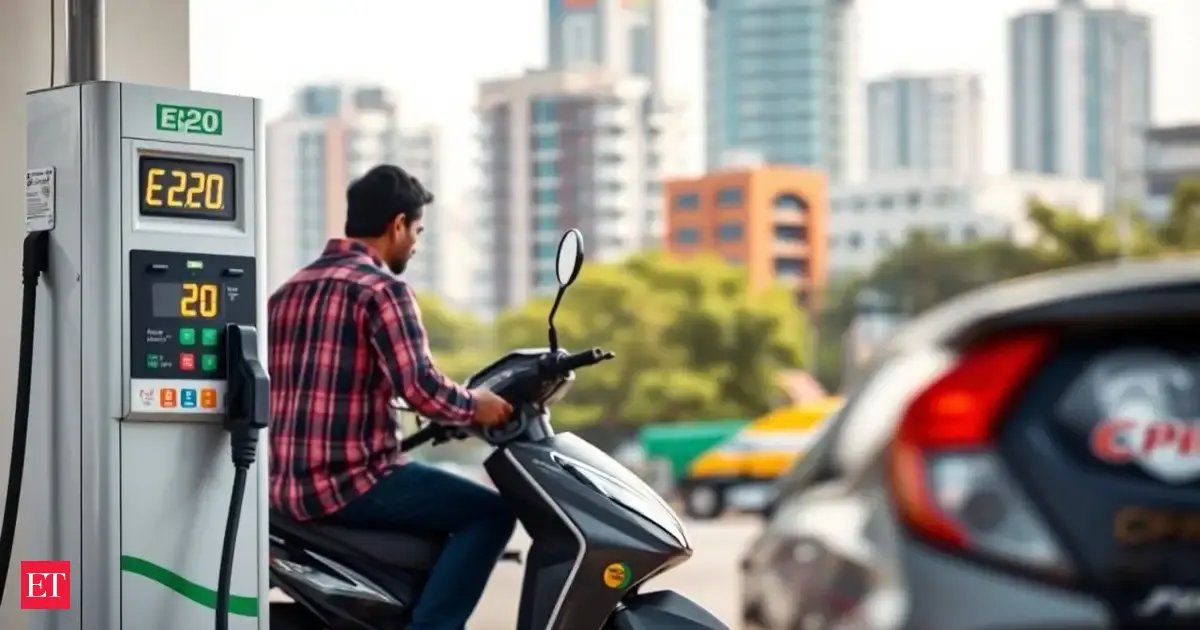
The adoption of E20 fuel, a blend of 20% ethanol and 80% petrol, in India has been met with mixed reactions. While the government touts its environmental and economic benefits, many vehicle owners are reporting a significant decrease in mileage after switching to the new fuel. This has sparked a debate about the compatibility of older vehicles with E20 and the true cost of this green initiative. The complaints are widespread, with owners of various car models, including Volkswagen Vento, Honda, and Tata Tigor, reporting drops in mileage ranging from 20% to 40%. These users attribute the reduced fuel efficiency to the lower energy content of ethanol compared to petrol. The government, however, dismisses these claims as unscientific, stating that the impact on mileage should be minimal, especially for E20-compliant vehicles. They suggest that any required part replacements, such as gaskets or rubber components, are part of standard servicing and should not be a cause for concern. This difference in perspective highlights the complexities of transitioning to alternative fuels and the need for clear communication and proactive solutions to address consumer concerns. The situation reflects a broader challenge in balancing environmental goals with economic realities and ensuring a smooth transition for all stakeholders. The government's push for E20 is driven by several factors, including the desire to reduce India's reliance on imported crude oil, lower carbon emissions, and support the agricultural sector. Ethanol is produced from sugarcane and maize, providing a domestic source of fuel and boosting rural economies. The NITI Aayog-backed study claims that sugarcane-based ethanol cuts CO₂ emissions by 65% compared to petrol, while maize-based ethanol reduces emissions by 50%. These figures are significant in the context of India's commitment to combating climate change and achieving its Nationally Determined Contributions (NDCs) under the Paris Agreement. Furthermore, the ethanol program has resulted in substantial economic benefits, including savings in foreign exchange, increased distillery revenues, and income for farmers. The government estimates that the program has saved the country approximately ₹1.36 lakh crore in foreign exchange since 2014 and generated ₹1.96 lakh crore in distillery revenues. Farmers supplying raw materials have collectively earned ₹1.18 lakh crore. These figures underscore the potential of ethanol as a sustainable and economically viable fuel source. However, the benefits of E20 are not without their drawbacks. The lower energy content of ethanol means that vehicles consume more fuel to travel the same distance, leading to reduced mileage. This is particularly noticeable in older vehicles that are not designed to run on E20. The Society of Indian Automobile Manufacturers (SIAM) acknowledges that mileage may fall by 1–2% for E10-tuned vehicles upgraded to handle E20 and by 3–6% for others. While SIAM suggests that this drop can be mitigated with proper engine tuning, many vehicle owners may not be aware of this option or may find it too expensive. The concerns about fuel efficiency are further exacerbated by the fact that petrol prices in India are already high. Consumers are sensitive to any increase in fuel costs, even if it is offset by environmental benefits. The sarcastic remark made by a Honda City and Maruti Brezza owner, "Feels like driving a Hyundai with Mercedes mileage," reflects the frustration of many consumers who feel that they are paying more for less. The controversy surrounding E20 highlights the importance of public awareness campaigns and clear communication from the government. Many consumers are unaware of the benefits of ethanol or the potential impact on their vehicles. The government needs to do a better job of educating the public about the science behind E20, the potential impact on mileage, and the steps that can be taken to mitigate any negative effects. This includes providing information on engine tuning, recommending suitable fuels for different types of vehicles, and addressing concerns about maintenance costs. Furthermore, the government needs to ensure that the transition to E20 is equitable and does not disproportionately burden lower-income consumers who may not be able to afford newer, E20-compliant vehicles or engine tuning. This could involve providing subsidies for engine tuning or offering incentives for the purchase of E20-compliant vehicles. The next step in India's ethanol program is the introduction of E27, petrol with 27% ethanol content. The government plans to finalize the standards for E27 by the end of August 2025 and the Automotive Research Association of India (ARAI) is assessing required engine modifications. While E27 promises even greater environmental and economic benefits, it also raises new challenges. The higher ethanol content may exacerbate the mileage concerns and require more significant engine modifications. It is crucial that the government learns from the experience with E20 and takes proactive steps to address the concerns of vehicle owners before rolling out E27. This includes conducting thorough testing of E27 on different types of vehicles, providing clear guidance on engine modifications, and implementing a comprehensive public awareness campaign. The success of India's ethanol program depends on building trust and ensuring that the benefits of this green initiative are shared by all stakeholders. The government needs to listen to the concerns of vehicle owners, address their anxieties, and provide them with the information and support they need to make informed decisions. Only then can India fully realize the potential of ethanol as a sustainable and economically viable fuel source.
Expanding on the technical aspects, the issue isn't simply a matter of ethanol 'adulterating' fuel, as some users claim. Ethanol has a lower energy density than gasoline, meaning it produces less energy per unit volume. This is an inherent property of the molecule itself. Therefore, when ethanol is blended with gasoline, the resulting fuel mixture will have a lower energy density than pure gasoline. This translates to a decrease in fuel economy, all other factors being equal. The extent of the decrease depends on the ethanol concentration in the blend. E20 fuel, with 20% ethanol, will have a greater impact on fuel economy than E10 fuel, with 10% ethanol. Moreover, the impact on fuel economy is not linear. As the ethanol concentration increases, the percentage decrease in fuel economy tends to increase as well. This is because the engine control unit (ECU) of a vehicle may need to adjust the fuel-air mixture and ignition timing to compensate for the lower energy density of the fuel. However, the ECU may not be able to fully optimize the engine's performance for higher ethanol concentrations, leading to a greater reduction in fuel economy. Another factor that contributes to the mileage issue is the material compatibility of vehicle components with ethanol. Ethanol is a corrosive solvent that can degrade certain types of rubber, plastic, and metal used in fuel systems. Older vehicles, which were not designed to run on ethanol-blended fuels, may be particularly susceptible to this issue. Over time, ethanol can cause these components to deteriorate, leading to fuel leaks, engine damage, and reduced fuel economy. Modern vehicles, which are designed to be E20-compliant, use materials that are more resistant to ethanol corrosion. However, even these vehicles may experience some degradation over time, especially if they are exposed to higher ethanol concentrations than they were designed for. In addition to material compatibility, the presence of water in ethanol-blended fuel can also be problematic. Ethanol is hygroscopic, meaning it readily absorbs water from the atmosphere. If the water content in the fuel exceeds a certain level, it can lead to phase separation, where the ethanol and gasoline separate into two distinct layers. This can cause fuel system problems and engine damage. To prevent phase separation, it is important to store ethanol-blended fuel in sealed containers and to avoid using fuel that has been stored for long periods of time. It's crucial to consider the broader economic implications of switching to E20, especially for consumers. The perceived decrease in mileage translates directly into increased fuel expenses for drivers. This is especially significant for individuals and businesses that rely heavily on vehicles for transportation. For example, taxi drivers and delivery services, who often drive long distances, may experience a substantial increase in their fuel costs. While the government argues that the environmental benefits of E20 outweigh the economic costs, it is important to consider the impact on different segments of the population. Lower-income individuals and small businesses may be disproportionately affected by the increased fuel expenses. To mitigate these concerns, the government could consider providing financial assistance to these groups, such as fuel subsidies or tax breaks. Moreover, it is important to ensure that the price of E20 fuel reflects its lower energy density compared to gasoline. If E20 fuel is priced the same as gasoline, consumers are effectively paying more for less energy. A more equitable pricing system would take into account the energy content of the fuel and adjust the price accordingly.
Furthermore, the long-term effects of widespread E20 usage on vehicle maintenance and repair costs need careful consideration. While the government claims that any required part replacements fall under standard servicing, the potential for accelerated wear and tear on fuel system components due to ethanol corrosion could lead to higher maintenance costs over the lifespan of a vehicle. This is particularly relevant for older vehicles that were not designed to run on ethanol-blended fuels. Owners of these vehicles may need to replace fuel lines, fuel pumps, and other components more frequently than they would have if they were using pure gasoline. The increased maintenance costs could offset some of the savings from reduced foreign exchange and environmental benefits. To address this issue, the government could consider establishing a program to assist owners of older vehicles with the cost of upgrading their fuel systems to be compatible with E20. This could involve providing subsidies for the purchase of ethanol-resistant components or offering tax breaks for vehicle upgrades. In addition to the direct costs of vehicle maintenance, the widespread use of E20 could also have indirect costs on the automotive repair industry. Mechanics may need to acquire new skills and equipment to work on vehicles that have been damaged by ethanol corrosion. This could lead to increased labor costs and longer repair times. The government could support the automotive repair industry by providing training programs and financial assistance to help mechanics adapt to the challenges of working with E20-compatible vehicles. Moreover, the increased demand for ethanol could have implications for the agricultural sector. While the government touts the benefits of ethanol production for farmers, it is important to consider the potential environmental impacts of large-scale sugarcane and maize cultivation. These crops require significant amounts of water and fertilizer, which can lead to water pollution and soil degradation. Sustainable agricultural practices are essential to ensure that the benefits of ethanol production are not offset by environmental damage. The government could promote sustainable agricultural practices by providing farmers with incentives to adopt water-efficient irrigation techniques, reduce fertilizer use, and implement soil conservation measures. Furthermore, the government should invest in research and development to explore alternative feedstocks for ethanol production, such as cellulosic biomass. Cellulosic biomass is derived from non-food crops and agricultural residues, which are more sustainable and environmentally friendly than sugarcane and maize. In conclusion, the transition to E20 fuel in India presents both opportunities and challenges. While the environmental and economic benefits of ethanol are undeniable, it is important to address the concerns of vehicle owners and ensure that the transition is equitable and sustainable. The government needs to provide clear communication, financial assistance, and technical support to help consumers and businesses adapt to the changes. Moreover, the government should continue to invest in research and development to explore alternative feedstocks for ethanol production and promote sustainable agricultural practices. By taking a comprehensive and proactive approach, India can fully realize the potential of ethanol as a sustainable and economically viable fuel source.
Source: ‘Driving Hyundai with Mercedes mileage’: Car owners blame E20 fuel for shocking drop in mileage