
 |
|
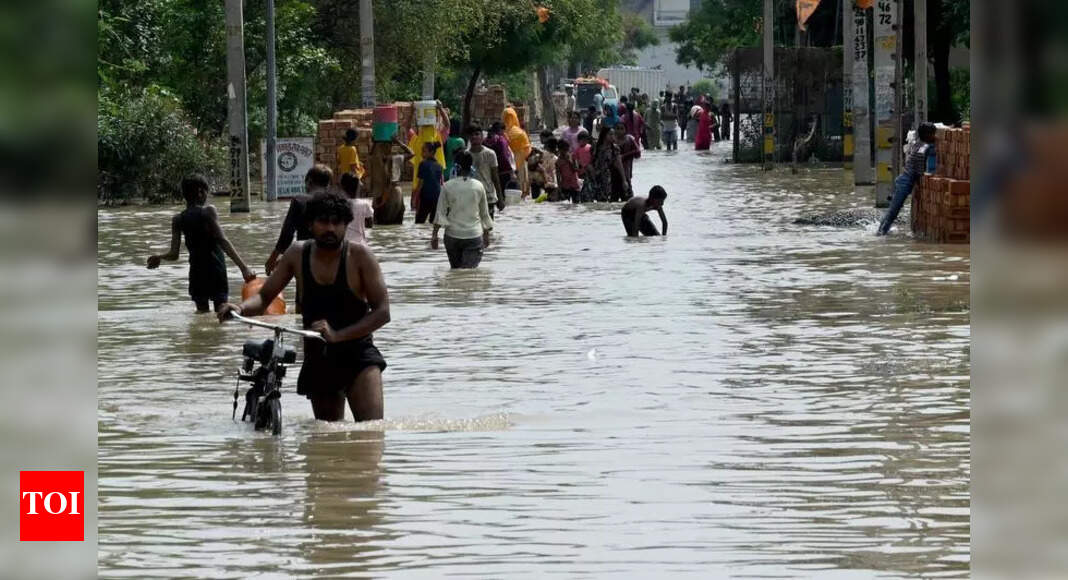
Delhi's recurrent flooding, as evidenced by the devastating events of 2023 and ongoing issues, is not simply a consequence of unpredictable weather patterns. Instead, a recent report, the Environmental Improvement Plan of Delhi, meticulously reveals that these floods are a direct result of decades of unchecked and poorly planned urban expansion, a failure to manage rainwater runoff effectively, a critical reduction in groundwater recharge capabilities, and a severely inadequate and poorly maintained drainage network. The situation is further compounded by the rampant dumping of waste into drains and water bodies, the persistent issue of uncleared sewers and drainage systems, and the illegal encroachment upon ecologically sensitive areas, all of which contribute significantly to the escalating problem of urban flooding in the capital city. The report emphatically underscores the transformation of Delhi from a landscape characterized by wetlands and agricultural fields into a sprawling concrete jungle. This metamorphosis has dramatically diminished the city's inherent capacity to naturally absorb rainfall. With built-up areas now dominating the landscape, there has been a corresponding increase in surface runoff, while simultaneously hindering the replenishment of groundwater reserves. The report specifically highlights areas like Connaught Place and Karol Bagh, as well as densely populated informal settlements such as Sangam Vihar, where compact layouts and a glaring absence of proper urban planning exacerbate the problem of waterlogging. In stark contrast, low-density peripheral areas like Chhatarpur, Dwarka, and Narela, although possessing some green spaces, are situated within the flood-prone belts of the Yamuna floodplain, rendering them highly vulnerable to inundation. The banks of the Yamuna River, which once served as natural flood buffers, have been progressively encroached upon by urbanization, further diminishing the city's capacity to mitigate flood risks. Numerous urban zones are located in low-lying depressions, lacking adequate slope to facilitate the efficient flow of water towards drainage outlets. The ITO area, for example, is notorious for its poor natural flow, which consistently overwhelms the stormwater drain network, leading to frequent flooding. The devastating floods of 2023 impacted hundreds of illegal settlements that had been constructed on the floodplain, as well as legitimately built areas such as Mayur Vihar and the bungalows in Civil Lines, resulting in the evacuation of over 23,000 people. The tragic death of three students in July 2024, who were trapped in the flooded basement of a coaching center, serves as a poignant reminder of the human cost of Delhi's persistent flooding problem. Even in the current year, several areas have been repeatedly deluged every time there is a heavy rainfall, highlighting the ongoing vulnerability of the city's infrastructure.
Despite claims from a government official that conditions have improved significantly this year, with usually affected spots like Minto Bridge, Ring Road opposite WHO office, Jahangirpuri metro station road, Zakhira flyover and the Loni Road roundabout not reporting waterlogging during recent heavy showers due to “intense cleaning” of the Barapullah drain, the underlying issues persist. The report definitively identifies choked drains as a significant contributing factor to the problem. The widespread practice of dumping garbage into open drains and water bodies has effectively blocked major water pathways, while encroachments have obstructed drainage lines in areas such as Kirat Nagar, Dwarka, and Rohini. The responsibility for maintaining Delhi's extensive drainage network, which spans a total of 3,642 km, is divided among various agencies. The Public Works Department (PWD) manages the largest portion, with 2,064 km, followed by the Delhi government's Irrigation and Flood Control Department (426 km), the Municipal Corporation of Delhi (MCD) (521 km), the New Delhi Municipal Council (NDMC) and Delhi Cantonment (374 km), and the Delhi Development Authority (DDA) (251 km). Officials have disclosed the formation of a committee to facilitate coordination between these multiple agencies. They also claim that the shared political leadership between the state government and the MCD has fostered improved coordination in recent times. The industrial sector also contributes significantly to Delhi's water management challenges. Industries collectively produce 32.79 million litres of effluent every day. However, the existing common effluent treatment plants (CETPs) are only capable of treating 63.4 million litres per day (MLD) against their total capacity of 212.3 MLD. This substantial inefficiency, coupled with punctures in the sewage system, places an additional burden on the stormwater drain network. While a government official stated that the treatment figures cited in the report reflected an earlier situation and have since improved, and that the government is closely monitoring CETPs and ensuring increased efficiency, the report paints a concerning picture of industrial waste management.
As rainfall patterns become increasingly erratic as a consequence of climate change, Delhi faces the prospect of more frequent and intense downpours over shorter durations, presenting a formidable challenge for its already stressed, clogged, and poorly planned stormwater management system. The Environmental Improvement Plan of Delhi underscores the urgent need for a comprehensive set of recommendations aimed at strengthening solid waste and stormwater management practices, restoring and desilting natural drains, undertaking comprehensive reforms to prevent further encroachments on ecologically sensitive areas, and actively engaging local communities in awareness campaigns and ongoing maintenance efforts. These measures are crucial for building a more resilient and sustainable urban environment. Addressing the intertwined issues of urban planning, infrastructure development, waste management, and industrial effluent control is paramount to mitigating the risk of future flooding and ensuring the safety and well-being of Delhi's residents. A holistic approach that encompasses technological upgrades, policy reforms, and community engagement is essential to transform Delhi into a truly flood-resilient city. Moreover, strict enforcement of existing regulations, coupled with proactive measures to address the root causes of environmental degradation, is necessary to safeguard the city's natural resources and build a more sustainable future. Only through a concerted and sustained effort can Delhi hope to overcome its recurring flood crises and create a livable and resilient urban environment for all its inhabitants.
Source: Monsoon Wading: How Delhi Has Built Its Own Way Into Flood Crisis