
 |
|
The inauguration of Bengaluru's Yellow Line metro represents a significant milestone in the city's ongoing efforts to alleviate traffic congestion and improve urban mobility. After eight long years of delays, the 19.15-kilometer corridor connecting RV Road to Bommasandra is finally set to open, promising to streamline commutes between south Bengaluru and the key technology and manufacturing hubs in Electronic City. This area is home to major companies such as Infosys, Biocon, and TCS, and the Yellow Line is expected to drastically reduce travel times for employees and residents alike. The project's history, however, is a complex tapestry of bureaucratic hurdles, supply chain disruptions, geopolitical tensions, and persistent challenges that underscore the difficulties inherent in large-scale infrastructure development in India. Understanding the factors that contributed to these delays provides valuable insights for future projects, highlighting the need for improved planning, coordination, and proactive problem-solving. The initial vision for the Yellow Line was laid out in the Detailed Project Report (DPR) prepared by the Delhi Metro Rail Corporation (DMRC) in 2011. The report estimated a cost of Rs 4,255 crore and targeted a completion date of March 2016. Construction commenced in 2017, but the deadline was quickly revised to December 2021, with an updated budget of Rs 5,744 crore. These early adjustments foreshadowed the numerous challenges that lay ahead. Bureaucratic delays were a persistent impediment, slowing down approvals and decision-making processes. Supply chain setbacks further compounded the problems, disrupting the flow of essential materials and equipment. Leadership lapses also contributed to the project's stagnation, hindering effective management and coordination. While civil work gained momentum in 2018-19, land acquisition delays began to significantly impact project schedules. Securing the necessary land for the metro line proved to be a protracted and contentious process, involving negotiations with multiple landowners and navigating complex legal frameworks. In 2020, the Covid-19 pandemic dealt a major blow to the project, causing widespread disruption in supply chains and manpower. Lockdowns and travel restrictions hindered the movement of workers and materials, while the global economic slowdown further exacerbated the challenges. The pandemic also highlighted the vulnerability of infrastructure projects to external shocks and the need for robust contingency planning.
Adding to the project's woes were the geopolitical tensions between India and China following the 2020 Galwan clash. These tensions directly impacted the supply of rolling stock from CRRC Nanjing, the Chinese train manufacturer contracted to provide the trains for the Yellow Line. The delays in the delivery of the trains threatened to derail the project altogether, forcing the government to devise an alternative strategy. To mitigate the risk of relying solely on foreign suppliers, the government directed CRRC to partner with Kolkata-based Titagarh Rail Systems Ltd to manufacture the trains domestically. This move aimed to promote local manufacturing and reduce dependence on foreign sources, but it also introduced new challenges. Localising the train production process proved to be more complex than initially anticipated, leading to production line delays and other logistical hurdles. Visa issues for CRRC engineers further hampered the transfer of technology and expertise, while delays in delivering the Train Control and Management System (TCMS) software by Mitsubishi Electric Corporation (MELCO) added to the uncertainty surrounding the project timeline. The convergence of these various challenges created a perfect storm, pushing the Yellow Line project further and further behind schedule. Recognizing the urgency of the situation, Bangalore South Member of Parliament Tejasvi Surya intervened to advocate for the project's acceleration. He pressed both state and central authorities to address the bottlenecks and expedite the remaining work. In 2023, he launched a campaign calling for the appointment of a full-time managing director (MD) for BMRCL, arguing that a dedicated leader was needed to provide the necessary focus and direction. After three months of sustained lobbying and meetings with the Ministry of Housing and Urban Affairs (MoHUA) and the state government, a dedicated MD was finally appointed, freeing up much-needed executive bandwidth to resolve bottlenecks. This appointment proved to be a turning point, helping to streamline decision-making and improve coordination among various stakeholders.
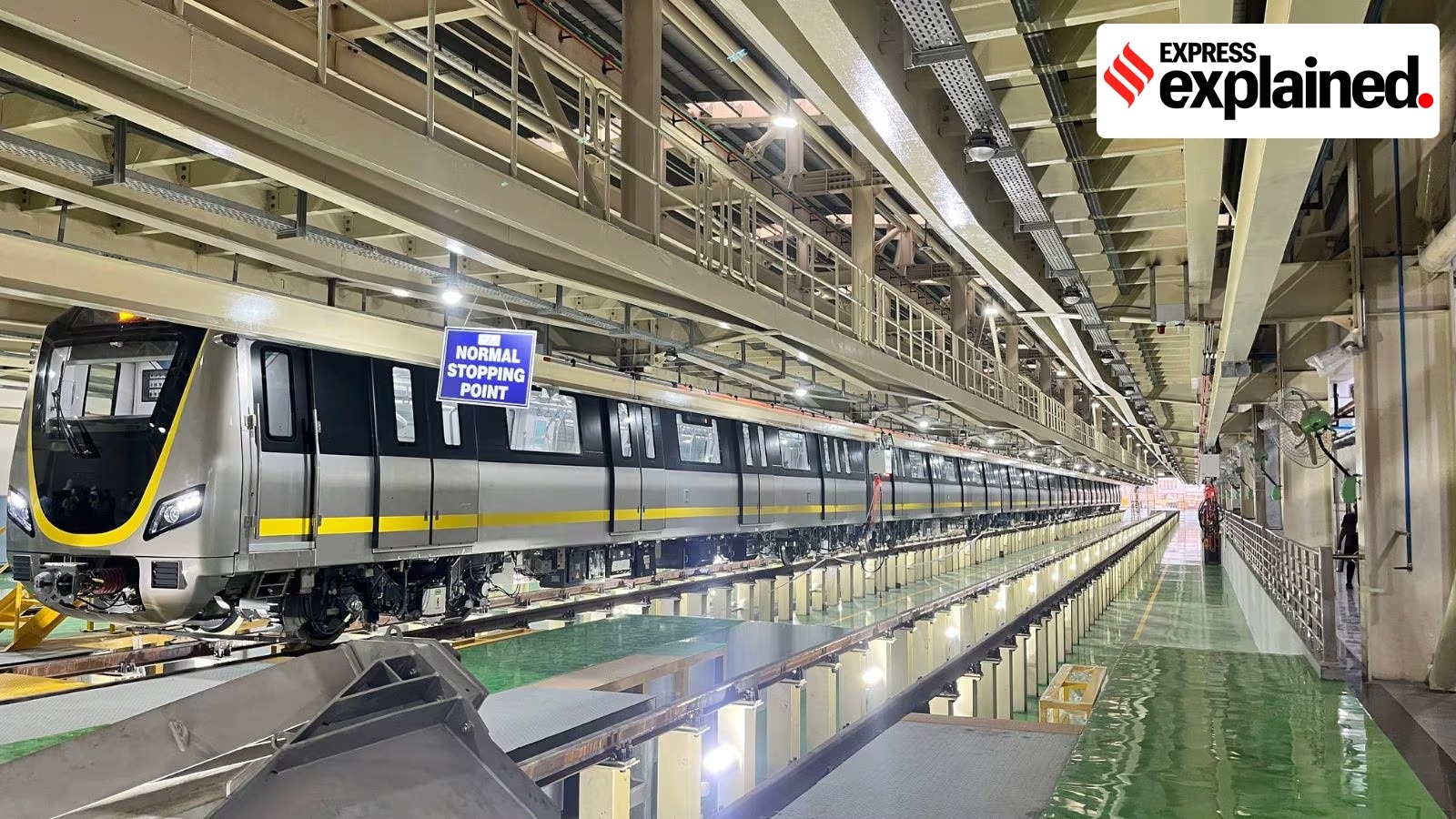
The delays and disruptions inevitably led to cost overruns, with the Yellow Line's cost escalating to Rs 7,610 crore – about Rs 400 crore per km, representing a 32% increase from BMRCL's original estimate. Despite these challenges, progress was finally made in 2024. CRRC delivered its first six-coach prototype (driverless with CBTC) train set in February 2024. Through collaboration with the Ministry of External Affairs and the Union Finance Ministry, issues related to visas and customs clearance for CRRC engineers and imported components were resolved to speed up coach production at the Titagarh factory. On January 6, 2025, the first train set was rolled out and dispatched from Titagarh Rail Systems, followed by a second train set that arrived at Bengaluru’s Hebbagodi depot on February 9. Between April and May, six additional coaches reached Bengaluru, bringing the total to three train sets and prompting BMRCL to accelerate preparations for commercial operations. However, even at this late stage, the project faced further delays. BMRCL had not committed to an official launch date by mid-2025 due to delays in receiving the Independent Safety Assessment (ISA) report, which would allow BMRCL to request a Commissioner of Metro Railway Safety (CMRS) inspection. The ISA report was delayed due to technical glitches discovered during the review of key datasets, requiring software updates. Without this report, BMRCL could not proceed with the mandatory CMRS inspection. The ISA clearance was finally granted on July 19, after which CMRS inspection was requested.
The final hurdle was cleared on August 1, when the CMRS cleared the Yellow Line for revenue operations. However, the CMRS flagged several issues, including unauthorised welding work, incomplete structural tests, non-functional lifts, and incorrect signage at some stations. These issues highlight the importance of rigorous quality control and safety standards in infrastructure projects. Despite these concerns, the CMRS clearance paved the way for the inauguration of the Yellow Line. On August 2, Union Minister for Home and Urban Affairs Manohar Lal Khattar announced that Prime Minister Modi would inaugurate the Yellow Line connecting RV Road to Bommasandra and lay the foundation stone for the 44.65-km Phase-3 expansion of Bengaluru Metro on August 10. Currently, BMRCL plans to operate the Yellow Line from Monday (August 11) with three trains running at a frequency of 25 minutes from RV Road to Bommasandra. The Yellow Line's journey from conception to completion is a testament to the resilience and determination of the project teams and stakeholders involved. Despite facing numerous obstacles and setbacks, they persevered and ultimately delivered a vital piece of infrastructure that will benefit the city of Bengaluru for years to come. The project also serves as a valuable case study for future infrastructure development, highlighting the importance of proactive planning, effective risk management, and strong coordination among various stakeholders. By learning from the challenges and successes of the Yellow Line project, future projects can be better equipped to navigate the complexities of large-scale infrastructure development and deliver timely and cost-effective solutions.
Source: Bengaluru metro’s Yellow Line to be inaugurated on Sunday: Why the project was delayed for years