
 |
|
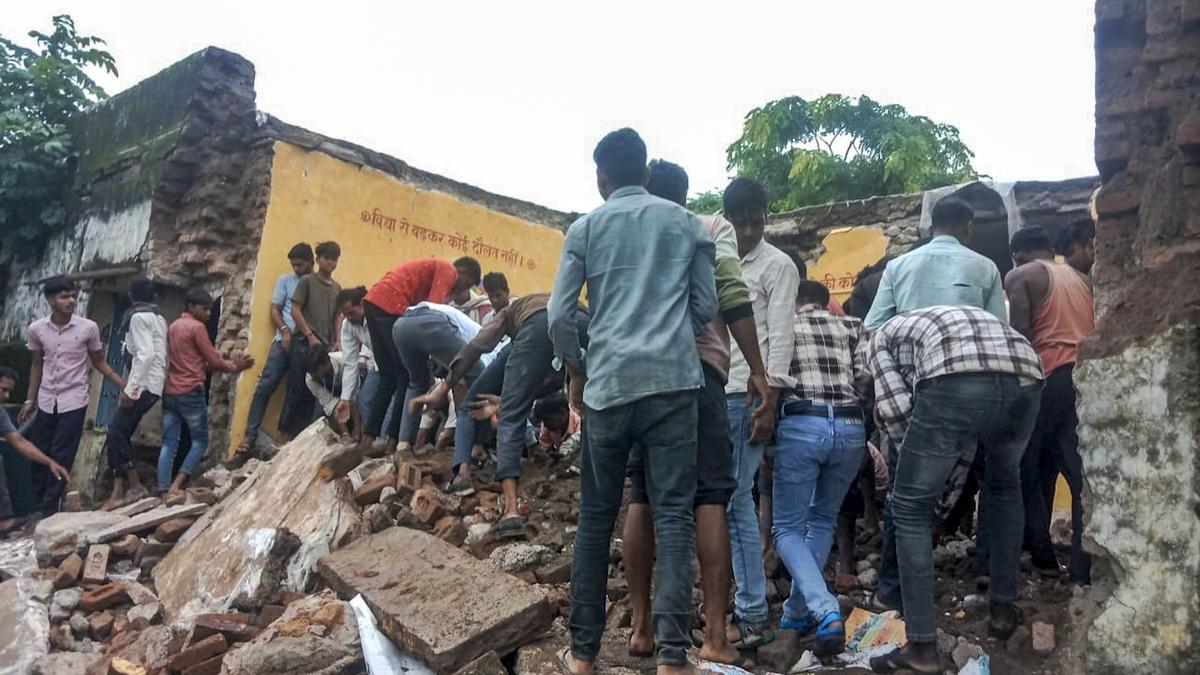
The collapse of the Piplod Government School building in Rajasthan's Jhalawar district, resulting in the tragic death of seven students and injuries to 28 others, is a devastating event that underscores critical failures in infrastructure maintenance and oversight. The incident, which occurred on July 25, 2025, highlights the urgent need for stringent safety measures in educational institutions and a responsive approach to addressing concerns raised by local communities regarding building conditions. The collapse of the section housing Classes 6 and 7, burying approximately 35 children under debris, evokes images of chaos and despair, emphasizing the fragility of human life and the profound impact of institutional negligence. The immediate aftermath of the collapse witnessed frantic efforts by parents, teachers, and locals to rescue the trapped children, a testament to the community's resilience and solidarity in the face of tragedy. However, these acts of heroism cannot overshadow the underlying systemic issues that contributed to this preventable disaster. The accusation leveled by local residents, that the administration was informed about the dilapidated state of the school building but failed to take any action, points to a breakdown in accountability and a disregard for the safety and well-being of the students. This claim, if substantiated, represents a grave breach of trust and a dereliction of duty on the part of the authorities responsible for maintaining school infrastructure. The Jhalawar collector's response, stating that the district administration had recently instructed the education department to provide information about dilapidated school buildings but this particular school was not on the list, raises further questions about the effectiveness of the reporting and monitoring mechanisms in place. It suggests either a failure to accurately assess the condition of the school building or a lack of communication and coordination between different departments. Regardless of the specific reason, the fact remains that a potentially dangerous situation was not identified and addressed in a timely manner, ultimately leading to tragic consequences. The incident serves as a stark reminder of the importance of proactive risk management and the need for regular inspections and maintenance of school buildings. It also highlights the crucial role of community involvement in identifying and reporting potential hazards. Local residents, who are often the first to notice signs of deterioration or structural weakness, should be empowered to voice their concerns and have them addressed promptly and effectively. The investigation promised by the Jhalawar collector must be thorough and impartial, holding accountable all those responsible for the negligence that contributed to the collapse. The investigation should not only focus on the specific circumstances surrounding this particular incident but also examine the broader systemic issues that allowed it to occur. This includes evaluating the adequacy of funding for school maintenance, the effectiveness of building inspection procedures, and the responsiveness of the administration to community concerns. Furthermore, the investigation should make recommendations for preventing similar tragedies from happening in the future. These recommendations should include measures to strengthen building codes, improve inspection and maintenance practices, and enhance communication and coordination between different departments. The collapse of the Piplod Government School building is a wake-up call for the education sector and the government as a whole. It underscores the urgent need for a renewed focus on safety and infrastructure maintenance, and a commitment to ensuring that all schools are safe and conducive learning environments for children. The lives of the seven students who perished in this tragedy must not be in vain. Their memory should serve as a constant reminder of the importance of prioritizing safety and taking proactive measures to prevent similar disasters from occurring in the future.
Beyond the immediate tragedy and the investigation that follows, the Piplod school collapse necessitates a deeper examination of the socioeconomic factors that often contribute to inadequate school infrastructure in many parts of India. Government schools, particularly those in rural areas, frequently suffer from neglect due to insufficient funding, bureaucratic inefficiencies, and a lack of political will to prioritize education. This neglect manifests in various forms, including dilapidated buildings, inadequate sanitation facilities, a shortage of teaching staff, and a lack of essential resources such as textbooks and computers. The combination of these factors creates a challenging learning environment for students and undermines their educational opportunities. The Piplod school, apparently overlooked despite local concerns, likely reflects a broader pattern of neglect afflicting numerous government schools across the country. Addressing this issue requires a multi-pronged approach that involves increasing funding for education, streamlining bureaucratic processes, and empowering local communities to participate in the management and oversight of schools. Greater transparency in the allocation and utilization of funds is crucial to ensure that resources reach the schools that need them most. Furthermore, the government should invest in training programs for teachers and school administrators to equip them with the skills and knowledge necessary to maintain school buildings and create safe learning environments. Community participation is essential to ensure that schools are responsive to the needs of their students and communities. Local residents should be involved in the decision-making process regarding school maintenance and development, and they should have the opportunity to voice their concerns and hold school officials accountable. The Piplod school collapse also highlights the importance of disaster preparedness in schools. Schools should have emergency plans in place to respond to various types of disasters, including earthquakes, floods, and building collapses. These plans should include procedures for evacuating students, providing first aid, and communicating with parents and emergency services. Regular drills should be conducted to ensure that students and staff are familiar with the emergency procedures. Furthermore, schools should be equipped with emergency supplies, such as first aid kits, flashlights, and water. The Piplod school collapse is a stark reminder of the vulnerability of children in unsafe school environments. It underscores the urgent need for a comprehensive and coordinated effort to improve the safety and quality of school infrastructure in India. This effort must involve the government, school administrators, teachers, parents, and local communities working together to create safe and conducive learning environments for all children.
The legal and ethical dimensions of the Piplod school building collapse are also significant. The incident raises questions about the liability of the government and school authorities for the deaths and injuries caused by the collapse. Under Indian law, the government has a duty of care to ensure the safety of its citizens, including students attending government schools. This duty of care requires the government to take reasonable steps to prevent foreseeable harm. In the case of the Piplod school collapse, it could be argued that the government breached its duty of care by failing to properly maintain the school building and by ignoring the concerns raised by local residents. If the government is found to have breached its duty of care, it could be held liable for damages, including compensation for the families of the deceased and injured students. School authorities also have a duty of care to ensure the safety of students under their supervision. This duty requires them to take reasonable steps to protect students from foreseeable harm, including ensuring that the school building is safe and well-maintained. School authorities could also be held liable for damages if they are found to have been negligent in their duty of care. In addition to legal liability, the Piplod school collapse raises ethical concerns about the responsibility of government and school authorities to protect the lives and well-being of children. Children are particularly vulnerable and rely on adults to provide them with safe and nurturing environments. When adults fail to meet this responsibility, it can have devastating consequences. The Piplod school collapse is a reminder of the importance of upholding ethical standards and prioritizing the safety and well-being of children in all aspects of society. The incident also raises questions about the role of the media in reporting on tragedies and holding those responsible accountable. The media has a responsibility to report accurately and fairly on events such as the Piplod school collapse, and to provide a platform for victims and their families to share their stories. The media also has a role to play in holding government and school authorities accountable for their actions and in advocating for policy changes to prevent similar tragedies from happening in the future. The Piplod school collapse is a complex and multifaceted issue that raises a number of legal, ethical, and socioeconomic questions. Addressing this issue requires a comprehensive and coordinated effort involving the government, school authorities, the media, and civil society organizations. Only through such an effort can we ensure that all children in India have access to safe and quality education.
To prevent future tragedies like the Piplod school collapse, a fundamental shift in mindset and resource allocation is necessary. This shift must prioritize the long-term safety and well-being of students over short-term cost savings or bureaucratic expediency. It requires a commitment to proactive maintenance, rigorous inspection, and transparent accountability at all levels of the education system. One crucial aspect of this shift is the implementation of a comprehensive building inspection program that covers all government schools. This program should be conducted by qualified engineers and architects who are trained to identify potential structural weaknesses and safety hazards. The inspections should be conducted regularly, at least annually, and the results should be made publicly available. Any identified deficiencies should be addressed promptly and effectively, with adequate funding allocated for necessary repairs and renovations. In addition to regular inspections, schools should also be required to conduct routine maintenance checks and repairs. This includes tasks such as fixing leaky roofs, repairing cracked walls, and ensuring that electrical systems are in good working order. School administrators and teachers should be trained to identify potential maintenance issues and report them promptly to the appropriate authorities. Another important aspect of preventing future tragedies is to empower local communities to participate in the oversight of schools. Local residents should be given the opportunity to inspect school buildings and report any concerns they may have. They should also be involved in the decision-making process regarding school maintenance and development. To facilitate community participation, the government should establish a system for receiving and responding to complaints from local residents. This system should be transparent and accountable, ensuring that all complaints are investigated thoroughly and that appropriate action is taken. Furthermore, the government should provide funding for community-based organizations to conduct independent assessments of school buildings and advocate for necessary improvements. In addition to these measures, it is also important to address the underlying socioeconomic factors that contribute to inadequate school infrastructure. This includes increasing funding for education, reducing poverty, and promoting social inclusion. The government should invest in programs that improve the living conditions of families in disadvantaged communities, ensuring that all children have access to safe and healthy environments. Finally, it is essential to promote a culture of safety and accountability in schools. This includes providing training to teachers and school administrators on safety procedures and emergency preparedness. It also includes establishing clear lines of accountability for ensuring the safety of students. School officials who fail to meet their responsibilities should be held accountable for their actions. The Piplod school collapse is a tragic reminder of the importance of prioritizing safety and accountability in schools. By implementing the measures outlined above, we can create safer and more conducive learning environments for all children in India and prevent similar tragedies from happening in the future.