
 |
|
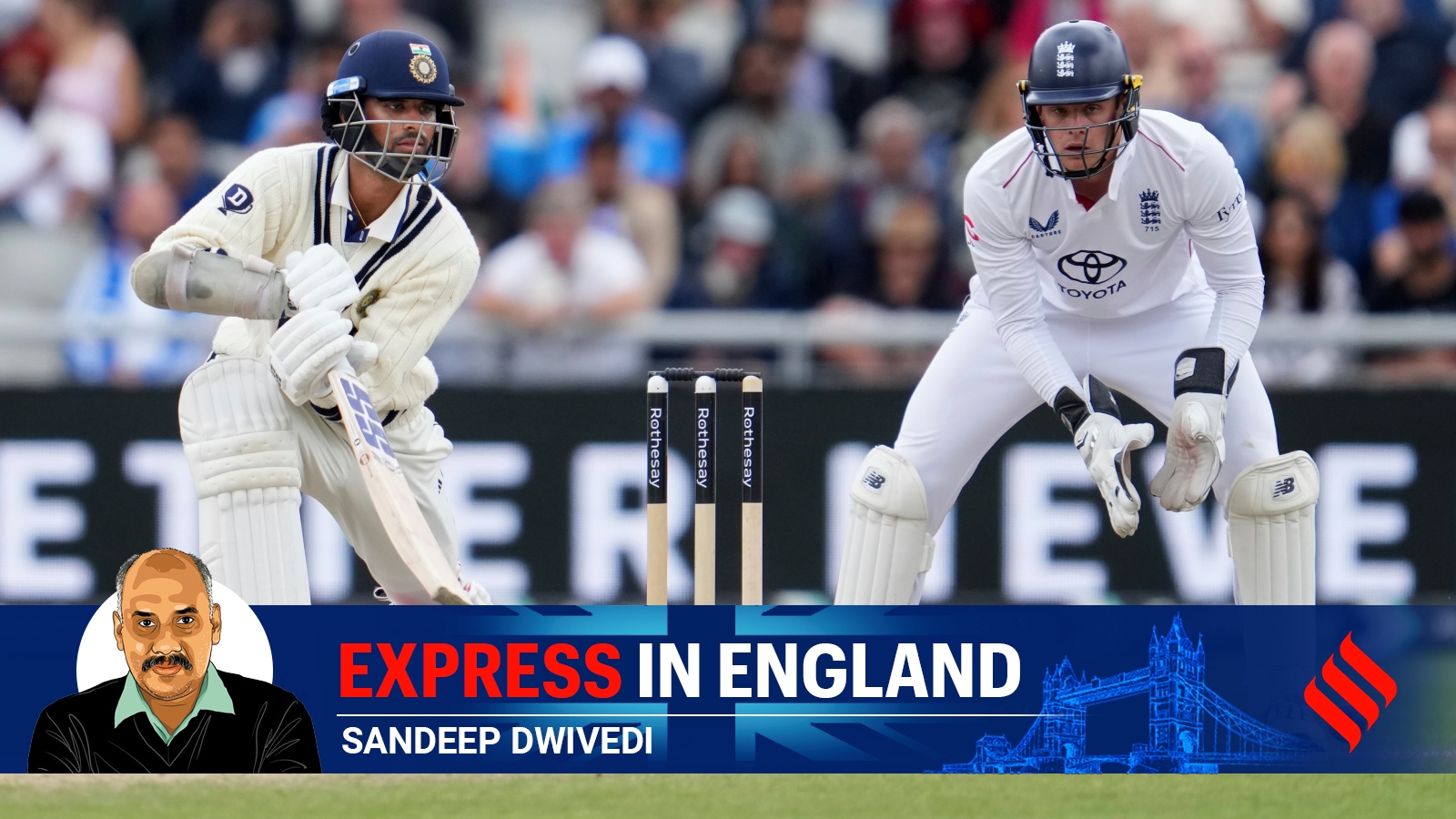
The Manchester Test match between England and India concluded in a draw, a result that felt like a moral victory for the Indian side. While a draw might seem like a neutral outcome, the circumstances surrounding the final stages of the match painted a picture of intense frustration and ultimately, a psychological win for India. England, eager to seal the series at Old Trafford, found themselves thwarted by the resilient batting of Ravindra Jadeja and Washington Sundar, who were both approaching their respective centuries. The situation escalated into a tense standoff, marked by on-field sledging and strategic decisions that raised eyebrows. The article vividly captures the drama that unfolded as England's desperation to secure a victory clashed with India's determination to salvage a draw and allow their batsmen to reach significant milestones. The events of the final session highlighted the contrasting approaches to the game, with England prioritizing a win at all costs, even resorting to unconventional tactics and verbal barbs, while India focused on individual achievements and demonstrating their resilience under pressure. The repercussions of this draw extend beyond the scoreboard, potentially impacting team morale and strategic decisions heading into the next Test match.
England's captain, Ben Stokes, a figure known for his aggressive and unwavering pursuit of victory, found himself in a peculiar predicament. The game was heading inexorably towards a draw, but two Indian batsmen, Ravindra Jadeja and Washington Sundar, were tantalizingly close to reaching their centuries. Stokes, reportedly not a fan of individual milestones in drawn games, was visibly keen to bring the match to an end. The article describes how Stokes approached Jadeja with a handshake, an offer that would have officially signaled the end of the game. However, Jadeja refused, pointing towards the Indian captain, Shubman Gill, in the dressing room balcony, seemingly enjoying the batsmen's resolute performance. This refusal marked a turning point, as it signaled India's intention to play out the remaining overs and allow their batsmen the opportunity to reach their centuries. In response, Stokes resorted to employing part-time bowlers, including Harry Brook, who delivered a series of loopy full tosses and rank long hops, reducing the final phase of the Test to what some might consider a farce. This tactical decision, while perhaps understandable given Stokes' aversion to risking his frontline bowlers, was interpreted by some as a sign of frustration and a departure from the spirit of the game. The incident highlights the complex dynamics at play in Test cricket, where individual ambitions often intertwine with team objectives and the pursuit of victory.
The tension in the final session reached fever pitch, culminating in a series of verbal exchanges between the English players and the Indian batsmen. Harry Brook, bowling his unorthodox deliveries, was reportedly heard sledging Washington Sundar, urging him to "get on with it." Jofra Archer, the express pace bowler, also chipped in, suggesting that if Sundar had wanted a hundred, he should have batted like it earlier. These remarks, coupled with comments from other English players, including Zak Crawley and Ben Duckett, reflected the growing frustration within the English camp. Crawley reportedly said, "If you shake our hands, it's done," while Duckett sarcastically inquired, "How long do you need, an hour?" Despite the barrage of verbal pressure, the Indian batsmen remained steadfast, taking their own sweet time and eventually achieving their desired milestones. Washington Sundar completed his hundred, prompting a final handshake between the two teams. The sledging incident, while perhaps commonplace in the heat of battle, underscores the intense pressure and emotional investment that players experience in Test cricket. It also raises questions about the boundaries of acceptable on-field behavior and the role of sportsmanship in the game.
The aftermath of the Manchester Test draw saw contrasting reactions from both camps. While the result was technically a draw, it was widely perceived as a moral victory for India. They had not only managed to salvage a draw from a potentially losing position but had also seemingly gotten under the skin of the English team. Stokes and his men, despite their relentless efforts, failed to break through the Indian resistance. It appeared that England had poured all their energy into winning this particular Test, leaving them potentially vulnerable for the upcoming match at the Oval. The article highlights the physical toll the match had taken on Stokes, who was reportedly battling a dodgy shoulder, strained hamstring, and lower back pain. Furthermore, concerns were raised about the workload of England's pace bowlers, with Brydon Carse and Chris Woakes having played all four Tests and potentially in need of a break. The medical advice for Jofra Archer, returning from a long injury layoff, might also be against him playing another Test with such a short turnaround. These factors suggest that England's all-out pursuit of victory at Old Trafford may have come at a cost, potentially weakening their position for the remainder of the series.
In contrast, the Indian camp expressed satisfaction with the draw, viewing it as a significant achievement. Captain Shubman Gill clarified his decision to play on, stating that it felt "no less than a win" for his team. He praised the brilliant batting of Jadeja and Sundar, emphasizing that a Test hundred is a significant accomplishment and that they deserved to reach their centuries. Gill's comments reflect the Indian team's focus on individual milestones and their determination to support their players in achieving them. Former England player Michael Vaughan also weighed in on the situation, expressing a degree of admiration for India's approach. He acknowledged that the final ten runs were "farcical" but emphasized that the Indian batsmen had earned the right to reach their centuries after fighting hard throughout the match. Vaughan's perspective suggests that while some may have questioned India's tactics, their resilience and determination ultimately deserved recognition. The draw at Old Trafford, therefore, stands as a testament to India's fighting spirit and their ability to withstand pressure, both on and off the field. The events of the match are sure to fuel further debate about the ethics of Test cricket, the balance between team goals and individual achievements, and the importance of sportsmanship in the heat of competition. Ultimately, the Manchester Test will be remembered as a captivating encounter, filled with drama, controversy, and a healthy dose of psychological warfare.
Source: Manchester Test drama | Harry Brook to Washington: ‘F*&#ing hell … Washi, get on with it’