
 |
|
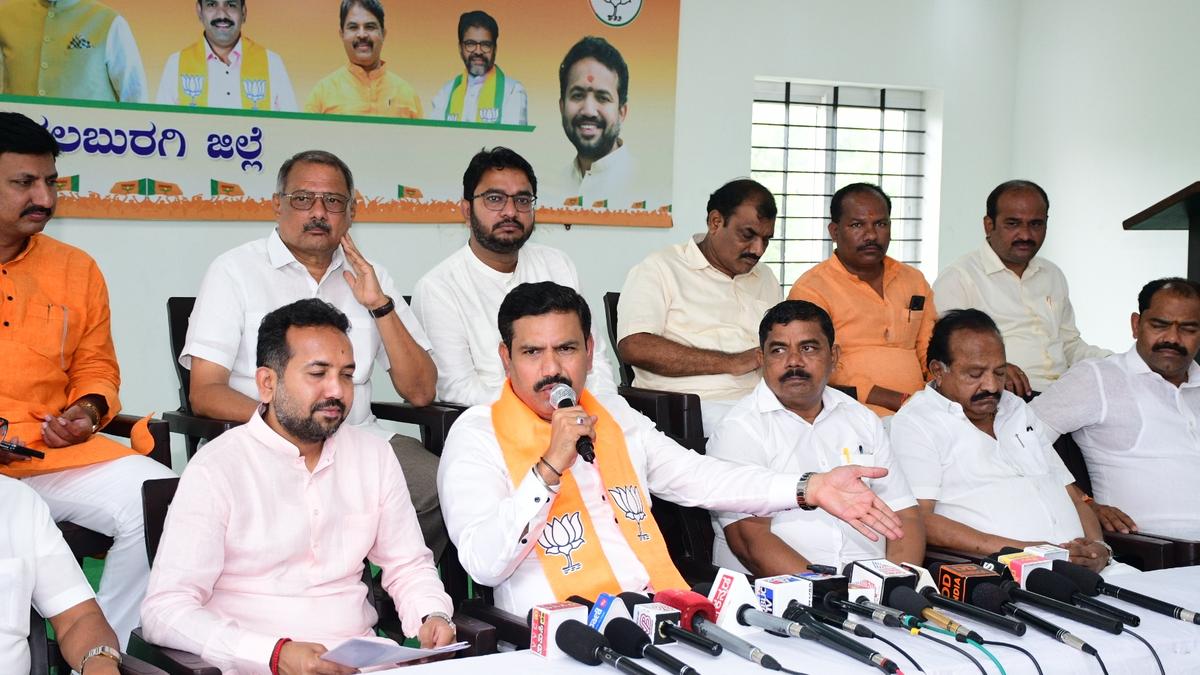
The recent accusations leveled by BJP State unit president B.Y. Vijayendra against Chief Minister Siddaramaiah and Deputy Chief Minister D.K. Shivakumar regarding the tragic stampede that occurred during RCB’s victory celebrations in Bengaluru on June 4th have ignited a political firestorm. Vijayendra's bold claim that the deaths of 11 people are directly attributable to the actions and decisions of these two prominent Congress leaders has significantly raised the stakes in Karnataka's already heated political landscape. He has not only pointed fingers but has also challenged Siddaramaiah to a public debate, signaling an aggressive approach aimed at capitalizing on the unfortunate event and potentially undermining the Congress-led government's credibility. The essence of Vijayendra’s argument rests on the assertion that Siddaramaiah and Shivakumar prioritized political gain over public safety. He alleges that despite warnings from police officials about the potential risks associated with holding the victory celebrations on the same day, pressure from the Chief Minister and Deputy Chief Minister led to the event proceeding as planned. This decision, according to Vijayendra, was driven by a power struggle and a desire to leverage RCB’s victory for political advantage, ultimately resulting in the tragic loss of life. The gravity of these accusations cannot be overstated. Implying that political ambition directly contributed to a fatal stampede is a serious charge that demands thorough investigation and public scrutiny. If Vijayendra's claims are substantiated, it could have far-reaching consequences for Siddaramaiah and Shivakumar, potentially jeopardizing their political careers and weakening the Congress party's position in Karnataka. Moreover, the incident underscores the critical importance of prioritizing public safety in large-scale events and the potential ramifications of political interference in such matters. Beyond the immediate accusations related to the stampede, Vijayendra also used the press conference to highlight the achievements of the BJP-led government at the Centre and Prime Minister Narendra Modi’s contributions over the past 11 years. He contrasted Modi’s leadership with the alleged corruption that plagued the previous UPA government, painting a stark picture of progress and integrity under the BJP versus malfeasance and stagnation under the Congress. This broader political narrative serves to reinforce the BJP’s overall strategy of positioning itself as the party of good governance and development, while simultaneously discrediting the Congress as a party mired in corruption and inefficiency. The call for an open debate further amplifies this strategy, providing Vijayendra with a platform to directly confront Siddaramaiah and articulate the BJP’s perspective on both the stampede incident and the overall performance of the Congress-led government in Karnataka. Such a debate would undoubtedly attract significant media attention and public interest, offering a crucial opportunity for both sides to present their case and potentially sway public opinion. In the context of Indian politics, where public perception often plays a decisive role in electoral outcomes, the ability to effectively communicate one's message and address criticism is paramount. Vijayendra's challenge to Siddaramaiah should therefore be viewed as a calculated move aimed at seizing the initiative and shaping the narrative surrounding the Bengaluru stampede and the performance of the Karnataka government. The setting up of an anti-communal task force by the Karnataka government, which Vijayendra claims is intended to suppress Hindu activists and BJP workers, adds another layer of complexity to the political situation. This assertion suggests a growing polarization between the ruling Congress party and the opposition BJP, with each side accusing the other of bias and targeting. The formation of such a task force, if indeed used to suppress political opposition, would represent a serious threat to democratic principles and freedom of expression. It highlights the importance of ensuring that law enforcement agencies remain impartial and uphold the rights of all citizens, regardless of their political affiliations. The accusations surrounding the anti-communal task force also underscore the broader issue of communal tensions in Karnataka and the potential for these tensions to be exploited for political gain. In a diverse society like India, maintaining social harmony and preventing communal violence requires careful and sensitive leadership. The politicization of communal issues can exacerbate existing divisions and undermine the fabric of society. Therefore, it is crucial for all political actors to refrain from using divisive rhetoric and to prioritize the promotion of peace and understanding. The Bengaluru stampede, along with the subsequent political fallout, serves as a stark reminder of the complex challenges facing Indian politics. From the need to prioritize public safety in large-scale events to the importance of good governance and the prevention of corruption, the incident highlights the critical issues that shape the political landscape. The accusations leveled by Vijayendra against Siddaramaiah and Shivakumar have not only triggered a political controversy but have also raised fundamental questions about accountability, responsibility, and the role of political leadership in ensuring the well-being of citizens.
The political battle brewing in Karnataka transcends the immediate tragedy of the Bengaluru stampede; it underscores deeper systemic issues prevalent in Indian politics. Vijayendra's deliberate framing of the incident as a direct consequence of Siddaramaiah and Shivakumar's actions serves as a potent example of how political opponents leverage unfortunate events to gain an upper hand. While accountability is paramount, the potential for politicization often overshadows genuine efforts towards systemic improvement and prevention of future tragedies. The challenge, therefore, lies in fostering a political environment where constructive dialogue and evidence-based policymaking take precedence over partisan bickering and blame games. The emphasis on Narendra Modi's achievements and the BJP-led government's anti-corruption stance is a tried-and-true tactic used to contrast their governance with that of the Congress. This narrative is not new; it's a consistent theme in the BJP's communication strategy, aiming to create a perception of superior competence and integrity. However, the effectiveness of this message hinges on public trust and scrutiny of actual policy outcomes. The public needs access to comprehensive data and independent analysis to assess whether the claims of economic progress and corruption-free governance are truly substantiated. Furthermore, the accusation of the anti-communal task force suppressing Hindu activists and BJP workers highlights the delicate balance between maintaining law and order and safeguarding civil liberties. While the State government has the responsibility to prevent communal tensions and enforce the law, it's crucial to ensure that such measures don't disproportionately target specific groups or stifle legitimate dissent. Independent oversight and transparent procedures are essential to prevent abuse of power and maintain public confidence in the fairness of law enforcement. The constant cycle of accusations and counter-accusations between political parties risks eroding public trust in institutions and fostering cynicism. It's imperative for political leaders to rise above partisan interests and engage in constructive dialogue to address the underlying issues facing society. This includes tackling corruption, promoting economic development, and ensuring social justice for all citizens. The focus should be on finding common ground and working collaboratively towards solutions, rather than perpetuating a climate of animosity and division. The media also plays a crucial role in shaping public perception and holding political leaders accountable. Responsible journalism requires thorough investigation, balanced reporting, and a commitment to providing accurate and unbiased information. This empowers citizens to make informed decisions and participate meaningfully in the democratic process. The Bengaluru stampede serves as a catalyst for critical reflection on the state of Indian politics. It highlights the need for greater accountability, transparency, and responsible leadership. By fostering a more informed and engaged citizenry, we can create a political environment that prioritizes the well-being of all citizens and promotes a more just and equitable society. The challenge lies in moving beyond the rhetoric and engaging in meaningful action to address the systemic issues that plague our political system.
Moving forward, it's essential to consider tangible steps that can be taken to prevent similar tragedies and foster a more responsible political climate. Regarding large-scale events, a comprehensive risk assessment framework should be implemented, involving input from law enforcement, emergency services, and community representatives. This framework should consider factors such as crowd size, venue capacity, potential hazards, and emergency evacuation plans. Strict adherence to safety protocols and clear communication with the public are crucial to minimizing risks. Furthermore, independent oversight bodies should be established to investigate incidents of political interference and ensure accountability for decisions that compromise public safety. These bodies should have the power to subpoena witnesses, access relevant documents, and make recommendations for disciplinary action or policy changes. Transparency is key to building public trust and preventing future abuses of power. To combat corruption, robust anti-corruption mechanisms should be implemented, including whistleblowing protection laws, asset declaration requirements for public officials, and independent investigative agencies. These mechanisms should be accompanied by strong enforcement measures and swift penalties for those found guilty of corruption. Promoting ethical conduct in public life requires a multi-pronged approach, including education, training, and a culture of accountability. It's equally important to address the underlying causes of communal tensions and promote social harmony. This requires fostering interfaith dialogue, promoting inclusive education, and combating hate speech and discrimination. Civil society organizations and community leaders can play a vital role in building bridges between different communities and promoting understanding and respect. The media can also contribute to a more harmonious society by reporting responsibly on communal issues and avoiding sensationalism or bias. A focus on solutions-oriented journalism and constructive dialogue can help to bridge divides and foster a sense of shared citizenship. Ultimately, building a more responsible political climate requires a collective effort from political leaders, civil society organizations, the media, and individual citizens. By demanding greater accountability, promoting transparency, and engaging in constructive dialogue, we can create a political system that is more responsive to the needs of the people and more committed to the well-being of society. The Bengaluru stampede serves as a wake-up call, reminding us of the importance of prioritizing public safety, promoting good governance, and fostering a more just and equitable society. It's time to move beyond the rhetoric and engage in meaningful action to build a better future for all.
Source: Vijayendra says Siddaramaiah, DKS are directly responsible for stampede that killed 11 people