
 |
|
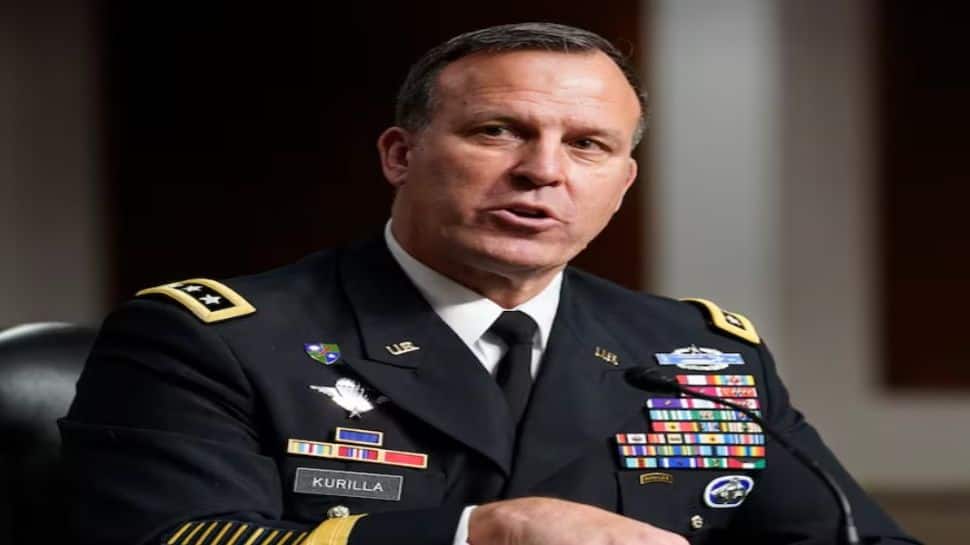
General Michael Kurilla's recent remarks praising Pakistan's role in counterterrorism efforts have ignited a firestorm of controversy, particularly in India. As the head of U.S. Central Command (CENTCOM), Kurilla's assessment carries significant weight, and his assertion that the United States should not choose between India and Pakistan has been interpreted by many in India as a betrayal, especially in the wake of a recent terror attack in Jammu and Kashmir. The timing of Kurilla's statement is crucial. Coming shortly after the Pahalgam attack, which India has attributed to Pakistan-sponsored terrorism, it has amplified existing tensions and suspicions. India has consistently maintained that Pakistan harbors and supports terrorist groups operating across its borders, and it has urged the international community to hold Pakistan accountable for its alleged involvement. Kurilla's remarks, however, appear to contradict this narrative, presenting Pakistan as a partner in the fight against terrorism rather than a sponsor of it. This divergence in perception highlights the complex geopolitical landscape of South Asia and the challenges involved in balancing relationships with two key players who have a long history of conflict and mistrust. The situation is further complicated by the United States' own strategic interests in the region. On one hand, the U.S. seeks to strengthen its ties with India, a rising economic and military power that is seen as a counterweight to China. On the other hand, the U.S. also recognizes the importance of maintaining a working relationship with Pakistan, particularly in the context of counterterrorism efforts in Afghanistan and the region. Pakistan's geographic proximity to Afghanistan and its historical ties to the Taliban make it a valuable partner in addressing the threat posed by terrorist groups operating in the region, such as ISIS-K. Kurilla's emphasis on Pakistan's role in combating ISIS-K underscores this strategic imperative. He highlighted Pakistan's aggressive operations against the group, aided by U.S. intelligence, and cited specific instances of successful counterterrorism cooperation, including the arrest and planned extradition of a key figure in the 2021 Kabul airport bombing. These revelations suggest that the U.S. military sees Pakistan as a crucial ally in its efforts to contain the spread of terrorism in the region, despite India's concerns about Pakistan's alleged support for other terrorist groups targeting India. The apparent contradiction between these two perspectives raises questions about the U.S.'s long-term strategy in South Asia. Is the U.S. willing to overlook Pakistan's alleged support for terrorism in exchange for its cooperation in combating ISIS-K? Or is it simply trying to strike a delicate balance between maintaining relationships with both India and Pakistan, even if it means risking the perception of appeasing terror sponsors? The answers to these questions are likely to shape the future of U.S.-India relations and U.S.-Pakistan relations in the years to come.
The Indian perspective on Kurilla's remarks is understandable. India has suffered greatly from terrorism, and it views Pakistan as the primary source of this threat. The Pahalgam attack is just one example of the many terrorist attacks that have been carried out in India by groups allegedly based in Pakistan. India's government and its people are understandably sensitive to any perceived leniency towards Pakistan, especially from a close ally like the United States. The Indian government has consistently urged the international community to take a firm stance against Pakistan's alleged support for terrorism, and it has expressed frustration with what it sees as a lack of accountability. Kurilla's remarks, which appear to downplay Pakistan's role in sponsoring terrorism, are therefore seen as a betrayal of India's trust and a disregard for its security concerns. The Indian media and political commentators have been particularly critical of Kurilla's statement, accusing him of being tone-deaf and of undermining India's efforts to combat terrorism. Some have even suggested that Kurilla's remarks are motivated by a desire to appease Pakistan in order to secure its cooperation on other issues, such as Afghanistan. The Indian government is likely to continue to press the U.S. to take a tougher stance on Pakistan and to hold it accountable for its alleged support for terrorism. However, it remains to be seen whether the U.S. will be willing to change its approach, given its own strategic interests in the region. The United States finds itself walking a tightrope. It needs India as a growing power to help balance China and navigate trade issues globally. Yet, it also finds Pakistan valuable in controlling and containing certain terror factions along the Afghani/Pakistani border. This requires diplomatic skill, but also might be fundamentally impossible to achieve.
The controversy surrounding Kurilla's remarks highlights the challenges involved in navigating the complex geopolitical landscape of South Asia. The U.S. must balance its relationships with India and Pakistan, while also pursuing its own strategic interests in the region. This requires a nuanced approach that takes into account the perspectives of all parties involved. It is important for the U.S. to understand India's concerns about Pakistan's alleged support for terrorism and to take these concerns seriously. However, it is also important for the U.S. to recognize Pakistan's role in combating terrorism and to maintain a working relationship with Pakistan in order to address this threat. The U.S. should strive to be transparent in its dealings with both India and Pakistan, and it should avoid taking actions that could be perceived as favoring one country over the other. The U.S. should also work to promote dialogue and cooperation between India and Pakistan, in order to address the underlying issues that fuel conflict and mistrust. Ultimately, the long-term stability of South Asia depends on finding a way to resolve the differences between India and Pakistan. The U.S. can play a constructive role in this process by encouraging dialogue, promoting cooperation, and taking a balanced approach to its relationships with both countries. The potential ramifications of this situation are significant. A deterioration in U.S.-India relations would weaken the U.S.'s strategic position in Asia and could embolden China. A breakdown in U.S.-Pakistan relations would undermine counterterrorism efforts in the region and could lead to increased instability in Afghanistan. Therefore, it is essential for the U.S. to carefully manage its relationships with both India and Pakistan in order to safeguard its own interests and to promote peace and stability in South Asia. Kurilla's comments serve as a potent reminder of the delicate balance required in international diplomacy and the constant need for reevaluation in a volatile geopolitical environment.