
 |
|
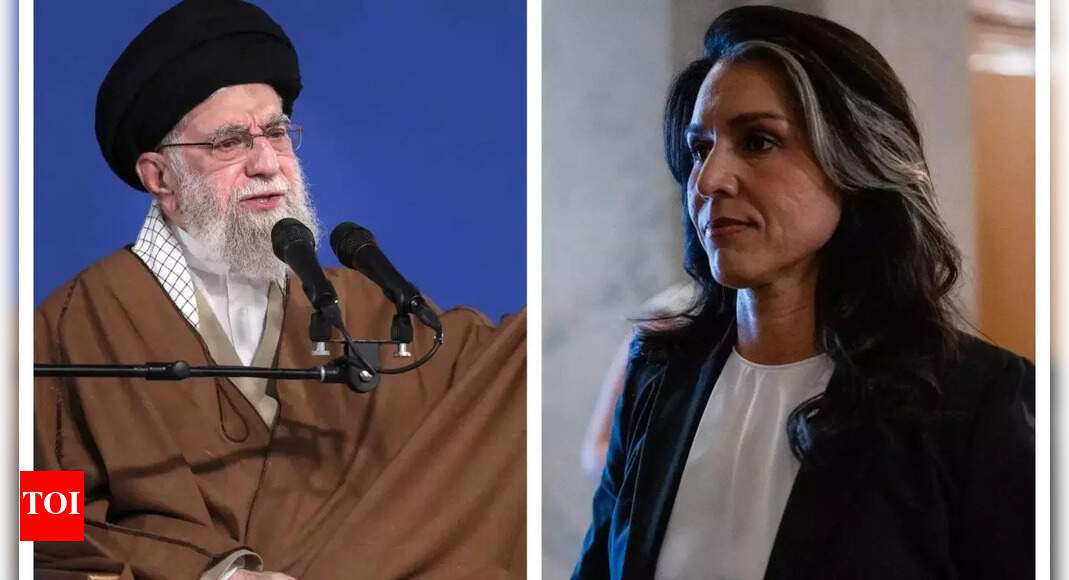
The controversy surrounding Tulsi Gabbard’s statements on Iran's nuclear program highlights the complexities of intelligence assessment, political communication, and media interpretation in the context of international security. Gabbard, a former Director of National Intelligence, found herself at the center of a political storm after her remarks on Iran's nuclear capabilities were perceived as contradictory and insufficient, particularly in the face of escalating tensions in the Middle East. The situation underscores the challenges faced by public figures in conveying nuanced intelligence information to the public while navigating the often-polarized political landscape. The core of the issue revolves around Gabbard's testimony before a House Permanent Select Committee on Intelligence hearing. In her assessment of the US Intelligence Community's (IC) findings, she stated that Iran was not currently building a nuclear weapon and that the Supreme Leader Khomeini had not authorized the program that was suspended in 2003. However, she also acknowledged that Iran was expanding its influence in the Middle East, developing advanced missile capabilities, and increasing its enriched uranium stockpile to unprecedented levels. This seemingly contradictory message created confusion and opened Gabbard up to criticism from various quarters, including President Donald Trump, who publicly rebuked her for not adequately alerting the administration to the potential threat posed by Iran's nuclear program. The media, as often happens, played a significant role in shaping the narrative surrounding Gabbard's statements. Gabbard herself accused the “dishonest media” of intentionally taking her testimony out of context and spreading fake news to manufacture division. While it is difficult to definitively determine the media's intent, it is clear that the selective reporting and framing of her remarks contributed to the perception that she had changed her position on Iran's nuclear capabilities. The media's tendency to focus on sensational or conflicting aspects of a story, rather than presenting a comprehensive and balanced account, can often lead to misunderstandings and misinterpretations of complex issues. The controversy also raises important questions about the role of intelligence assessments in shaping public policy. Intelligence assessments are inherently complex and often involve uncertainties and nuances. They are not always definitive or conclusive, and they may be subject to change as new information becomes available. It is therefore crucial for policymakers and the public to understand the limitations of intelligence assessments and to avoid drawing simplistic conclusions based on incomplete or selectively presented information. In the case of Iran's nuclear program, the intelligence community has consistently assessed that Iran is not currently building a nuclear weapon, but that it has the capability to do so if it chooses to. This assessment is based on a variety of factors, including Iran's technical capabilities, its political motivations, and its compliance with international safeguards. However, the assessment is also subject to uncertainty, as Iran's intentions can change rapidly and its nuclear program is shrouded in secrecy. The political context in which Gabbard's statements were made also played a significant role in shaping the controversy. At the time, tensions between the United States and Iran were high, due to a number of factors, including the US withdrawal from the Iran nuclear deal, the imposition of sanctions on Iran, and Iran's support for proxy groups in the Middle East. In this context, any statement that could be interpreted as downplaying the threat posed by Iran was likely to be met with criticism, particularly from those who favored a more hawkish approach to Iran. Gabbard's political background and affiliations also contributed to the controversy. As a former Democratic congresswoman, she had often taken positions that were at odds with the mainstream of her party, particularly on foreign policy issues. This made her a target for criticism from both the left and the right, and her statements on Iran were quickly seized upon by her political opponents. Furthermore, the timing of the controversy coincided with growing concerns about the potential for a wider conflict in the Middle East, particularly between Israel and Iran. These circumstances heightened the sensitivity surrounding any statements on Iran's nuclear capabilities, making it more likely that Gabbard's remarks would be scrutinized and interpreted in a negative light. The controversy surrounding Gabbard's statements serves as a reminder of the importance of clear and accurate communication in the context of national security. Public figures have a responsibility to convey complex information in a way that is both informative and accessible, without sacrificing nuance or accuracy. The media also has a responsibility to report on these issues in a fair and balanced manner, avoiding sensationalism and providing context for the information that they present. Finally, policymakers and the public must be critical consumers of information, understanding the limitations of intelligence assessments and avoiding the temptation to draw simplistic conclusions based on incomplete or selectively presented information. In conclusion, Tulsi Gabbard's statements on Iran's nuclear program triggered a multifaceted controversy involving intelligence assessments, media interpretation, and political context. The episode underscores the need for careful communication, responsible reporting, and critical thinking in matters of national security, particularly when dealing with complex and sensitive issues like nuclear proliferation. The incident also demonstrates how easily nuanced information can be distorted or misinterpreted in the highly charged atmosphere of political discourse, emphasizing the importance of seeking a complete understanding of events before drawing definitive conclusions. This situation also sheds light on the increasing challenges faced by public figures attempting to navigate complex political landscapes while maintaining a commitment to accuracy and transparency. Ultimately, the controversy serves as a valuable lesson in the complexities of international relations and the importance of informed public debate. The ability to critically analyze information and understand the different perspectives involved is essential for fostering a more nuanced understanding of global challenges. Further, it highlights the need for greater media literacy and a willingness to challenge prevailing narratives. The case of Tulsi Gabbard and her Iran statements serves as a case study in how easily information can be manipulated or misconstrued in the context of political discourse, underscoring the importance of careful analysis and critical evaluation. The long-term effects of this controversy on Gabbard's political career and on public perceptions of Iran's nuclear program remain to be seen, but it is clear that the episode has had a significant impact on the discourse surrounding these issues. The incident also emphasizes the need for ongoing dialogue and collaboration between intelligence agencies, policymakers, and the media in order to ensure that the public is properly informed about the threats facing the nation. Only through such collaboration can we hope to achieve a more nuanced and informed understanding of the complex challenges of the 21st century. The interplay between public opinion, media coverage, and political agendas ultimately shaped the controversy surrounding Gabbard’s statements, demonstrating the multifaceted nature of information dissemination and the importance of considering multiple perspectives. The incident underscores the need for constant vigilance and a commitment to accuracy and transparency in all aspects of public discourse. It also highlights the importance of promoting media literacy and encouraging critical thinking in order to foster a more informed and engaged citizenry. The Tulsi Gabbard controversy concerning Iran’s nuclear capabilities serves as a cautionary tale, highlighting the importance of careful communication, responsible reporting, and critical thinking in matters of national security, particularly when dealing with complex and sensitive issues like nuclear proliferation. The need for ongoing dialogue and collaboration between intelligence agencies, policymakers, and the media is essential in order to ensure that the public is properly informed about the threats facing the nation. Only through such collaboration can we hope to achieve a more nuanced and informed understanding of the complex challenges of the 21st century. The multifaceted nature of information dissemination and the importance of considering multiple perspectives are central to understanding the incident. Ultimately, the case of Tulsi Gabbard and her Iran statements exemplifies the complexities of navigating the modern political landscape and the importance of informed decision-making in the face of evolving global challenges.
Analyzing the situation further, it is crucial to consider the inherent biases that can influence both intelligence assessments and media reporting. Intelligence agencies are often subject to political pressure and may tailor their assessments to align with the policy preferences of the administration in power. Similarly, media outlets are often driven by commercial interests and may prioritize sensationalism over accuracy in order to attract a wider audience. These biases can distort the information that is presented to the public and make it difficult to form an objective assessment of the situation. In the case of Iran's nuclear program, there has been a long-standing debate over the true nature of Iran's intentions. Some analysts believe that Iran is determined to acquire nuclear weapons and is simply biding its time until it can do so without facing international repercussions. Others argue that Iran is primarily interested in developing a nuclear deterrent and has no intention of actually using nuclear weapons. Still others believe that Iran's nuclear program is primarily driven by domestic political considerations and that the country's leaders are simply trying to bolster their own legitimacy and prestige. The intelligence community has generally taken a cautious approach to this issue, acknowledging that Iran has the technical capability to build nuclear weapons but that there is no conclusive evidence that it has made a decision to do so. This assessment is based on a variety of factors, including Iran's compliance with international safeguards, its statements of intent, and its interactions with other countries. However, the assessment is also subject to uncertainty, as Iran's intentions can change rapidly and its nuclear program is shrouded in secrecy. The media has often portrayed Iran's nuclear program in a more alarming light, emphasizing the potential threat that it poses to the United States and its allies. This portrayal has been fueled by a number of factors, including the ongoing tensions between the United States and Iran, the history of conflict in the Middle East, and the fear of nuclear proliferation. However, it is important to recognize that there is a wide range of opinions on this issue and that the media's portrayal does not necessarily reflect the views of all experts. One of the key challenges in analyzing Iran's nuclear program is the lack of transparency surrounding the program. Iran has consistently denied that it is seeking to acquire nuclear weapons and has insisted that its nuclear program is solely for peaceful purposes. However, Iran has also been reluctant to fully cooperate with international inspectors and has resisted efforts to increase transparency and accountability. This lack of transparency makes it difficult to verify Iran's claims and to assess the true nature of its intentions. Another challenge is the difficulty of separating fact from fiction. There has been a great deal of misinformation and disinformation circulating about Iran's nuclear program, making it difficult to distinguish between reliable sources of information and unreliable ones. This is particularly true in the age of social media, where false or misleading information can spread rapidly and reach a wide audience. In order to overcome these challenges, it is essential to rely on credible sources of information and to critically evaluate the information that is presented. It is also important to be aware of the potential biases that can influence both intelligence assessments and media reporting. By taking these steps, it is possible to form a more objective and informed assessment of Iran's nuclear program and to make better decisions about how to address the challenges that it poses.
The long-term implications of the controversy surrounding Tulsi Gabbard's statements are significant. Her credibility as a commentator on foreign policy and national security has been damaged, and her future political prospects may be diminished. The incident also underscores the challenges faced by public figures in navigating the complex and often-polarized landscape of contemporary political discourse. In a world where information is readily available and opinions are easily amplified through social media, it is more important than ever to engage in critical thinking and to seek out diverse perspectives. The controversy surrounding Gabbard's statements highlights the need for greater media literacy and for a more informed and engaged citizenry. It also underscores the importance of promoting civil discourse and of encouraging respectful dialogue across ideological divides. Only by working together can we hope to address the complex challenges facing our nation and the world. Furthermore, this episode serves as a reminder of the importance of transparency and accountability in government. Intelligence agencies must be held accountable for the accuracy and objectivity of their assessments, and policymakers must be transparent about the rationale behind their decisions. The media also has a responsibility to report on these issues in a fair and balanced manner, avoiding sensationalism and providing context for the information that they present. By promoting transparency and accountability, we can help to ensure that the public is properly informed and that our government is acting in the best interests of the nation. The controversy surrounding Tulsi Gabbard's statements on Iran's nuclear program is a complex and multifaceted issue with significant implications for both domestic and foreign policy. It underscores the challenges faced by public figures in navigating the complex and often-polarized landscape of contemporary political discourse and highlights the need for greater media literacy and for a more informed and engaged citizenry. It also serves as a reminder of the importance of transparency and accountability in government and of the need to promote civil discourse and to encourage respectful dialogue across ideological divides. The events surrounding Gabbard's remarks serve as a microcosm of the broader challenges facing democracies in the 21st century: the need to balance security concerns with civil liberties, the importance of fostering a well-informed public, and the imperative of promoting respectful dialogue in an era of increasing polarization. Navigating these challenges requires a commitment to critical thinking, a willingness to engage with diverse perspectives, and a steadfast belief in the power of democratic institutions. It demands continuous efforts to promote media literacy, to encourage responsible journalism, and to foster a culture of transparency and accountability. In conclusion, the controversy surrounding Tulsi Gabbard's statements on Iran's nuclear program represents a complex intersection of intelligence assessments, media interpretation, and political context. It has broad implications for the accuracy of public discourse and requires that leaders, media outlets, and individual citizens strive for a more nuanced understanding of global challenges, fostering an environment of greater informed debate. The long-term impact of this controversy on public opinion regarding Iran's nuclear intentions is yet to be completely determined, however it is clear that it stands as a significant case study in the complexities of the modern political landscape, showcasing the importance of transparent communication, informed decision-making, and a commitment to fostering critical thought.
Source: 'Khamenei has not authorized...': What Tulsi Gabbard said in March about Iran's nuclear program