
 |
|
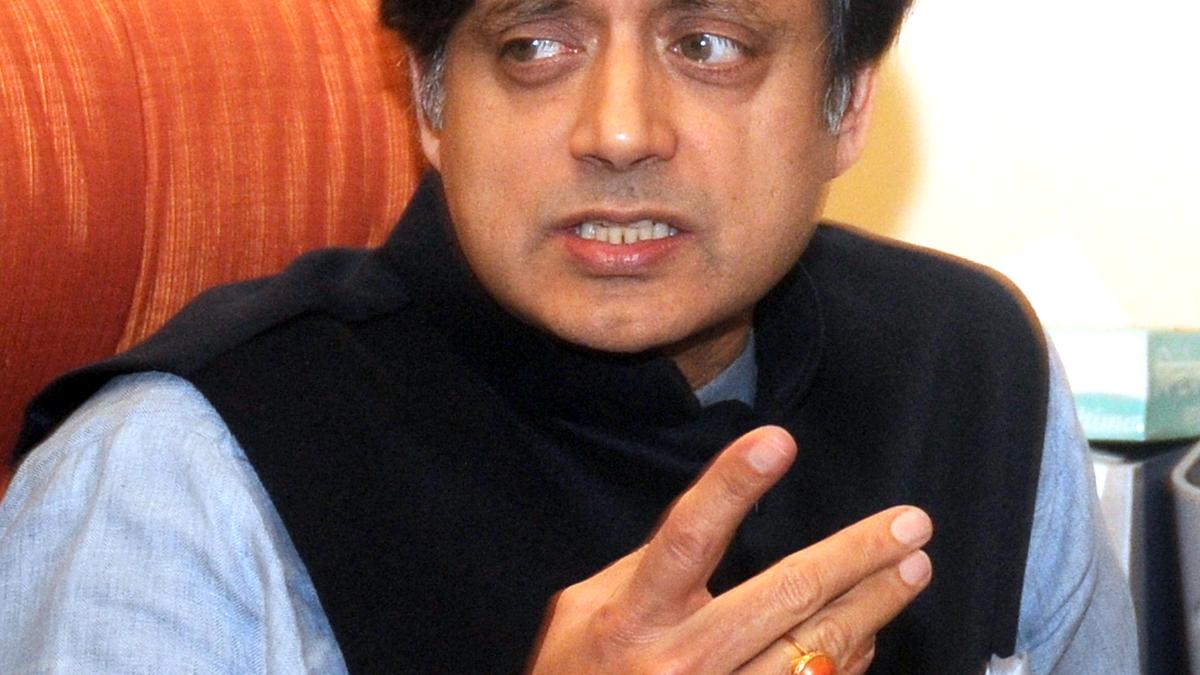
Shashi Tharoor, a prominent member of the Indian National Congress, has articulated a clear stance on the possibility of engaging in dialogue with Pakistan, emphasizing that such engagement is contingent upon Islamabad taking demonstrable and significant action against the infrastructure of terrorism operating within its borders. Tharoor's remarks, delivered on June 3, 2025, underscore the long-standing Indian concern regarding Pakistan's alleged support for terrorist groups and activities. He asserted that the primary impediment to meaningful talks between the two nations is not linguistic but rather the absence of a shared commitment to decency and peace. Tharoor's position reflects a broader consensus within India that Pakistan's continued harboring of terrorists and failure to dismantle terrorist infrastructure constitute a fundamental obstacle to any constructive dialogue. The demand for concrete action serves as a precondition for any future engagement, signaling India's determination to address the issue of cross-border terrorism directly. Tharoor's statement also highlights the importance of verifiable actions over mere verbal assurances. India seeks tangible evidence of Pakistan's commitment to combating terrorism, such as the dismantling of training camps, the arrest and prosecution of known terrorists, and the cessation of support for extremist groups. This emphasis on demonstrable action reflects a deep-seated skepticism regarding Pakistan's willingness to genuinely address the issue of terrorism. The history of bilateral relations between India and Pakistan is fraught with instances where promises of cooperation were not followed by concrete action. Therefore, India's insistence on verifiable measures is seen as a necessary safeguard against further disappointment and betrayal. The infrastructure of terrorism, as described by Tharoor, encompasses a wide range of elements, including training camps, safe havens, funding networks, and propaganda outlets. These elements collectively contribute to the perpetuation of terrorism and pose a direct threat to India's security. Dismantling this infrastructure requires a comprehensive and sustained effort on the part of the Pakistani government, involving not only law enforcement agencies but also intelligence services, the judiciary, and civil society organizations. It also necessitates addressing the root causes of radicalization and extremism, such as poverty, inequality, and lack of opportunity. Tharoor's comments were made in the context of his leadership of an all-party parliamentary delegation to Brazil, where he successfully conveyed India's message against terrorism to Latin American countries. This outreach underscores India's proactive efforts to build international support for its position on terrorism and to counter Pakistan's narrative. By engaging with countries that may have previously held differing views, India aims to foster a more nuanced understanding of the challenges it faces and to garner broader international condemnation of terrorism. The delegation's success in conveying India's message reflects the growing international recognition of the threat posed by terrorism and the need for concerted action to combat it. It also highlights India's diplomatic efforts to build bridges with other nations and to promote a shared understanding of global security challenges. Furthermore, Tharoor alluded to earlier instances of diplomatic success, specifically mentioning Colombia's withdrawal of a statement offering condolences to Pakistan following India's military strikes in response to the Pahalgam attack. This incident demonstrates the effectiveness of India's diplomatic efforts in countering Pakistan's narrative and in highlighting its alleged support for cross-border terrorism. By providing evidence of Pakistan's involvement in terrorist activities, India was able to persuade Colombia to reconsider its position and to express solidarity with India's struggle against terrorism. This diplomatic victory underscores the importance of proactive engagement and the need to present a compelling narrative based on verifiable facts. The delegation's itinerary also included visits to Guyana, Panama, and Colombia, where they successfully conveyed India's message against terrorism. These engagements highlight India's commitment to building strong relationships with countries across the globe and to fostering a shared understanding of global security challenges. By engaging with these nations, India aims to create a broader coalition against terrorism and to promote a more unified approach to combating this global threat. The inclusion of countries from Latin America and the Caribbean underscores the universality of the threat posed by terrorism and the need for international cooperation to address it effectively.
The notion of a "bleeding to death by 1,000 cuts," attributed to Pakistan's alleged strategy, represents a deeply entrenched perception within India of Pakistan's long-term goal to destabilize and weaken the country through sustained, low-intensity conflict. This phrase encapsulates the Indian narrative of continuous cross-border terrorism, infiltration, and support for separatist movements aimed at undermining India's territorial integrity and internal stability. This perception significantly influences India's security policies and its approach to relations with Pakistan. The idea that Pakistan seeks to inflict a "thousand cuts" suggests a calculated and persistent effort to exploit vulnerabilities and sow discord within India. This strategy is perceived as encompassing a range of tactics, including supporting terrorist groups, funding separatist movements, spreading misinformation, and engaging in proxy warfare. The cumulative effect of these actions is believed to be a gradual erosion of India's strength and stability. This narrative is often invoked to justify India's assertive counter-terrorism measures and its reluctance to engage in unconditional dialogue with Pakistan. The perceived threat of a "thousand cuts" necessitates a proactive and vigilant approach to security, including strengthening border defenses, enhancing intelligence gathering, and conducting surgical strikes against terrorist targets. It also underscores the importance of maintaining a strong military deterrent to dissuade Pakistan from engaging in further acts of aggression. However, the "thousand cuts" narrative is not without its critics. Some argue that it oversimplifies the complex dynamics of the India-Pakistan relationship and that it can be used to justify excessive security measures and to stifle dissent. Critics also contend that focusing solely on the perceived threat from Pakistan can distract from addressing internal challenges, such as poverty, inequality, and communal tensions, which can also contribute to instability. Despite these criticisms, the "thousand cuts" narrative remains a powerful force in shaping Indian perceptions of Pakistan and in influencing its security policies. It reflects a deep-seated distrust and a sense of vulnerability stemming from decades of conflict and cross-border terrorism. Addressing this perception requires a comprehensive approach that includes not only strong security measures but also efforts to promote dialogue, build trust, and address the root causes of conflict. Tharoor's mention of the upcoming visit to Washington D.C. and his expectation of "challenging questions" underscores the complex and multifaceted nature of India's engagement with the United States on issues related to terrorism and regional security. The United States has historically played a significant role in mediating between India and Pakistan and in providing assistance to both countries in their fight against terrorism. However, the relationship between India and the United States on these issues has not always been straightforward. The United States has often faced criticism for its perceived double standards in dealing with terrorism and for its close relationship with Pakistan. India, on the other hand, has sought to strengthen its strategic partnership with the United States in order to counter the perceived threat from China and to enhance its security capabilities. The upcoming visit to Washington D.C. is likely to provide an opportunity for Indian officials to address these issues directly and to seek greater understanding and cooperation from the United States in combating terrorism and promoting regional stability. The "challenging questions" that Tharoor anticipates likely reflect the complexities and sensitivities surrounding the India-Pakistan relationship and the role of the United States in the region. These questions may relate to issues such as Pakistan's alleged support for terrorist groups, the situation in Kashmir, and the implications of India's growing military capabilities. Addressing these questions effectively will require a nuanced and strategic approach that takes into account the diverse perspectives and interests involved.
The BRICS Parliamentary Forum, mentioned in the article, is an important platform for India to engage with other emerging economies on a range of issues, including economic development, climate change, and global governance. However, as Tharoor points out, the forum's primary focus is not on terrorism. While BRICS nations may express solidarity with India's struggle against terrorism, it is unlikely that the forum will issue a specific statement on terrorism against Indian citizens. India's preoccupation, as stated by Tharoor, remains its bilateral relationship with Pakistan and Pakistan's complete failure to dismantle the infrastructure of terrorism in their country. This focus reflects the enduring challenges and complexities of the India-Pakistan relationship and the ongoing threat posed by cross-border terrorism. India's policy priorities are firmly rooted in addressing this immediate security concern. The delegation's success in communicating India's message against terrorism to various countries underscores the effectiveness of proactive diplomacy and the importance of building international support for India's position. By engaging with countries across the globe, India aims to foster a shared understanding of the challenges it faces and to promote a more unified approach to combating terrorism. This diplomatic outreach is essential for countering Pakistan's narrative and for ensuring that India's concerns are heard and addressed on the international stage. The success of the delegation's efforts reflects the growing international recognition of the threat posed by terrorism and the need for concerted action to combat it. It also highlights India's diplomatic skills and its ability to build relationships with countries that may have previously held differing views. In conclusion, Tharoor's statement provides a clear articulation of India's position on dialogue with Pakistan, emphasizing the need for concrete action against terrorism as a precondition for any meaningful engagement. His remarks also underscore India's proactive efforts to build international support for its position on terrorism and to counter Pakistan's narrative. The challenges and complexities of the India-Pakistan relationship continue to shape India's security policies and its approach to international relations. Addressing the threat of cross-border terrorism remains a top priority for India, and the country is committed to pursuing all available means to achieve this goal. The ongoing diplomatic efforts and the clear articulation of India's position demonstrate the country's determination to protect its security and to promote regional stability. The future of the India-Pakistan relationship hinges on Pakistan's willingness to take credible and verifiable action against terrorism. Until such action is taken, India is likely to remain skeptical of Pakistan's intentions and to prioritize its own security concerns. The path to dialogue and reconciliation will require a fundamental shift in Pakistan's policies and a genuine commitment to combating terrorism in all its forms. Only then can the two countries begin to build a relationship based on trust and mutual respect. The international community has a crucial role to play in encouraging Pakistan to take the necessary steps to dismantle the infrastructure of terrorism and to engage in constructive dialogue with India. By providing support and assistance to both countries, the international community can help to create an environment conducive to peace and stability in the region. The challenges are significant, but the potential benefits of a peaceful and stable India-Pakistan relationship are immense. A stable and prosperous South Asia is in the interest of the entire world, and all stakeholders must work together to achieve this goal.