
 |
|
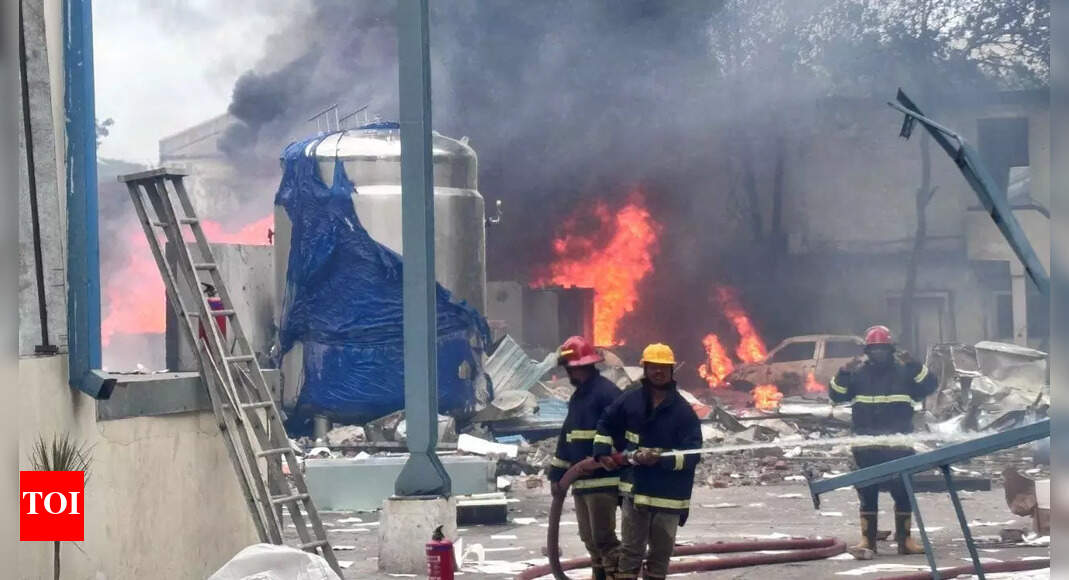
The devastating explosion at the Sigachi Industries facility in Telangana's Medak district has resulted in a tragic loss of life, with the death toll currently standing at 35. The incident, suspected to have been triggered by a dryer malfunction within the quality control unit of the multi-storey chemical plant, has left many workers injured and a significant number still unaccounted for. The sheer scale of the destruction, which reduced the building to rubble, has complicated rescue efforts and deepened the anguish of the families desperately seeking information about their loved ones. The disaster underscores the critical importance of stringent safety protocols and regular maintenance in industrial settings, particularly in facilities dealing with potentially hazardous materials. The immediate aftermath of the explosion saw a massive mobilization of resources, with nearly 200 personnel from fire services, the State Disaster Response Force (SDRF), and the National Disaster Response Force (NDRF) teams converging on the site to conduct rescue operations. The challenging conditions, compounded by the structural damage and the presence of hazardous debris, have made the search for survivors an arduous task. The government area hospital in Patancheru has been overwhelmed with the task of conducting post-mortem examinations and providing support to the bereaved families. The presence of forensic doctors, dispatched at the direction of the state health minister, and the involvement of the Forensic Science Laboratory in DNA analysis highlight the complexity of identifying the victims, many of whom suffered severe burns and injuries beyond recognition. The widespread impact of the tragedy is reflected in the fact that the workers at the Sigachi Industries plant hailed from multiple states across India, including Telangana, Andhra Pradesh, Jharkhand, Odisha, Bihar, Uttar Pradesh, and West Bengal. This geographic diversity underscores the plant's significance as a major employer in the region and amplifies the ripple effects of the disaster on communities far beyond the immediate vicinity. The incident has triggered a wave of grief and concern across the nation, with Prime Minister Narendra Modi expressing condolences and announcing an ex gratia payment of Rs 2 lakh each for the families of the deceased and Rs 50,000 for the injured. This financial assistance, while providing some measure of relief, cannot fully compensate for the profound loss and suffering experienced by the affected families. The Telangana state government, led by Chief Minister A Revanth Reddy, has also taken steps to address the crisis, with the Chief Minister himself planning to visit the hospital and meet with the victims' families. He has directed the health minister, chief secretary, and director general of police to oversee rescue and relief efforts, ensuring that all available resources are deployed to support the affected communities. Furthermore, a five-member committee has been formed to investigate the cause of the explosion and recommend preventive measures to prevent similar incidents from occurring in the future.
The lack of accurate information from the company management regarding the number of workers present in the building at the time of the explosion has significantly hampered rescue efforts. Director of Fire Services G V Narayana Rao has emphasized the challenges faced by rescue teams due to the uncertainty surrounding the number of individuals potentially trapped under the debris. This lack of clarity has added to the already immense pressure on rescue workers and has prolonged the agonizing wait for families seeking news about their missing loved ones. The death of General Manager A Loganan, who was in charge of attendance, has further complicated efforts to determine the precise number of workers present at the time of the incident. The fact that Loganan had just stepped out of his car when the explosion occurred underscores the sudden and unexpected nature of the tragedy. The blast also caused significant structural damage to the surrounding area, with an adjacent HR block and a rear compound wall partially damaged. Chunks of cement crushed some workers, while others suffered fatal burns as flames rapidly engulfed the area. The speed and intensity of the fire, fueled by the chemical nature of the materials stored within the plant, contributed to the severity of the injuries and the difficulty of rescue operations. The incident has raised serious questions about the adequacy of safety measures and emergency preparedness at the Sigachi Industries facility. While the initial findings point to a dryer malfunction as the likely cause of the explosion, a thorough investigation is needed to determine whether other factors, such as inadequate maintenance, faulty equipment, or human error, may have contributed to the disaster. The investigation must also examine the company's compliance with relevant safety regulations and standards, as well as the effectiveness of its emergency response plan. The findings of the investigation will be crucial in identifying the root causes of the explosion and in implementing corrective measures to prevent similar incidents from occurring in the future. The tragedy at the Sigachi Industries facility serves as a stark reminder of the inherent risks associated with industrial operations, particularly those involving hazardous materials. It underscores the importance of a proactive and comprehensive approach to safety management, which includes regular risk assessments, thorough training for workers, and the implementation of robust emergency response plans. The incident also highlights the need for greater oversight and regulation of industrial facilities to ensure that they are operating in compliance with the highest safety standards.
Sigachi Industries, a manufacturer of microcrystalline cellulose (MCC), has informed stock exchanges about an “accident in the vicinity” of its plant in Medak district. This somewhat understated description of the devastating explosion reflects the company's initial efforts to manage the potential fallout from the incident. Microcrystalline cellulose is a refined wood pulp and is used as a texture improver, an anti-caking agent, a fat substitute, an emulsifier, an extender, and a bulking agent in food production. The facility is valued at Rs 500 crore.The incident has undoubtedly had a significant impact on the company's operations, and it remains to be seen how long it will take for the plant to resume production. The economic consequences of the disaster are also significant, with potential job losses and disruptions to the supply chain. The long-term impact of the tragedy on the company's reputation and its relationship with stakeholders will also depend on how it responds to the crisis. The families of the victims deserve justice and accountability, and it is imperative that all responsible parties are held accountable for their actions. The investigation into the explosion must be thorough and transparent, and the findings must be made public. The government must also take steps to ensure that similar incidents are prevented from occurring in the future, including strengthening safety regulations and increasing oversight of industrial facilities. The tragedy at the Sigachi Industries facility is a stark reminder of the human cost of industrial accidents. It is a call to action for all stakeholders – government, industry, and the community – to work together to create a safer and more secure working environment for all. The lessons learned from this disaster must be used to prevent similar tragedies from occurring in the future. This includes strengthening safety regulations, increasing oversight of industrial facilities, and promoting a culture of safety within the industry. It is also important to provide support to the victims and their families, and to ensure that they receive the compensation and care that they deserve. Only by working together can we create a safer and more just society for all.
Source: Telangana factory tragedy: Toll rises to 35 at Sigachi; many workers still missing, families on edge