
 |
|
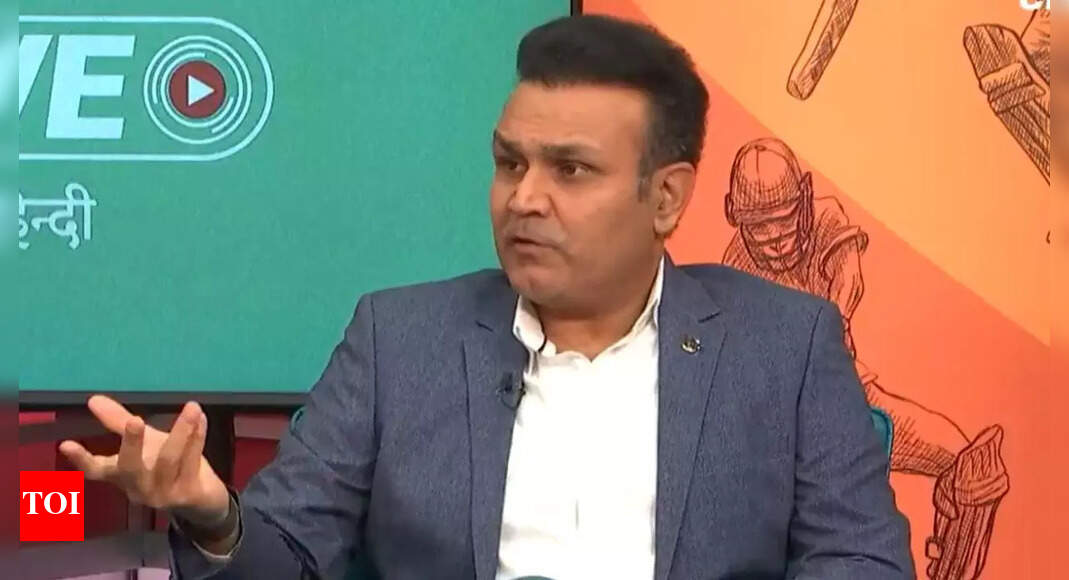
The world of cricket is often intertwined with superstition, luck, and the psychological games players and fans alike engage in. Virender Sehwag, the former Indian opener known for his aggressive batting style and equally sharp wit, has once again found himself at the center of attention, this time not for his exploits on the field, but for his playful prediction regarding the IPL 2025 final. The match, slated to be held at the Narendra Modi Stadium in Ahmedabad, will pit Royal Challengers Bangalore (RCB) against Punjab Kings (PBKS), two franchises that have been part of the Indian Premier League since its inception in 2008 but have yet to taste the sweet nectar of victory. Sehwag's involvement in this narrative isn't through batting or fielding, but through his humorous and self-aware application of a 'reverse jinx,' a concept deeply ingrained in the sports world. The reverse jinx, in essence, is the act of publicly supporting a team with the expectation that your support will ironically lead to their defeat, thereby benefiting the opposing team you secretly favor. It's a strategic deployment of reverse psychology, a playful manipulation of fate that adds another layer of intrigue to the already captivating world of cricket. In a conversation with Cricbuzz, Sehwag was directly asked to pick a winner between RCB and PBKS. His response was a masterful blend of humor and superstition. “I think RCB will win,” he stated with a smile, immediately setting the stage for his 'reverse jinx' explanation. He elaborated, “I’ve gone back to my old form because the team I support usually loses. Be it Gujarat Titans vs Mumbai Indians or Punjab Kings vs RCB — every time I pick a side, they lose.” This self-deprecating acknowledgment of his perceived 'bad luck' immediately endears him to the audience and lays the groundwork for the comedic twist. Sehwag then cheekily revealed his strategy, explaining that he's actively trying to apply the 'reverse jinx' logic to this particular final. “I supported MI in Qualifier 2 against PBKS, and they lost. So I’m saying RCB will win… let’s see what happens,” he laughed, suggesting that his public endorsement of RCB might actually tip the scales in PBKS' favor. This playful ambiguity is what makes his commentary so engaging. He's not seriously claiming to have the power to influence the outcome of the match, but he's certainly playing with the idea, adding a layer of entertainment to the pre-match analysis. When pressed for clarity by the host, Sehwag doubled down on his prediction, repeating “RCB” with a mischievous grin. This reinforces the comedic intent and further blurs the lines between genuine prediction and calculated 'reverse jinx.' The underlying context, of course, is the desperation of both RCB and PBKS to finally end their long-standing title droughts. Both teams are hungry for victory, and the pressure is immense. RCB, fueled by the legendary presence of Virat Kohli, are seeking redemption after suffering three previous final losses. The weight of expectation is palpable, as fans yearn to see Kohli lift the coveted IPL trophy. PBKS, on the other hand, are powered by the leadership of Shreyas Iyer, whose strategic brilliance and consistent form have been instrumental in their journey to the final. Iyer's captaincy has been a revelation this season, and he will be looking to guide his team to their first-ever IPL title. The dynamics at play extend beyond just the two captains. The entire squads of both teams have stellar players, each with a crucial role in their respective quest for glory. RCB boasts a batting lineup known for aggression and some exciting bowlers. PBKS have been known for their explosive starts and ability to bounce back from pressure situations. The Narendra Modi Stadium, with its massive capacity and electric atmosphere, will serve as the backdrop for this epic showdown. The crowd will be a sea of colors, with fans passionately cheering for their respective teams. The noise will be deafening, the tension will be high, and the stakes will be astronomical. The game will depend on moments of brilliance and errors under pressure. So, beyond Sehwag's jocular predictions, the outcome rests on the players' performance. All the strategic masterplans will be secondary if the bowlers aren't hitting their length and the batsmen are unable to capitalize on the loose deliveries. Fielding and catching are equally critical. Dropped catches or missed opportunities can be extremely costly in a high-stakes match. Every run, every wicket, every catch matters. Sehwag's commentary, while entertaining, shouldn't overshadow the sheer hard work and dedication of the players. They have spent countless hours honing their skills, pushing their limits, and making sacrifices to get to this point. Their families, friends, and coaches have also been pivotal in their journey. Regardless of who wins, both teams deserve immense credit for their journey to the IPL final. It's a testament to their talent, resilience, and unwavering commitment to the sport. As the anticipation continues to build, one thing is certain: the IPL 2025 final between RCB and PBKS promises to be a thrilling and unforgettable spectacle. Sehwag's 'reverse jinx' adds a playful dimension to the narrative, but ultimately, the outcome will be decided by the players on the field. The match will create new heroes and break a few hearts. The fans are waiting eagerly.
The psychological aspect of cricket, particularly in high-pressure situations like the IPL final, is often underestimated. Players are not just athletes; they are individuals grappling with emotions, expectations, and the weight of responsibility. The ability to manage these psychological factors can be as crucial as technical skill. In the context of Sehwag's 'reverse jinx,' one can argue that it subtly plays on the mental state of both teams. For RCB, the 'reverse jinx' might create a sense of unease, a nagging doubt that despite being favored, something could go wrong. This unease, if not properly managed, could translate into hesitation on the field, leading to crucial errors. Conversely, for PBKS, Sehwag's 'reverse jinx' might serve as a source of motivation. It could fuel their belief that they are being underestimated and that they have a point to prove. This heightened motivation could translate into greater intensity and determination, giving them an edge in crucial moments. The role of leadership in managing these psychological factors cannot be overstated. Virat Kohli, as the inspirational leader of RCB, will need to ensure that his team remains focused and unfazed by external distractions, including Sehwag's playful predictions. He will need to instill a sense of confidence and self-belief, reminding his players of their strengths and their collective goal. Shreyas Iyer, as the captain of PBKS, will need to harness the potential motivational effect of the 'reverse jinx,' using it to galvanize his team and instill a sense of unity. He will need to foster a positive and supportive environment, encouraging his players to embrace the challenge and perform to their full potential. Furthermore, the crowd's presence and energy can significantly impact the players' psychological state. A supportive crowd can boost morale and provide an extra surge of adrenaline, while a hostile crowd can create pressure and anxiety. Both RCB and PBKS will need to be prepared to handle the emotional intensity of the crowd and use it to their advantage. Coaches and support staff also play a crucial role in managing the players' psychological state. They provide guidance, encouragement, and strategies for coping with pressure and adversity. They work closely with the players to identify and address any mental blocks or anxieties that may be hindering their performance. The importance of mental preparation in cricket is increasingly recognized, with many teams now employing sports psychologists to help players develop mental skills such as focus, resilience, and confidence. These skills are essential for performing at the highest level, particularly in high-stakes matches like the IPL final. In conclusion, while Sehwag's 'reverse jinx' may appear to be a lighthearted jest, it subtly underscores the importance of the psychological aspect of cricket. The ability to manage emotions, expectations, and external pressures can be as crucial as technical skill in determining the outcome of a match. Both RCB and PBKS will need to be mentally prepared to handle the intense pressure of the IPL final and to capitalize on any psychological advantages that may arise. The team that best manages its mental game will likely emerge victorious.
Beyond the individual and team dynamics, the IPL itself has become a cultural phenomenon that extends far beyond the boundaries of sport. It's a celebration of Indian culture, a fusion of entertainment and athleticism that captivates audiences across the globe. The IPL's success can be attributed to several factors. Firstly, it has brought together the best cricketers from around the world, creating a highly competitive and entertaining league. The opportunity to witness legendary players and rising stars competing on the same stage is a major draw for fans. Secondly, the IPL has embraced innovation and technology, enhancing the viewing experience for fans. Live streaming, interactive scoreboards, and advanced analytics have made it easier for fans to follow the action and engage with the game. Thirdly, the IPL has successfully tapped into the passion and enthusiasm of Indian fans. Cricket is deeply ingrained in Indian culture, and the IPL has provided a platform for fans to express their love for the game. The vibrant colors, pulsating music, and electrifying atmosphere create a unique and unforgettable experience for spectators. Moreover, the IPL has had a significant economic impact, generating billions of dollars in revenue and creating thousands of jobs. It has also helped to promote tourism and showcase India's vibrant culture to the world. The IPL's success has also inspired the creation of other franchise-based leagues in various sports, both in India and abroad. This has led to increased competition and innovation in the sports industry, benefiting athletes and fans alike. However, the IPL has also faced its share of challenges, including concerns about corruption, match-fixing, and player welfare. These issues have highlighted the need for greater transparency and accountability in the league's governance. Despite these challenges, the IPL remains one of the most popular and successful sports leagues in the world. Its blend of entertainment, athleticism, and cultural celebration has made it a global phenomenon. As the IPL continues to evolve, it will undoubtedly face new challenges and opportunities. However, its enduring appeal and its ability to connect with fans across the globe suggest that it will remain a dominant force in the world of sports for many years to come. Sehwag's humorous take on the final adds to the league's broader narrative, proving that even in a high-stakes environment, a bit of levity can further enhance the experience and appeal of the IPL to its vast audience.