
 |
|
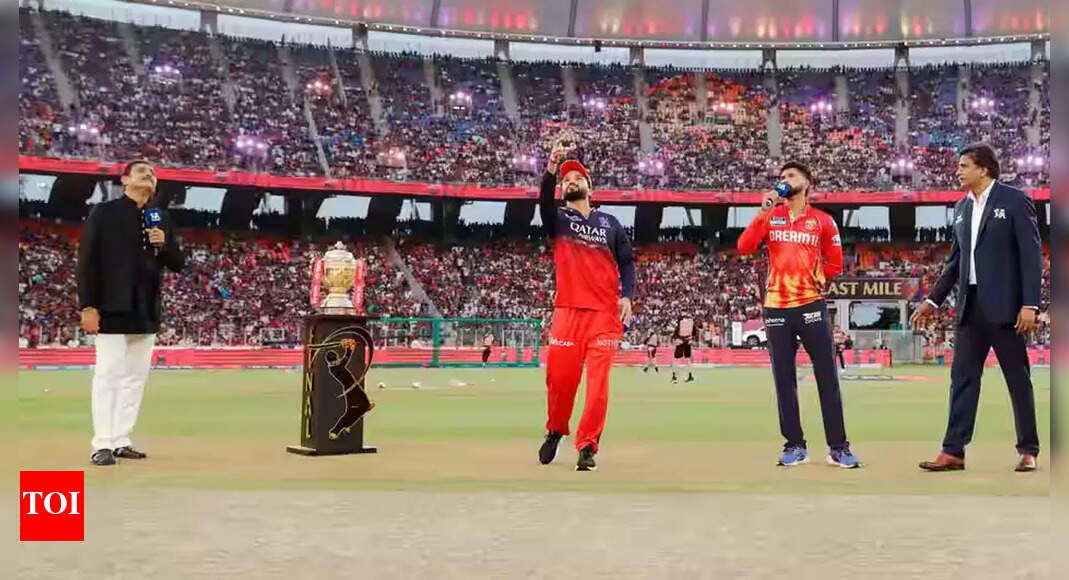
The high-stakes atmosphere surrounding the IPL 2025 final between Royal Challengers Bengaluru (RCB) and Punjab Kings (PBKS) proved to be a pressure cooker, affecting not only the players but also the broadcasting team and commentators. A prime example of this palpable tension was the unexpected blunder made by former Indian cricketer and veteran commentator, Ravi Shastri, during the crucial toss segment. Shastri, known for his articulate commentary and insightful analysis, found himself at the center of attention for an entirely different reason this time around. As the presenter for the toss at the Narendra Modi Stadium in Ahmedabad, he committed a significant error that quickly ignited social media and became a trending topic. The error occurred immediately after Punjab Kings skipper Shreyas Iyer won the toss and opted to bowl first. Shastri proceeded to conduct the post-toss interviews with both captains, Iyer and RCB's Rajat Patidar. However, after the captains concluded their interviews and departed from the stage, Shastri, in a moment of apparent confusion, announced to the viewers that Iyer had chosen to bat first. To further emphasize his mistaken announcement, he even mimicked a classic front-foot defensive stroke, a gesture that only amplified the comical nature of the blunder. The goof-up was immediately noticed by viewers and fans who were tuned into the live broadcast. Within minutes, social media platforms were flooded with comments, memes, and jokes poking fun at Shastri's mix-up. The incident quickly transformed into a viral sensation, with users sharing their reactions and creating humorous content inspired by the commentator's mistake. The speed and scale of the reaction underscored the power of social media in amplifying even the smallest of errors, turning them into widespread entertainment. While the blunder was undoubtedly embarrassing for Shastri, it also served as a reminder that even experienced professionals are susceptible to mistakes, especially under pressure. The intense scrutiny and high expectations that come with live broadcasts can create a challenging environment, where errors, however minor, are quickly amplified and scrutinized by a vast audience. Despite the blunder, the actual toss decision remained unchanged, with Shreyas Iyer opting to bowl first, a decision that reflected his assessment of the pitch conditions and the overall strategy of his team. Both teams, RCB and PBKS, entered the final with the hopes of securing their maiden IPL title, adding to the already heightened stakes of the match. The team managements opted for stability and consistency, choosing to field unchanged lineups for the crucial encounter. This decision reflected their confidence in the players who had contributed to their success throughout the season and their belief that maintaining continuity would be an advantage in the final. RCB, however, continued to be without the services of Tim David, who had been sidelined due to an injury in the preceding two matches. David's absence was a notable one, as he had been a valuable contributor to the team's batting lineup and his absence required other players to step up and fill the void. During the toss interview, Shreyas Iyer conveyed his confidence in his team's mindset and their ability to perform well under pressure. He emphasized the importance of staying calm and focused, which he believed would lead to the best results. Iyer expressed his excitement about the electrifying atmosphere at the Narendra Modi Stadium and his desire to cherish the occasion, recognizing the significance of playing in an IPL final. When asked about the team's pre-match discussions, Iyer reiterated the message of staying calm and embracing the moment. He shared his vision of lifting the trophy and emphasized his commitment to playing the game with a positive attitude and a strategic approach. He said he was feeling absolutely fine and ready to play like a final. RCB skipper Rajat Patidar, echoing Iyer's sentiments, acknowledged that he would have also preferred to bowl first had he won the toss. He described the pitch as hard and expressed his team's intention to post a competitive total. Patidar emphasized the importance of treating the final as just another game and focusing on executing their plans effectively. He also highlighted the team's positive performance throughout the season and expressed their determination to give their best in the final. Patidar confirmed that RCB would be fielding the same team as their previous match, indicating their confidence in the selected players and their belief in the team's overall balance. He described the pitch as a good one, with a flat surface and a mix of red and black soil, suggesting that it would be conducive to batting. The match was scheduled to be played on pitch number six, which was characterized by a surface composition of 25% black soil and 75% red soil. According to historical data, teams batting first on this pitch had won six out of the eight matches played on it, suggesting a potential advantage for the team batting first. The boundary dimensions were specified as 64 meters on either side square and 72 meters down the ground, providing further insights into the playing conditions and the potential for scoring opportunities. The Shastri incident, whilst a small event in the grand scheme of the IPL final, highlights the intense pressure individuals face in such a high profile environment and how quickly social media can spread and amplify even the smallest mistake. The focus quickly shifted back to the game with both captains confident in their team's chances for victory. The IPL final, the pinnacle of the season, is always marked by intense scrutiny, both on and off the field. The teams, the players, the coaches, and even the commentators are placed under a microscope as the world watches. The intensity of the spotlight, combined with the inherent pressure of a high-stakes final, can create an environment where even the most seasoned professionals are prone to making mistakes. The Ravi Shastri toss blunder serves as a stark reminder of this reality, demonstrating that even experienced commentators can stumble under the weight of expectation and the rapid pace of live broadcasting.
The incident involving Ravi Shastri during the IPL 2025 final toss raises several interesting points about the nature of live broadcasting, the power of social media, and the psychological pressures that individuals face in high-profile events. First, the Shastri's mistake underscores the inherent challenges of live broadcasting. Unlike pre-recorded content, live broadcasts offer no opportunity for editing or correction. Commentators and presenters must think on their feet, react quickly to unexpected events, and deliver accurate information in real-time. The pressure to perform flawlessly under these conditions can be immense, increasing the likelihood of errors. The Shastri blunder also highlights the pervasive influence of social media in modern society. Within minutes of the incident occurring, social media platforms were inundated with comments, memes, and jokes about the commentator's mistake. This rapid and widespread reaction demonstrates the power of social media to amplify even the smallest of errors, turning them into viral sensations. The incident also underscores the potential for social media to create a culture of scrutiny, where individuals are held accountable for their actions and words in a public forum. Another key aspect of the Shastri blunder is the psychological pressure that individuals face in high-profile events. The IPL final, as one of the most watched sporting events in India, generates enormous public interest and scrutiny. The players, coaches, and commentators involved in the event are under immense pressure to perform at their best and avoid making mistakes. This pressure can lead to anxiety, stress, and even mental fatigue, which can impair cognitive function and increase the likelihood of errors. Shastri, as a former Indian cricketer and seasoned commentator, is no stranger to high-pressure situations. However, even experienced professionals can be affected by the psychological demands of live broadcasting and the expectations of a large audience. It is important to note that while the Shastri blunder was widely publicized and discussed, it ultimately had no impact on the outcome of the IPL final. The toss decision remained unchanged, and the match proceeded as planned. However, the incident served as a reminder that even small mistakes can have a significant impact on public perception and reputation. In the aftermath of the blunder, Shastri faced criticism and ridicule from some quarters. However, he also received support from many fans and colleagues who recognized that everyone is prone to making mistakes. The incident ultimately served as a reminder that it is important to be forgiving of others and to learn from our own errors. It also highlighted the importance of maintaining a sense of humor in the face of adversity. In conclusion, the Ravi Shastri toss blunder during the IPL 2025 final was a minor incident that nonetheless raised several important points about the nature of live broadcasting, the power of social media, and the psychological pressures that individuals face in high-profile events. The incident served as a reminder that even experienced professionals are prone to making mistakes and that it is important to be forgiving of others and to learn from our own errors. It also highlighted the importance of maintaining a sense of humor in the face of adversity. The Shastri incident can be viewed as a microcosm of the challenges and opportunities that come with the modern media landscape. The ability to reach a vast audience in real-time comes with the responsibility to be accurate, ethical, and mindful of the impact of our words and actions. The incident also underscores the importance of developing resilience and adaptability in the face of criticism and scrutiny. In a world where mistakes are quickly amplified and shared, it is essential to be able to learn from our errors and move forward with confidence.
The broader context surrounding the IPL 2025 final and Ravi Shastri's blunder encompasses the evolving dynamics of sports broadcasting, the increasing role of technology in media consumption, and the changing expectations of sports fans. Sports broadcasting has undergone a significant transformation in recent years, driven by technological advancements and changing consumer preferences. The rise of streaming services, social media platforms, and mobile devices has created new avenues for fans to access sports content and engage with their favorite teams and players. This has led to increased competition among broadcasters and a greater emphasis on delivering innovative and engaging content. The Ravi Shastri incident highlights the challenges and opportunities that come with this evolving media landscape. Broadcasters must now contend with a more demanding and discerning audience that expects accurate and up-to-the-minute information. At the same time, they have access to a wider range of tools and technologies that can enhance the viewing experience and engage fans in new ways. The increasing role of technology in media consumption has also had a significant impact on the way sports fans interact with live broadcasts. Social media platforms have become a virtual water cooler where fans can share their reactions, opinions, and insights about the game in real-time. This has created a more interactive and participatory viewing experience, where fans feel more connected to the game and to each other. The Ravi Shastri incident demonstrates the power of social media to amplify and disseminate information, both positive and negative. Within minutes of the incident occurring, social media platforms were flooded with comments, memes, and jokes about the commentator's mistake. This rapid and widespread reaction underscores the importance of broadcasters being aware of and responsive to the social media conversation. The changing expectations of sports fans have also contributed to the pressure on broadcasters to deliver flawless performances. Fans today are more knowledgeable and demanding than ever before. They expect accurate information, insightful analysis, and engaging commentary. They are also quick to point out mistakes and inconsistencies. This has led to a greater emphasis on quality control and professional standards in sports broadcasting. The Ravi Shastri incident serves as a reminder that broadcasters must be vigilant in their efforts to maintain accuracy and credibility. In addition to the technological and cultural factors, the Ravi Shastri incident also highlights the importance of human factors in sports broadcasting. Commentators and presenters are not machines; they are human beings who are subject to errors and lapses in judgment. It is important to remember that even experienced professionals can make mistakes, especially under pressure. The ability to acknowledge and learn from these mistakes is a key component of professional growth. In conclusion, the Ravi Shastri incident during the IPL 2025 final can be seen as a microcosm of the challenges and opportunities that come with the evolving landscape of sports broadcasting. The incident underscores the importance of accuracy, credibility, and adaptability in a world where information travels quickly and public scrutiny is intense. It also highlights the human element in sports broadcasting and the need for broadcasters to be forgiving of themselves and of others. The incident should serve as a reminder that the pursuit of perfection is a noble goal, but that mistakes are inevitable and that the ability to learn from them is essential for continued success. Finally, it's vital to consider the evolving responsibilities of commentators in the age of social media. Commentators, while providing expert analysis and insights, must also be aware of their broader influence and impact on public discourse. Their words can shape perceptions, influence opinions, and contribute to the overall narrative surrounding a sporting event. As such, it's crucial that they exercise their platform responsibly, promoting fair play, respect for opponents, and a healthy appreciation for the game. The Ravi Shastri incident, while a minor gaffe, serves as a useful case study for examining the evolving role of sports commentators in today's interconnected world.
Source: Goof-up! Ravi Shastri's toss blunder leaves fans in splits during IPL 2025 final – WATCH