
 |
|
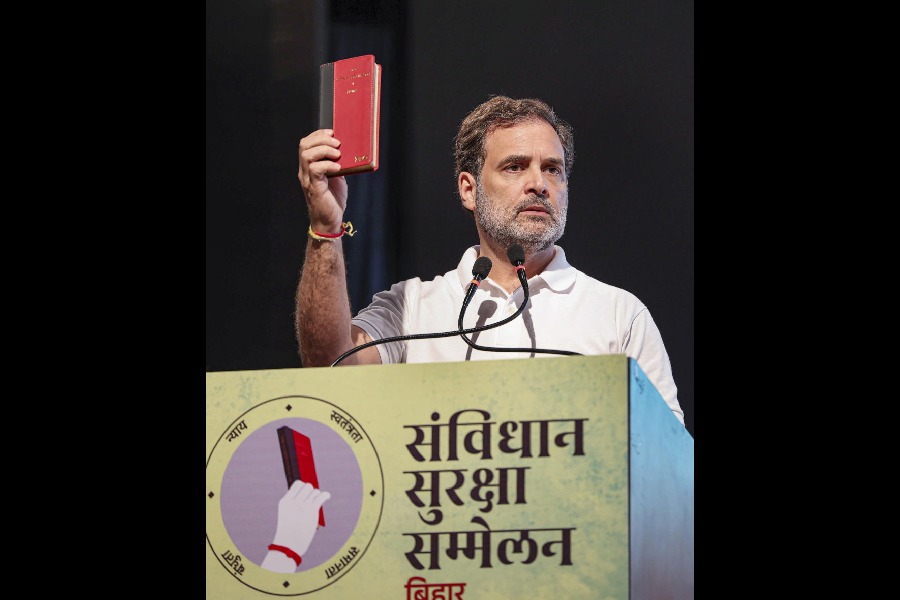
The article centers on Rahul Gandhi's renewed accusations of electoral fraud, specifically targeting the previous Maharashtra polls and anticipating similar issues in the upcoming Bihar Assembly election. Gandhi uses social media platform X to disseminate his claims, outlining a multi-step process allegedly employed to manipulate election outcomes. These steps include influencing the Election Commission's composition, adding fraudulent voters, inflating turnout figures, strategically targeting bogus voting in key areas, and concealing evidence. The allegations are framed within a broader narrative suggesting a pattern of electoral malpractice by the BJP, particularly in regions where their victory is not assured. Gandhi directly links the alleged irregularities in Maharashtra to potential future occurrences in Bihar, thereby raising concerns about the integrity of the democratic process in upcoming elections. His assertions have prompted a strong reaction from the BJP, with party president J.P. Nadda issuing a sharp rebuttal on the same platform. Nadda's response dismisses Gandhi's claims as baseless conspiracy theories designed to deflect attention from the Congress party's repeated electoral defeats. He accuses Gandhi of ignoring factual data and defaming institutions without providing any concrete evidence to support his allegations. Nadda further suggests that Gandhi's motives are driven by the certainty of an impending defeat in Bihar. The exchange highlights the deeply polarized political landscape and the heightened sensitivity surrounding election integrity. The Election Commission, in turn, has responded to the allegations by referencing previous clarifications provided to the Congress party. The EC emphasizes that factual data regarding voter enrollment in Maharashtra does not support the claims of widespread irregularities. They highlight that only a small number of Assembly constituencies experienced significant voter additions and that the Congress party was actively involved in the electoral roll revision process. The EC also addresses concerns about discrepancies between initial and final voter turnout figures, asserting that data verification procedures are in place to ensure accuracy. The EC's response aims to defend the integrity of the electoral process and counter the perception of bias or manipulation. Furthermore, the article delves into specific details raised by Rahul Gandhi in an op-ed published in The Indian Express. Gandhi points to an unusually large increase in voter turnout between the 5 pm estimate and the final reported figures, suggesting a potential manipulation of the numbers. He also criticizes the Election Commission's alleged lack of transparency in providing access to voter rolls and CCTV footage from polling stations. These specific points further fuel the debate over election integrity and raise questions about the EC's impartiality and responsiveness to concerns raised by opposition parties. The demand for CCTV footage and machine-readable voter rolls has been a recurring theme, with the Election Commission citing concerns about potential misuse of the data, including the creation of artificial intelligence-generated misinformation. The DMK's amplification of Rahul Gandhi's claims in Tamil underscores the broader political significance of the issue and its potential to resonate with regional audiences. Gandhi's concluding appeal to the Election Commission challenges them to address his concerns transparently and provide concrete evidence to dispel any doubts about the integrity of the electoral process. He specifically calls for the publication of consolidated, digital voter rolls and the release of post-5 pm CCTV footage from Maharashtra polling booths. This demand sets the stage for a potential escalation of the conflict and further scrutiny of the Election Commission's actions. The article paints a picture of a highly charged political environment where accusations of election fraud are used as a tool to undermine public trust and challenge the legitimacy of electoral outcomes. The competing narratives presented by Rahul Gandhi, the BJP, and the Election Commission reflect the deep divisions within Indian politics and the ongoing struggle for power. The issue of election integrity remains a critical concern, with implications for the stability and credibility of the democratic system.
The claims made by Rahul Gandhi are not new, they echo similar concerns raised during and after the 2019 general elections and subsequent state elections. However, the timing of these renewed allegations, just ahead of the Bihar Assembly election, suggests a strategic attempt to influence public opinion and potentially delegitimize the election results should the BJP perform well. By framing the Bihar election as potentially susceptible to the same alleged irregularities as the Maharashtra polls, Gandhi is effectively pre-emptively challenging the outcome and setting the stage for potential post-election disputes. The BJP's swift and forceful response indicates the seriousness with which they view these allegations. Accusations of election fraud can erode public confidence in the democratic process and create an environment of distrust and instability. The BJP's counter-narrative aims to portray Gandhi as a sore loser who resorts to conspiracy theories to explain away his party's electoral failures. By emphasizing the Congress party's repeated defeats and accusing Gandhi of defaming institutions, the BJP seeks to discredit his claims and maintain its own legitimacy. The Election Commission's position is particularly delicate. As an independent body responsible for overseeing free and fair elections, the EC must maintain impartiality and transparency. However, the EC also has a responsibility to defend the integrity of the electoral process against unsubstantiated allegations. The EC's response to Gandhi's claims reflects this balancing act. While providing factual data to counter the specific allegations, the EC also faces scrutiny regarding its transparency and responsiveness to concerns raised by opposition parties. The debate over access to voter rolls and CCTV footage highlights the tension between transparency and privacy. While opposition parties argue that access to this information is essential for verifying the integrity of the election process, the EC expresses concerns about the potential for misuse and the creation of misinformation. The EC's decision to restrict access to CCTV footage, citing concerns about AI-generated content, has been particularly controversial. Critics argue that this decision undermines transparency and further fuels suspicion about the EC's impartiality. The specific details raised by Gandhi, such as the increase in voter turnout between the 5 pm estimate and the final reported figures, warrant further investigation. While the EC explains that voters in queues at the time of closing are allowed to vote, the magnitude of the increase raises legitimate questions about the accuracy of the initial estimates and the potential for irregularities. The DMK's support for Gandhi's claims underscores the broader political implications of the issue. Election fraud allegations can resonate with regional audiences, particularly in states where there is a history of electoral malpractice. By amplifying Gandhi's claims in Tamil, the DMK seeks to mobilize support and potentially challenge the BJP's influence in the region. Gandhi's final appeal to the Election Commission represents a challenge to the EC's credibility. By demanding transparency and accountability, Gandhi is effectively forcing the EC to either address his concerns or risk further eroding public trust. The outcome of this dispute could have significant implications for the integrity of future elections and the stability of the Indian democratic system. The allegations and counter-allegations highlight the critical need for reforms to enhance transparency, accountability, and public confidence in the electoral process. Potential reforms could include measures to improve voter registration accuracy, enhance transparency in the counting process, and strengthen oversight of the Election Commission.
The issue of election integrity is a global concern, with many countries grappling with challenges related to voter fraud, misinformation, and foreign interference. The United States, for example, has faced intense scrutiny over its election processes in recent years, with allegations of voter fraud and foreign interference dominating political discourse. Similarly, in Europe, concerns have been raised about the potential for online disinformation campaigns to influence election outcomes. The Indian context is unique, however, due to the sheer scale of its elections and the diversity of its population. With over 900 million eligible voters, India's elections are among the largest and most complex in the world. The challenges of ensuring free and fair elections are compounded by factors such as poverty, illiteracy, and political violence. The Election Commission of India has a long and distinguished history of conducting credible elections, but it faces increasing challenges in the face of new technologies and political polarization. The rise of social media has created new opportunities for misinformation and disinformation to spread rapidly, making it more difficult to combat false claims and maintain public trust. Political polarization has also increased the likelihood of election-related disputes and violence. As political parties become more entrenched in their positions, they are more likely to resort to extreme measures to gain an advantage. The allegations of election fraud made by Rahul Gandhi reflect this broader trend of political polarization and the erosion of trust in institutions. While it is important to take these allegations seriously, it is also important to avoid generalizations and recognize that the vast majority of elections in India are conducted fairly and accurately. The Election Commission of India has a proven track record of conducting credible elections, and it is essential to support its efforts to maintain the integrity of the democratic process. However, it is also important to acknowledge that there are legitimate concerns about transparency and accountability, and that reforms are needed to strengthen public confidence in the electoral system. The debate over access to voter rolls and CCTV footage highlights the need for a careful balancing act between transparency and privacy. While access to this information can help to verify the integrity of the election process, it can also be misused to harass voters or spread misinformation. The Election Commission must find a way to provide access to this information in a way that protects privacy and prevents abuse. Ultimately, the integrity of the electoral process depends on the vigilance of citizens, political parties, and the media. Citizens must be informed and engaged in the political process, and they must hold their elected officials accountable. Political parties must abide by the rules of the game and respect the outcome of elections. The media must provide fair and accurate coverage of elections and avoid spreading misinformation. By working together, we can ensure that India's elections remain free, fair, and credible.