
 |
|
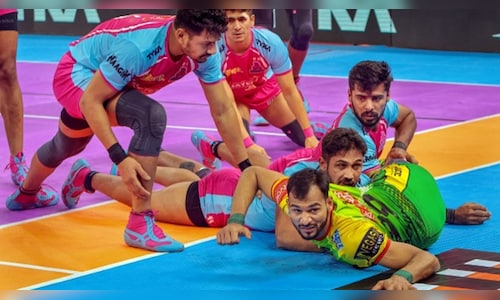
The Pro Kabaddi League (PKL) has emerged as a significant force in the Indian sporting landscape, transforming a traditionally grassroots sport into a prime-time spectacle. The recent auctions for the PKL 2025 season, marking the 12th edition of the tournament, underscored the league's sustained growth and financial viability. Mohammadreza Shadloui Chiyaneh's acquisition by the Gujarat Giants for ₹2.23 crore solidified his position as the second-most expensive player in the league's history, a testament to the increasing value placed on kabaddi athletes. Since its inception in 2014, the PKL has witnessed remarkable expansion, both in terms of the number of participating teams and the escalating player salaries, fueled by a strong partnership with broadcaster Star Sports. This evolution represents a significant step forward for kabaddi, a sport deeply rooted in Indian culture, providing players with unprecedented opportunities and recognition. Anupam Goswami, the league commissioner, aptly noted that players are the "heartbeat" of any sport, and their well-being is a key indicator of the league's overall health. The substantial base salary of ₹9 lakhs, with the median reaching ₹70 lakhs, allows kabaddi athletes to proudly embrace their profession, a stark contrast to the past when their association with the sport may have been less celebrated. This financial stability not only elevates the status of kabaddi players but also attracts new talent to the sport, ensuring its continued growth and competitiveness. The success of the PKL can be attributed to its ability to present kabaddi in a professional and engaging manner, appealing to a wide audience. The league has successfully packaged the sport for television, incorporating elements of entertainment and drama that resonate with viewers. The strategic marketing and promotion of the PKL have also played a crucial role in its popularity, transforming kabaddi from a niche sport to a mainstream attraction. The vision of the league's founders, including Charu Sharma, was to elevate an Indian sport to international prominence, drawing inspiration from the passion surrounding Australian Football League (AFL) in Australia. Sharma envisioned a scenario where countrymen would take immense pride in a homegrown game reaching the pinnacle of professionalism and achieving widespread recognition. This vision has largely been realized, as the PKL has not only transformed the landscape of Indian sports but also fostered a sense of national pride and identity. The league's success has also spurred the development of kabaddi at the grassroots level, with more young people taking up the sport and aspiring to play in the PKL. The PKL has created a pathway for aspiring kabaddi players, providing them with opportunities to showcase their talent and pursue their dreams. This has led to a significant increase in the quality of kabaddi being played across the country, further enhancing the competitiveness of the league. The PKL's commitment to innovation and continuous improvement is evident in its efforts to refine the rules and regulations of the game, making it more exciting and accessible to viewers. The league has also embraced technology to enhance the viewing experience, providing fans with real-time statistics, instant replays, and interactive features. This has helped to create a more immersive and engaging experience for fans, further solidifying the PKL's position as a leading sports league in India.
Looking ahead, the PKL aims to further solidify its position as the premier kabaddi league in the world and explore opportunities for international expansion. Goswami emphasized the importance of continuous growth to avoid stagnation and maintain the league's momentum. He highlighted the possibility of positioning kabaddi as a global sport, leveraging its presence in the Asian Games as a stepping stone towards broader international recognition. The league's success in India has demonstrated the potential for kabaddi to capture the attention of audiences worldwide, and the PKL is well-positioned to lead the charge in promoting the sport globally. The challenge lies in adapting the game to different cultural contexts and developing strategies to attract new fans. This may involve tailoring the rules and regulations of the game to appeal to international audiences, as well as investing in marketing and promotion efforts to raise awareness of kabaddi in different countries. The PKL can also learn from other successful sports leagues around the world, such as the English Premier League and the National Basketball Association, which have successfully expanded their reach to global audiences. This may involve partnering with international broadcasters and sponsors, as well as establishing leagues and academies in different countries. The globalization of kabaddi would not only benefit the sport itself but also provide opportunities for Indian players to showcase their talent on the world stage. It would also promote cultural exchange and understanding, fostering a sense of global community. However, the PKL must also be mindful of the potential challenges associated with international expansion, such as cultural differences, language barriers, and logistical complexities. The league must carefully plan and execute its international expansion strategy to ensure its long-term success. The PKL's focus on innovation and continuous improvement extends beyond the on-field action. The league is also committed to promoting fair play, ethical conduct, and social responsibility. The PKL has implemented a strict code of conduct for players, coaches, and officials, and it actively promotes initiatives to address social issues such as gender equality and environmental sustainability. This commitment to social responsibility helps to build the league's reputation and enhance its appeal to fans and sponsors. The PKL also recognizes the importance of investing in the development of grassroots kabaddi. The league supports initiatives to promote kabaddi in schools and communities across India, providing young people with opportunities to learn and play the sport. This helps to ensure the long-term sustainability of kabaddi and creates a pipeline of talent for the PKL.
Charu Sharma, a key figure in the PKL's creation, expressed his desire to see a resurgence of dynamic attacking play in the league. He lamented the increasing dominance of defensive strategies, which have limited the scope for spectacular raids and individual brilliance. Sharma believes that kabaddi should be a sport that celebrates the athleticism and skill of raiders, and he hopes to see a shift back towards a more balanced game. The evolution of kabaddi from a raider-dominated sport to a more defensive-oriented game reflects the increasing sophistication of the sport and the tactical acumen of coaches and players. However, Sharma argues that the focus on defense has come at the expense of attacking flair and excitement. He wants to see raiders rediscover their mojo and showcase their skills, creating more thrilling and unpredictable matches. This may involve implementing rule changes to encourage attacking play, as well as providing coaches and players with the tools and strategies to develop more effective raiding techniques. The PKL has a responsibility to ensure that the game remains entertaining and engaging for fans, and this may require taking steps to address the imbalance between offense and defense. The league can also learn from other sports that have successfully maintained a balance between offense and defense, such as basketball and soccer. By studying the strategies and tactics employed in these sports, the PKL can identify ways to encourage more attacking play without sacrificing the defensive integrity of the game. The PKL's commitment to innovation and continuous improvement is evident in its willingness to address challenges and adapt to changing circumstances. The league's success is a testament to the vision, dedication, and hard work of its founders, organizers, players, and fans. As the PKL embarks on its second decade, it is well-positioned to further solidify its position as a leading sports league in India and expand its reach to global audiences. The league's commitment to promoting fair play, ethical conduct, and social responsibility will continue to be a key differentiator, enhancing its reputation and appeal. The PKL's success story is an inspiration to other sports in India and around the world, demonstrating the potential for grassroots sports to achieve mainstream recognition and global prominence. The league's journey from humble beginnings to a prime-time spectacle is a testament to the power of vision, innovation, and determination.
In conclusion, the Pro Kabaddi League (PKL) stands as a shining example of how a traditional Indian sport can be reimagined and elevated to achieve both national and potentially international acclaim. From its humble beginnings in 2014, the league has experienced exponential growth, marked by expanding team participation, increasing player salaries, and a robust broadcast partnership with Star Sports. This transformation has not only provided kabaddi athletes with unprecedented opportunities and recognition but has also fostered a sense of national pride, showcasing India's rich sporting heritage. The league's success is a testament to the visionaries who recognized kabaddi's potential to captivate a wide audience. Charu Sharma's inspiration from the Australian Football League (AFL) highlights the importance of nurturing homegrown sports with the same passion and dedication as internationally recognized games. Anupam Goswami's leadership as league commissioner has been instrumental in ensuring the league's sustainable growth and its commitment to player welfare. The PKL's focus on innovation, continuous improvement, and social responsibility sets it apart from other sports leagues. The league's commitment to fair play, ethical conduct, and community engagement enhances its reputation and builds stronger connections with fans and sponsors alike. As the PKL looks toward the future, its goals include solidifying its position as the premier kabaddi league worldwide and exploring opportunities for international expansion. Overcoming the challenge of balancing offense and defense while maintaining the game's excitement is crucial for its continued success. The league's dedication to supporting grassroots development ensures a steady pipeline of talent, while its proactive approach to addressing social issues further strengthens its positive impact. The Pro Kabaddi League's journey from a grassroots sport to a prime-time spectacle is a remarkable story of vision, innovation, and unwavering dedication. It serves as an inspiration for other sports leagues in India and globally, demonstrating the power of reimagining traditional games to achieve mainstream recognition and international prominence.
Source: How Pro Kabaddi League reimagined a grassroots sport for prime-time India