
 |
|
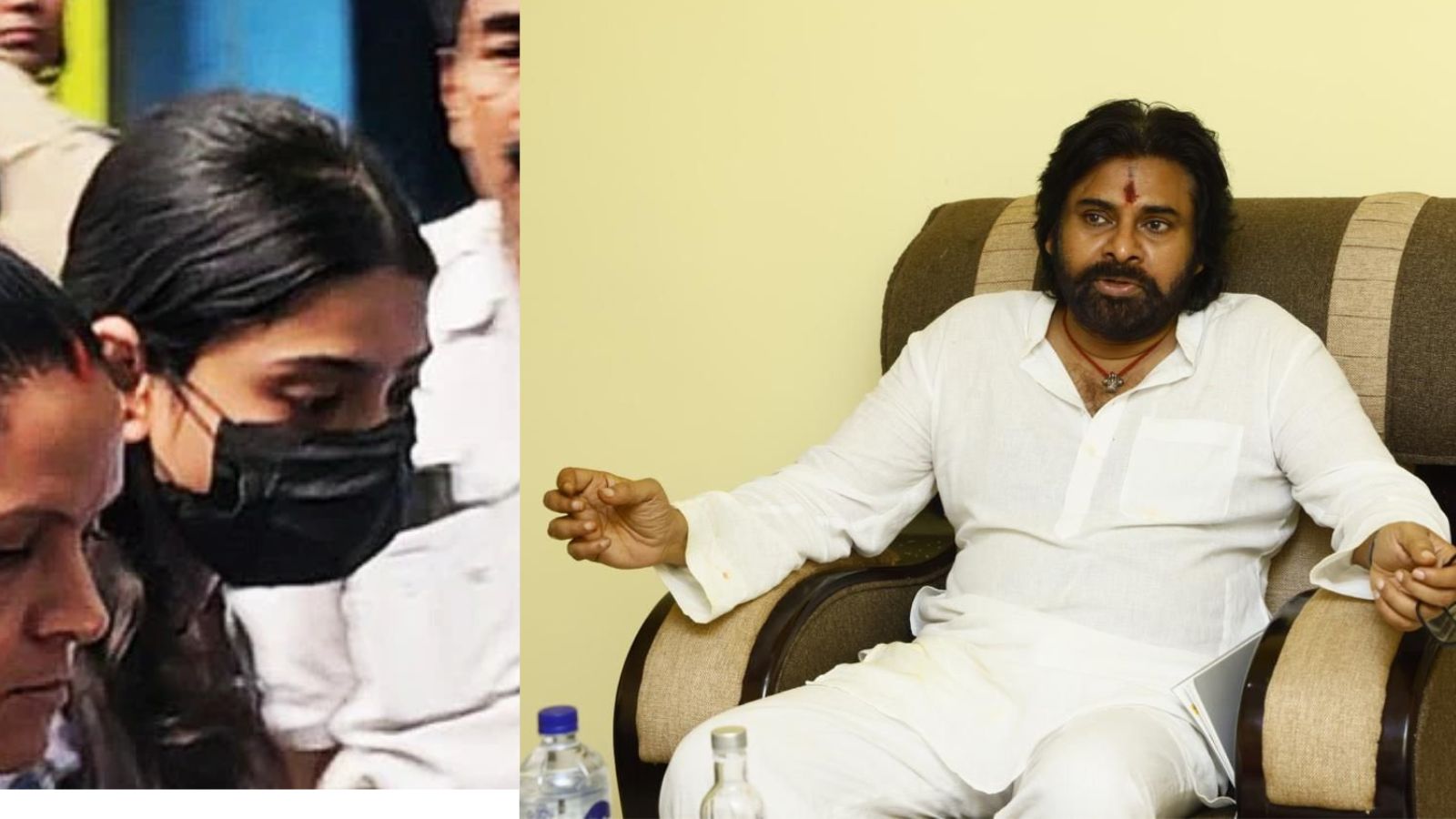
The arrest of law student Sharmistha Panoli by the Kolkata Police has ignited a political firestorm, with Andhra Pradesh Deputy Chief Minister Pawan Kalyan leading the charge against the Trinamool Congress (TMC). Kalyan, a prominent figure in the Telugu Desam Party (TDP), an ally of the National Democratic Alliance (NDA), has voiced strong condemnation of Panoli's arrest, arguing that it exemplifies a skewed application of secular principles. His criticism centers around the perceived disparity in the treatment of individuals based on their religious beliefs, specifically highlighting instances where remarks against Sanatan Dharma, a term often used to refer to Hinduism, have allegedly been overlooked or met with insufficient action. Kalyan's intervention underscores the growing tensions surrounding issues of religious freedom and the interpretation of secularism in India. The case has quickly become a focal point for debates about free speech, the role of law enforcement, and the delicate balance between protecting religious sentiments and upholding constitutional rights. The article details Kalyan's stance, quoting his statements on social media where he questions the swiftness of the police action against Panoli compared to the perceived inaction against TMC leaders who have allegedly made disparaging remarks about Hinduism. He argues that secularism should not be a 'shield' for some and a 'sword' for others, calling for equal treatment under the law for all citizens, regardless of their religious affiliations. The controversy extends beyond Kalyan's statements, with other prominent BJP leaders, including Leader of Opposition in Bengal Suvendu Adhikari and Bengal BJP president Sukanta Majumdar, echoing similar sentiments. Adhikari specifically pointed to instances where TMC leaders allegedly made offensive remarks against Hindu deities, questioning why no action was taken against them despite numerous FIRs being filed. Majumdar accused the Mamata Banerjee government of appeasement politics, suggesting that Panoli's arrest was motivated by a desire to cater to a specific community's vote bank. The case of Sharmistha Panoli revolves around a now-deleted video in which she reportedly made communal remarks. While the specific content of the video is not explicitly detailed in the article, it mentions that Panoli criticized Bollywood celebrities for their silence on 'Operation Sindoor.' This likely refers to a controversial incident or issue that has generated significant public debate. Following the backlash and threats she received online, Panoli deleted the video and issued a public apology, acknowledging her mistake. However, despite her apology, the Kolkata Police proceeded with her arrest in Gurgaon, bringing her to Kolkata on transit remand. She has since been remanded to judicial custody until June 13. The broader context of this case involves the ongoing debate about freedom of speech and expression in India, particularly in relation to religious sentiments. The Constitution of India guarantees freedom of speech, but this right is subject to reasonable restrictions, including those related to public order, morality, and the protection of the religious sentiments of others. Determining where the line lies between legitimate expression and hate speech or incitement to violence is a complex and often contentious issue. The arrest of Sharmistha Panoli highlights the challenges faced by law enforcement in navigating these issues, particularly in a politically charged environment. The case also raises questions about the role of social media in amplifying divisive narratives and the responsibility of individuals to exercise caution and sensitivity when expressing their views online. The incident involving Sharmistha Panoli is not an isolated event, but rather part of a larger pattern of controversies surrounding religious expression and the application of laws related to hate speech in India. There have been numerous instances in recent years where individuals have been arrested or faced legal action for allegedly making offensive remarks about religious figures or beliefs. These cases have often sparked intense public debate, with some arguing that the laws are being used to stifle dissent and target minority communities, while others maintain that they are necessary to maintain social harmony and prevent religious tensions from escalating. The political dimensions of this case are also significant. The BJP and other Hindu nationalist groups have often accused opposition parties of appeasing minority communities, particularly Muslims, at the expense of the majority Hindu population. These accusations have been used to mobilize support for the BJP's political agenda and to delegitimize its opponents. The case of Sharmistha Panoli provides an opportunity for the BJP to further amplify these narratives and to portray itself as the defender of Hindu interests. The TMC, on the other hand, faces the challenge of defending its actions while navigating the complex political landscape of West Bengal, where it has a significant Muslim population. The party's response to the controversy will likely be shaped by its need to maintain its support base while also addressing concerns about fairness and impartiality. The outcome of the case against Sharmistha Panoli remains to be seen. It is possible that she will be convicted of hate speech or other related charges, but it is also possible that the case will be dismissed or that she will be acquitted. Regardless of the outcome, the case has already had a significant impact on the political landscape in West Bengal and has raised important questions about freedom of speech, religious freedom, and the application of the law in India. The controversy surrounding Sharmistha Panoli's arrest is a microcosm of the broader challenges facing India as it grapples with issues of religious pluralism, social cohesion, and the protection of fundamental rights. The incident highlights the need for a more nuanced and informed public discourse on these issues, as well as for a greater commitment to upholding the principles of fairness, equality, and justice for all citizens. The actions and statements from prominent political figures, like Pawan Kalyan, add layers to this already intricate situation, underscoring the politicization of such sensitive issues. It is crucial to analyze the motivations and potential consequences of such interventions, as they can significantly influence public perception and the course of legal proceedings. Ultimately, the Sharmistha Panoli case serves as a reminder of the fragility of social harmony and the importance of safeguarding the rights and freedoms of all individuals in a diverse and democratic society. The long-term implications of this case will likely continue to shape the debate about religious freedom and secularism in India for years to come, making it a pivotal moment in the country's ongoing struggle to balance these competing values.
The concept of secularism itself is at the heart of this controversy, and the differing interpretations of this principle are driving much of the debate. In India, secularism is often understood as 'Sarva Dharma Sambhava,' which translates to 'equal respect for all religions.' This model differs from the strict separation of church and state found in some Western countries. However, the practical application of 'Sarva Dharma Sambhava' has been fraught with challenges, particularly in a society as diverse as India. Critics argue that the state's involvement in religious affairs, such as regulating religious institutions or providing subsidies to religious organizations, can lead to favoritism and discrimination. The case of Sharmistha Panoli highlights the perception that the state is not applying the law equally to all religions, leading to accusations of selective enforcement and appeasement politics. Pawan Kalyan's criticism of the TMC government is rooted in this perception, as he argues that remarks against Sanatan Dharma are being treated differently than remarks against other religions. This perception is not unique to the TMC government; similar accusations have been leveled against other political parties and governments in India. The debate about secularism also involves the question of how to balance the protection of religious sentiments with the right to freedom of speech and expression. As mentioned earlier, the Constitution of India guarantees freedom of speech, but this right is subject to reasonable restrictions, including those related to public order, morality, and the protection of the religious sentiments of others. The challenge lies in defining what constitutes a 'reasonable restriction' and in ensuring that these restrictions are not used to stifle dissent or to target minority communities. The Sharmistha Panoli case underscores the difficulty of drawing this line, as her arrest was based on a video in which she reportedly made communal remarks. While the specific content of the video is not detailed in the article, it is clear that her remarks were deemed to be offensive enough to warrant police action. However, critics argue that her apology should have been taken into consideration and that her arrest was an overreaction that violated her right to freedom of speech. The BJP's criticism of the TMC government also raises questions about the party's own commitment to secularism. While the BJP has often positioned itself as the defender of Hindu interests, its critics accuse it of promoting a Hindu nationalist agenda that marginalizes minority communities. These accusations are based on the BJP's policies and rhetoric, such as its push for a uniform civil code, its stance on issues related to cow slaughter, and its use of religious symbols and language in its political campaigns. The debate about secularism in India is further complicated by the historical context of religious conflict and communal violence. The partition of India in 1947, which was accompanied by widespread violence between Hindus and Muslims, left a deep scar on the country's collective psyche. The fear of communal violence remains a potent force in Indian society, and politicians often use this fear to mobilize support for their political agendas. The Sharmistha Panoli case highlights the potential for social media to be used to incite religious hatred and violence. The backlash and threats that Panoli received online after posting her video demonstrate the ease with which divisive narratives can spread through social media platforms. This underscores the need for greater regulation of social media content and for greater efforts to promote responsible online behavior. The case also raises questions about the role of law enforcement in addressing online hate speech. While it is important to hold individuals accountable for their actions, it is also important to ensure that law enforcement agencies are not used to stifle dissent or to target minority communities. The arrest of Sharmistha Panoli has sparked a fresh political row between the BJP and the TMC, but it also reflects a deeper struggle over the meaning and application of secularism in India. The case highlights the need for a more inclusive and nuanced understanding of secularism that respects the rights of all individuals and communities, while also promoting social harmony and preventing religious conflict. The long-term implications of this case will depend on how the courts and the government address the issues it raises, as well as on how the public engages in the debate about secularism and religious freedom. The need for responsible and informed discourse on these sensitive topics cannot be overstated, as the future of India as a pluralistic and democratic society depends on it.
The contrasting responses to alleged offenses against different religions, as highlighted in the article, underscore a critical issue within India's socio-political landscape: the perceived selective application of laws pertaining to religious sentiments. This perception fuels accusations of 'vote-bank politics,' where political parties are believed to prioritize the appeasement of specific religious communities for electoral gain, potentially at the expense of others. The BJP's criticism of the TMC government in the Sharmistha Panoli case exemplifies this accusation. The BJP alleges that the TMC acted swiftly in arresting Panoli due to pressure from certain religious groups, while simultaneously failing to take action against TMC leaders who allegedly made disparaging remarks about Hinduism. This perceived disparity in treatment reinforces the narrative that the TMC is prioritizing its Muslim vote base over the concerns of the Hindu majority. However, it's essential to acknowledge that accusations of vote-bank politics are not confined to any single political party. Across the political spectrum in India, parties are often accused of tailoring their policies and rhetoric to appeal to specific communities, leading to concerns about fairness and equal treatment under the law. The Sharmistha Panoli case also raises fundamental questions about the nature of free speech in a religiously diverse society. While the Indian Constitution guarantees freedom of speech and expression, this right is subject to 'reasonable restrictions,' including those intended to prevent incitement to violence or the denigration of religious beliefs. However, the interpretation of these restrictions is often contested, and the line between legitimate expression and hate speech can be blurry. In Panoli's case, her arrest was based on a video in which she reportedly made 'communal remarks.' The specific content of these remarks is not detailed in the article, but they were evidently deemed sufficiently offensive to warrant police action. Critics of her arrest, however, argue that her apology should have been taken into account and that her detention represents an infringement on her right to free speech. The incident underscores the ongoing tension between protecting freedom of expression and safeguarding religious sentiments in India. Furthermore, the Sharmistha Panoli case highlights the role of social media in amplifying and exacerbating religious tensions. The online backlash and threats that Panoli received after posting her video demonstrate the speed and intensity with which divisive narratives can spread through social media platforms. This phenomenon presents significant challenges for law enforcement agencies tasked with monitoring and responding to online hate speech. While it is essential to hold individuals accountable for their online actions, it is equally important to avoid infringing on legitimate forms of expression and to prevent the arbitrary targeting of individuals based on their religious beliefs. The political implications of the Sharmistha Panoli case extend beyond the immediate dispute between the BJP and the TMC. The incident serves as a microcosm of the broader challenges facing India in its efforts to reconcile religious pluralism, freedom of expression, and the rule of law. The way in which this case is resolved will likely have significant repercussions for future debates about these issues and for the overall climate of religious tolerance in India. The controversy also underscores the need for a more nuanced and informed public discourse on matters of religion and politics. Misinformation, propaganda, and the manipulation of religious sentiments can all contribute to social division and undermine democratic values. It is therefore crucial for citizens to engage with these issues critically and to resist the temptation to accept simplistic or divisive narratives. In conclusion, the Sharmistha Panoli case is a complex and multifaceted issue that raises fundamental questions about secularism, freedom of speech, and the role of law enforcement in a religiously diverse society. The incident highlights the need for a more inclusive and equitable approach to governance, one that respects the rights of all individuals and communities while also promoting social harmony and preventing religious conflict. The outcome of this case will likely have a significant impact on the future of religious freedom and secularism in India.