
 |
|
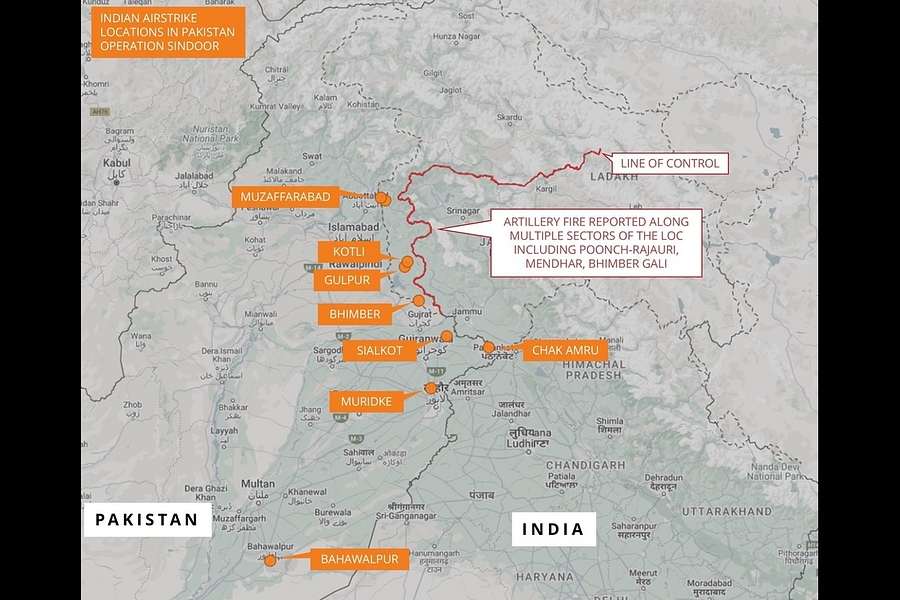
The surfacing of a Pakistan dossier concerning its Operation Bunyan un Marsoos has brought to light previously unacknowledged aspects of India's Operation Sindoor. According to an NDTV report, this alleged official dossier indicates that Indian forces struck at least seven additional targets beyond what was publicly disclosed by New Delhi. This revelation significantly broadens the scope of Operation Sindoor and offers a potential explanation for Pakistan's swift call for a ceasefire. Furthermore, it directly contradicts Islamabad's claims of extensive damage inflicted on the Indian side, as implied within the dossier. The alleged dossier contains maps pinpointing Indian strikes at various locations, including Peshawar, Jhang, Hyderabad (Sindh), Gujrat (Punjab), Bhawalnagar, Attock, and Chor. Notably, none of these locations were mentioned in earlier briefings by the Indian Air Force or the Director General of Military Operations. The initial Indian acknowledgment comprised strikes on nine terror sites, encompassing the headquarters of Jaish-e-Mohammed in Bahawalpur, the training camp of Lashkar-e-Toiba in Muridke, and other sites in Muzaffarabad, Kotli, Rawalakot, Bhimber, Neelum Valley, and Jhelum. However, the Pakistani dossier asserts that India also targeted deep military infrastructure. In response to Pakistan's retaliatory actions, which included drone and missile strikes on Indian civilian and military installations, India reportedly struck eleven Pakistani airbases. These airbases were identified as Nur Khan, Rafiqui, Murid, Sukkur, Sialkot, Pasrur, Chunian, Sargodha, Skardu, Bholari, and Jacobabad, resulting in substantial damage. India has consistently maintained that Operation Sindoor has established a clear line of demarcation. Indian officials have asserted that any future acts of terror will be interpreted as declarations of war, necessitating robust military action. This newly revealed information from the Pakistani dossier could potentially reshape the understanding of the conflict dynamics between India and Pakistan during that period, particularly concerning the extent of India's military response and its strategic objectives. It remains critical to investigate the authenticity and reliability of the dossier to determine the accuracy of its claims. The implications of these new details could be significant for future relations between the two countries. The revelations underscore the complexities of the conflict and the importance of transparency and accountability in reporting military actions. It may also influence future strategies and policies concerning counter-terrorism and cross-border military operations.
The context surrounding Operation Sindoor is crucial in understanding the significance of the newly revealed information. The operation was reportedly launched as a counteroffensive following the Pahalgam terror attack on April 22, which resulted in the deaths of 26 civilians. The attack was a major provocation, triggering a strong response from India. The initial acknowledgment by India of striking nine terror sites was perceived as a calibrated response aimed at dismantling terrorist infrastructure and deterring future attacks. However, the Pakistani dossier's claim that India struck seven additional targets, including locations deep within Pakistan, suggests a broader and more aggressive strategy. This raises questions about the true objectives of Operation Sindoor and the extent to which India was willing to escalate the conflict. The discrepancy between India's public acknowledgment and the details presented in the Pakistani dossier also highlights the challenges of verifying information in conflict zones. Both sides may have incentives to downplay or exaggerate their actions for strategic purposes. The reliance on a Pakistani dossier as the source of this information also raises concerns about potential bias. It is essential to critically evaluate the dossier's claims and seek corroborating evidence from independent sources. The inclusion of specific locations, such as Peshawar, Jhang, and Hyderabad (Sindh), as targets of Indian strikes is particularly significant. These locations are situated deep within Pakistan and are not typically associated with terrorist activities. If confirmed, the targeting of these locations would suggest that India was also aiming to strike at Pakistan's military infrastructure and deter further support for terrorism. The Pakistani dossier's claim that India struck eleven Pakistani airbases in response to retaliatory actions is consistent with publicly available information. However, the extent of the damage inflicted on these airbases remains a matter of debate. India has maintained that the strikes were precise and targeted, while Pakistan has downplayed the extent of the damage.
The potential implications of this revelation on India-Pakistan relations are considerable. The new details about Operation Sindoor could fuel further mistrust and animosity between the two countries. Pakistan may view the revelation as evidence of India's aggressive intentions and its willingness to escalate conflicts. India, on the other hand, may argue that the strikes were justified as a necessary response to terrorism and that Pakistan is attempting to deflect attention from its own role in supporting terrorist groups. The timing of the revelation is also significant. It comes at a time when India and Pakistan are already facing numerous challenges in their relationship, including ongoing disputes over Kashmir, cross-border terrorism, and trade relations. The new details about Operation Sindoor could further complicate efforts to resolve these issues and improve relations. The revelation could also have implications for regional security. The escalation of tensions between India and Pakistan could increase the risk of conflict and instability in the region. The two countries possess nuclear weapons, which raises the stakes even higher. It is crucial for both countries to exercise restraint and avoid any actions that could further escalate tensions. The international community also has a role to play in de-escalating tensions and promoting dialogue between India and Pakistan. The United States, China, and other major powers should encourage both countries to resolve their disputes peacefully and to work together to combat terrorism. The need for independent verification of the claims in the Pakistani dossier cannot be overstated. International organizations or third-party investigative bodies could play a crucial role in assessing the accuracy of the claims and providing an objective assessment of the events surrounding Operation Sindoor. This could help to reduce mistrust and promote a more accurate understanding of the conflict. Ultimately, the resolution of the issues surrounding Operation Sindoor and the broader India-Pakistan conflict will require a sustained commitment to dialogue and diplomacy. Both countries must be willing to address their grievances and work together to build a more peaceful and stable future.
The significance of the dossier extends beyond the immediate details of Operation Sindoor. It brings to the forefront the complexities inherent in conflict reporting and the challenges of verifying information in contested environments. War, by its very nature, is shrouded in secrecy, misinformation, and propaganda. Both sides of a conflict have vested interests in shaping the narrative to suit their strategic objectives. This makes it exceptionally difficult to ascertain the truth and to gain a comprehensive understanding of the events that transpired. The media, tasked with reporting on these conflicts, face immense pressure to disseminate information quickly and accurately. However, they are often hampered by limited access, unreliable sources, and the inherent biases of those providing the information. This underscores the importance of critical analysis, independent verification, and a commitment to presenting multiple perspectives. The Pakistani dossier, even if proven accurate, represents only one side of the story. It is crucial to seek out corroborating evidence from other sources, including Indian accounts, eyewitness testimonies, and independent investigations. Only through a multi-faceted approach can a more complete and nuanced understanding of Operation Sindoor be achieved. Furthermore, the dossier highlights the importance of accountability and transparency in military operations. Governments have a responsibility to be transparent with their citizens about the actions taken in their name, particularly when those actions involve the use of force. This transparency is essential for maintaining public trust, ensuring democratic oversight, and preventing future abuses. The alleged expansion of Operation Sindoor, as revealed in the dossier, raises questions about the proportionality of the response and the adherence to international humanitarian law. Were the additional targets legitimate military objectives? Were precautions taken to minimize civilian casualties? These are critical questions that need to be addressed through independent investigations and legal proceedings. The failure to hold actors accountable for violations of international law can perpetuate a cycle of violence and impunity.
The strategic implications of a deeper Indian strike, as alleged, are also profound. If India did indeed target military infrastructure deep within Pakistan, it signals a willingness to escalate conflicts beyond the traditionally understood parameters of counter-terrorism operations. This could be interpreted as a shift in India's strategic doctrine, moving towards a more assertive and proactive approach to dealing with perceived threats from Pakistan. Such a shift could have far-reaching consequences for regional stability. It could trigger a new arms race, encourage further military build-up on both sides, and increase the risk of future conflicts. It could also undermine efforts to build trust and cooperation between the two countries. The alleged strikes on Peshawar, Jhang, and Hyderabad (Sindh) are particularly concerning. These locations are major urban centers with significant civilian populations. Targeting these areas, even if the intended targets were military installations, would inevitably carry a high risk of collateral damage and civilian casualties. This raises serious ethical and legal concerns about the proportionality of the response and the adherence to the laws of war. The revelations in the Pakistani dossier also underscore the need for a more comprehensive approach to addressing terrorism. Military operations, while sometimes necessary, are not a panacea. A more sustainable solution requires addressing the root causes of terrorism, including poverty, inequality, and political marginalization. It also requires strengthening law enforcement, intelligence gathering, and international cooperation. Ultimately, the resolution of the India-Pakistan conflict will require a long-term commitment to peace-building and reconciliation. This will involve addressing the underlying grievances, fostering dialogue and understanding, and building trust between the two societies. It will also require the support of the international community, which can play a crucial role in mediating disputes, providing assistance, and promoting a more peaceful and stable region.
Source: India Struck Deeper Than Acknowledged During Operation Sindoor, Reveals Pakistan Dossier