
 |
|
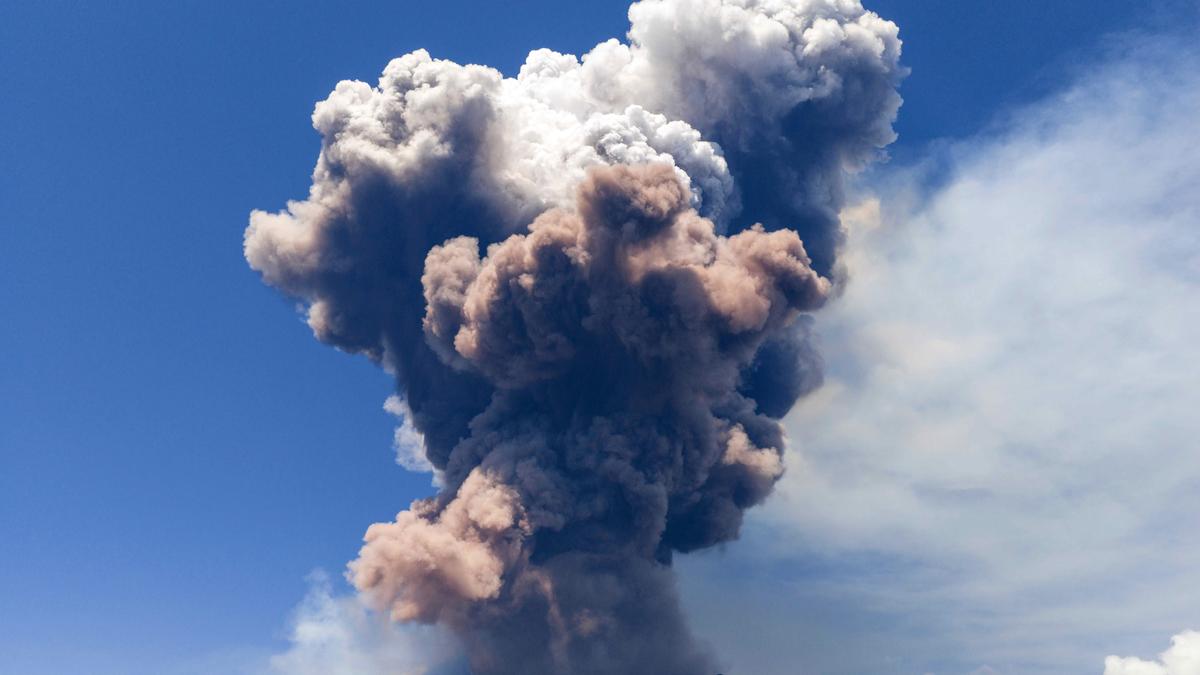
Mount Etna, a prominent landmark in Sicily, Italy, once again demonstrated its fiery nature with an eruption on Monday, June 2, 2025. While such events are characteristic of this perpetually active volcano, the recent eruption prompted heightened vigilance due to the substantial cloud of smoke and ash that ascended several kilometers into the atmosphere. Authorities closely monitored the situation, but quickly assessed that the eruption did not pose a direct threat to the surrounding population. However, in a precautionary measure, the alert level for Catania Airport was raised, reflecting the potential disruption that volcanic ash can cause to air travel. Fortunately, the ash cloud dissipated by afternoon, alleviating concerns about prolonged flight delays or cancellations.
Mount Etna's significance extends beyond its immediate impact on local communities. Recognized as a UNESCO World Heritage site, it holds a distinguished place among Europe's and the world's most active volcanoes. The extensive documented history of its eruptive activity, spanning at least 2,700 years, provides invaluable insights into the Earth's geological processes. UNESCO highlights this exceptional record as one of the longest documented histories of volcanic activity on the planet.
The sheer scale of Mount Etna is remarkable. Towering at approximately 3,300 meters, its height is roughly four times that of the Burj Khalifa, the world's tallest building. Unlike many other volcanoes that remain dormant for extended periods, Etna exhibits near-constant unrest, making it a subject of continuous scientific observation and research. This persistent activity provides scientists with a unique opportunity to study the dynamics of volcanic systems in real-time.
Mount Etna is classified as a stratovolcano, characterized by its conical shape. These types of volcanoes are formed by viscous lava that does not flow easily. Instead, the lava accumulates around the volcanic vent, gradually adding to the volcano's layered structure. According to the British Geological Survey, stratovolcanoes constitute approximately 60% of the Earth's individual volcanoes. This prevalence underscores their significance in shaping the Earth's landscape and influencing global climate patterns through the release of volcanic gases and aerosols.
The eruptions of Mount Etna typically manifest in two distinct styles: effusive and strombolian. Effusive eruptions are characterized by the relatively gentle outflow of lava onto the ground, creating lava flows that can extend for considerable distances. Strombolian activity, on the other hand, is more explosive, involving bursts of gas and lava fragments into the air. The interplay between these two eruption styles contributes to the complex and dynamic behavior of Mount Etna.
The eruptive history of Mount Etna stretches back approximately 500,000 years, according to Italy's National Institute of Geophysics and Volcanology (INGV). Over this vast period, the volcano has experienced numerous eruptions, some of which have had significant consequences for the surrounding region. The largest eruption in recorded history occurred in 1669, as reported by the Italian government's Civil Protection Department. This catastrophic event began on March 11, 1669, and the resulting lava flow reached the city of Catania on April 16, causing widespread destruction before eventually flowing into the sea.
Historical records indicate that the earliest documented reference to an eruption of Mount Etna dates back to around 1400 B.C., as documented in a 2007 research paper. This ancient account highlights the long-standing awareness of Etna's volcanic activity and its impact on human settlements. In more recent times, notable eruptive activity has been observed on multiple occasions in 2024. For example, in July and August of that year, Catania airport was temporarily closed due to volcanic ash emitted during eruptions. A report by the Bulletin of the Global Volcanism Network documented intense eruptive activity on Etna in 2001, with the main eruption lasting for approximately 24 days throughout July and August.
Efforts to mitigate the impact of Etna's eruptions have been undertaken in the past. In 1983, for instance, earthen barriers were constructed in an attempt to divert lava flows during an eruption. These measures, while not always entirely successful, demonstrate the ongoing commitment to protecting communities from the potential hazards posed by volcanic activity. The study of Mount Etna provides invaluable insights into the dynamics of active volcanoes and aids in the development of strategies for mitigating volcanic hazards globally. Continuous monitoring and research efforts are essential to improving our understanding of volcanic processes and protecting populations living in volcanic regions. The recent eruption serves as a reminder of the power and unpredictability of nature, and the importance of preparedness and mitigation strategies in the face of geological hazards. The ongoing research and monitoring of Mount Etna contribute to a better understanding of volcanism globally, and inform strategies for reducing the risks associated with volcanic activity. The volcano's unique characteristics and long history make it an invaluable natural laboratory for scientific study. This information is vital for protecting people and infrastructure in the vicinity of active volcanoes. The constant monitoring, research and innovation are vital to minimizing risks. Mount Etna's eruptions provide insights into the processes that shape the Earth's surface and interior. Further research is needed to refine our models of volcanic behavior and improve our ability to forecast future eruptions. Understanding the properties and behavior of magma is a key area of ongoing research, which benefits not only Sicily but people all around the world.
The enduring legacy of Mount Etna extends far beyond its immediate geological context. The volcano has permeated the cultural landscape of Sicily, inspiring myths, legends, and artistic creations for centuries. Its majestic presence has shaped the identity of the region, instilling a sense of awe and respect for the power of nature. From ancient Greek mythology to modern-day literature and cinema, Mount Etna has served as a recurring motif, symbolizing both destruction and renewal. The volcano's fertile slopes have also supported agriculture, fostering a unique viticultural tradition that produces distinctive wines known for their volcanic terroir. This combination of natural beauty, geological significance, and cultural heritage makes Mount Etna a truly unique and cherished landmark.
The study of Mount Etna is not merely an academic exercise; it has practical implications for managing volcanic hazards and mitigating risks. By closely monitoring the volcano's activity and analyzing its past eruptive behavior, scientists can develop better models for predicting future eruptions and assessing their potential impact. This information is crucial for informing emergency preparedness plans and guiding land-use decisions in the vicinity of the volcano. The lessons learned from Mount Etna can be applied to other active volcanoes around the world, contributing to a global effort to reduce the risks associated with volcanic activity. International collaboration and knowledge sharing are essential for advancing our understanding of volcanism and improving our ability to protect communities from volcanic hazards. The ongoing research at Mount Etna underscores the importance of investing in scientific infrastructure and supporting the work of volcanologists and other earth scientists. These dedicated professionals play a vital role in safeguarding communities and advancing our knowledge of the planet.
The continued study and observation of Mount Etna are not merely academic pursuits. They serve as cornerstones for developing more sophisticated models for predicting future eruptions and for accurately assessing the potential consequences thereof. This predictive capacity is paramount for informing well-structured emergency preparedness strategies and for making sound land-use decisions in areas proximate to the volcano. The lessons gleaned from the meticulous study of Mount Etna offer invaluable insights that can be extrapolated to other active volcanic systems worldwide, thereby contributing to a global initiative aimed at mitigating the risks intrinsically linked to volcanic activity. Collaborative endeavors and the open exchange of knowledge across international borders are indispensable for advancing our collective understanding of volcanism and for enhancing our ability to protect vulnerable communities from the inherent dangers posed by volcanic phenomena. The ongoing research initiatives conducted at Mount Etna highlight the critical importance of sustained investment in scientific infrastructure and the provision of robust support for the invaluable work of volcanologists and other earth scientists. These dedicated professionals play a pivotal role in safeguarding communities and in expanding our fundamental knowledge of the complex processes that govern our planet. Their unwavering commitment is essential for ensuring the safety and well-being of populations residing in volcanically active regions and for advancing our broader understanding of the dynamic forces that shape the Earth's surface and interior.
Moreover, the study of Mount Etna offers profound insights into broader geological and environmental processes. The volcano's eruptive activity provides a window into the Earth's interior, revealing the composition and behavior of magma, the molten rock that drives volcanic eruptions. By analyzing the gases and particles emitted during eruptions, scientists can gain valuable information about the chemical composition of the Earth's mantle and the processes that control the flow of heat and energy within the planet. The study of Mount Etna also sheds light on the interactions between volcanic activity and the environment. Volcanic eruptions can have significant impacts on air and water quality, soil fertility, and climate patterns. Understanding these interactions is crucial for assessing the long-term environmental consequences of volcanic activity and for developing strategies to mitigate their impact. The research conducted at Mount Etna contributes to a broader understanding of the Earth system and the complex interplay between geological, atmospheric, and biological processes. This holistic perspective is essential for addressing global environmental challenges and for promoting sustainable development.
Source: Mount Etna erupts: All about Europe’s most active volcano