
 |
|
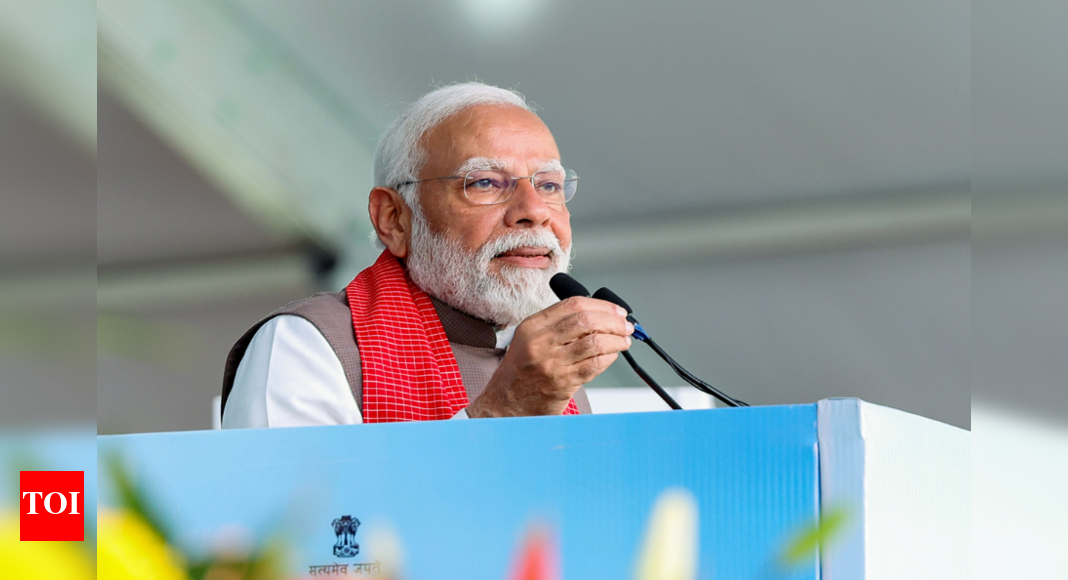
Prime Minister Narendra Modi, addressing the Annual General Meeting (AGM) of the International Air Transport Association (IATA) in Delhi, presented a vision of India as a leading force not only in global aviation but also in the broader landscape of future innovation, including space travel. Modi's address was a blend of forward-looking aspirations and practical economic optimism, positioning India as a key player in the evolving dynamics of global air travel and technological advancement. He articulated a vision where air travel transcends terrestrial limitations, envisioning a future where commercial spaceflights and interplanetary journeys become a reality, with civil aviation playing a central role in this transformative shift. The Prime Minister emphasized that India is ready to embrace this future, citing three fundamental pillars that underpin the nation's preparedness: a large and aspirational consumer market, a youthful and skilled workforce proficient in emerging technologies such as artificial intelligence, robotics, and clean energy, and a government policy environment that is open, supportive, and conducive to innovation. He noted the summit was a launchpad for climate commitments, global cooperation and equitable growth. India's rapidly expanding civil aviation sector is strategically positioned at the core of the government's broader ambition to establish the nation as a global technology and logistics hub. Modi underscored the significance of the IATA AGM, stating that the discussions and decisions made at the summit would chart a new course for the aviation industry, urging the participants to unlock the sector's vast potential and leverage it for greater advancements. This comprehensive vision presented by Prime Minister Modi at the IATA AGM signifies India's commitment to playing a pivotal role in the future of aviation and technological innovation, positioning the nation as a key player in the evolving landscape of global air travel and space exploration.
The Prime Minister’s speech at the IATA AGM can be interpreted as a strategic effort to attract foreign investment and partnerships in India’s aviation and technology sectors. By highlighting the country's vast consumer market, skilled workforce, and supportive policy environment, Modi aimed to showcase India as an attractive destination for businesses seeking to capitalize on the growth opportunities in these industries. The emphasis on innovation and future-oriented technologies, such as AI, robotics, and clean energy, further positions India as a hub for cutting-edge research and development. The reference to commercial space flights and interplanetary journeys serves to elevate the perception of India's ambitions beyond traditional aviation, signaling a commitment to pushing the boundaries of technological advancement. Modi's address also underscores the government's recognition of the importance of the aviation sector in driving economic growth and facilitating global connectivity. By investing in infrastructure development, streamlining regulations, and promoting innovation, the government aims to create an ecosystem that supports the expansion of the aviation industry and its integration with other sectors of the economy. The Prime Minister's call for shared climate commitments and global cooperation reflects India's commitment to sustainable development and its willingness to collaborate with other nations to address the challenges facing the aviation industry, such as reducing carbon emissions and improving energy efficiency. The speech also acknowledged the importance of international collaboration in advancing technological innovation and ensuring that the benefits of aviation are shared equitably across the globe.
Furthermore, the Prime Minister’s emphasis on India's readiness for the future of aviation and space travel can be seen as a reflection of the country's growing confidence in its technological capabilities and its ability to compete on the global stage. India's achievements in space exploration, its burgeoning IT sector, and its increasing focus on research and development have contributed to a perception of the country as a rising technological power. The Prime Minister’s speech builds on this narrative, presenting India as a nation that is not only capable of adapting to the changing landscape of aviation but also of shaping its future. The message is intended to instill confidence in investors, businesses, and the international community that India is a reliable and capable partner in the pursuit of innovation and sustainable growth. It's a subtle yet clear signal that India intends to be at the forefront of the next wave of advancements in air and space travel, not simply a follower. The IATA AGM provided a crucial platform to communicate this vision to a global audience of aviation leaders and decision-makers. By directly addressing this influential group, Modi sought to solidify India's position as a key player in the future of aviation and to cultivate partnerships that will help the country achieve its ambitious goals. He implicitly argued that those who invest in India now will benefit from the country's future growth and innovation in the sector.
The strategic implications of India's ambition to become a global aviation hub extend beyond economic considerations. A strong aviation sector is critical for national security, facilitating the rapid deployment of personnel and resources in times of crisis. It also enhances India's geopolitical influence by strengthening its connections with other countries and regions. By positioning itself as a hub for international travel and trade, India can project its soft power and promote its cultural values on a global scale. The focus on innovation in aviation also has implications for other sectors of the economy. The development of new technologies, such as electric aircraft and autonomous drones, can create opportunities for Indian companies in related industries, such as manufacturing, software development, and engineering. The emphasis on sustainability in aviation can also drive innovation in clean energy and resource management, contributing to India's broader efforts to address climate change. In addition, the expansion of the aviation sector can create new jobs and opportunities for Indian citizens, particularly in the fields of engineering, technology, and customer service. The Prime Minister’s speech at the IATA AGM can therefore be seen as part of a broader strategy to promote economic growth, enhance national security, and strengthen India's position in the world. It reflects a long-term vision for the country's development and a commitment to investing in the infrastructure, technology, and human capital necessary to achieve its goals. The message is that India is open for business and ready to collaborate with other nations to shape the future of aviation.
To achieve its ambitious goals for the aviation sector, India faces several challenges that must be addressed. Infrastructure constraints, such as airport capacity limitations and air traffic congestion, need to be overcome to accommodate the expected growth in passenger and cargo traffic. Regulatory hurdles, such as complex licensing procedures and bureaucratic delays, need to be streamlined to create a more business-friendly environment. Skills gaps in the aviation workforce need to be addressed through training programs and educational initiatives. Environmental concerns, such as carbon emissions and noise pollution, need to be mitigated through investments in sustainable technologies and operational practices. Addressing these challenges requires a multi-faceted approach involving government, industry, and academia. Government needs to provide the necessary funding, policy support, and regulatory framework to facilitate the growth of the aviation sector. Industry needs to invest in infrastructure development, technology innovation, and workforce training. Academia needs to conduct research and development to address the challenges facing the aviation industry and to develop new technologies for sustainable aviation. Collaboration between these stakeholders is essential to ensure that India's aviation sector can achieve its full potential and contribute to the country's economic growth, national security, and global competitiveness. The Prime Minister’s speech at the IATA AGM served as a call to action for all stakeholders to work together to address these challenges and to realize the vision of India as a global aviation hub.
In conclusion, Prime Minister Narendra Modi's address at the IATA AGM was a strategic and forward-looking statement that positions India as a key player in the future of aviation and technological innovation. By highlighting the country's vast consumer market, skilled workforce, supportive policy environment, and commitment to sustainable development, Modi aimed to attract foreign investment, foster international partnerships, and promote India's economic growth and global influence. The speech underscored the government's recognition of the importance of the aviation sector in driving economic development, enhancing national security, and facilitating global connectivity. It also reflected a broader vision for India's future, one where the country is at the forefront of technological innovation, committed to sustainable development, and ready to collaborate with other nations to address the challenges facing the world. To achieve its ambitious goals, India must address several challenges, including infrastructure constraints, regulatory hurdles, skills gaps, and environmental concerns. Overcoming these challenges requires a multi-faceted approach involving government, industry, and academia, all working together to create a thriving and sustainable aviation sector. The Prime Minister’s speech at the IATA AGM served as a rallying cry for all stakeholders to embrace this vision and to work together to build a brighter future for India and the world. Ultimately, the success of India's aviation ambitions will depend on the country's ability to leverage its strengths, address its challenges, and foster a spirit of innovation and collaboration.
Source: ‘From skies to space’: PM Modi at IATA AGM pitches India as future hub for aviation and innovation