
 |
|
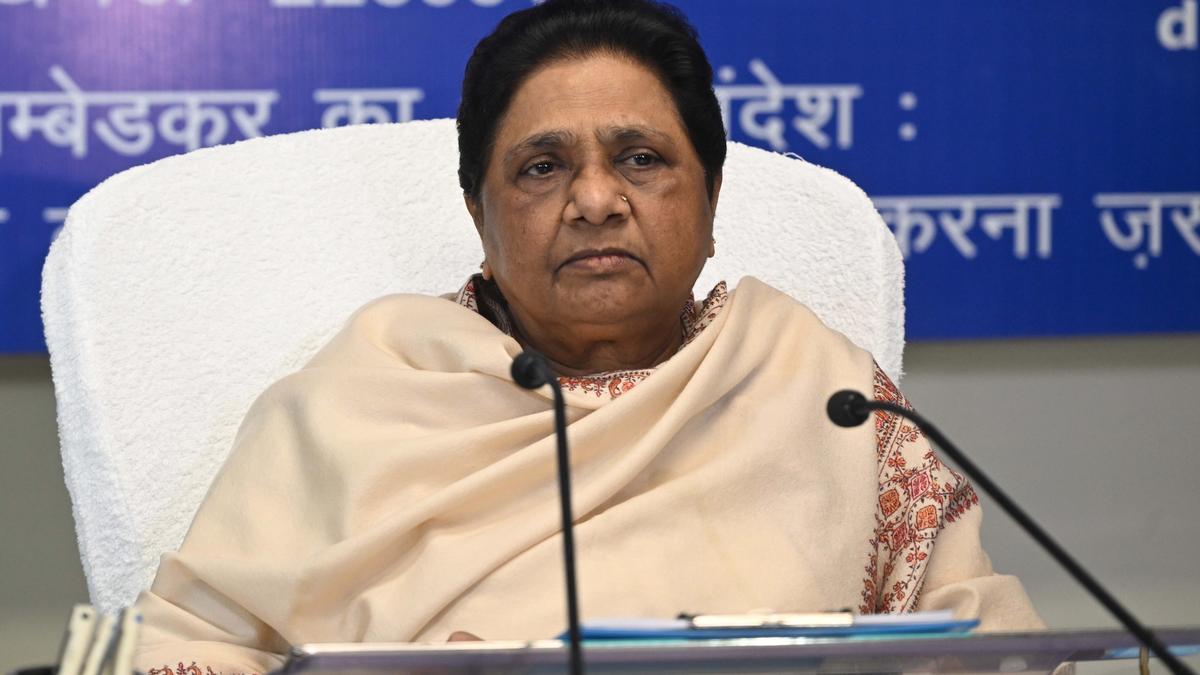
The appointment of Rajeev Krishna as the new Director General of Police (DGP) in Uttar Pradesh comes at a critical juncture, as highlighted by Bahujan Samaj Party (BSP) president Mayawati. Her concerns about the deteriorating law and order situation in the state underscore the significant challenges that Mr. Krishna now faces. Mayawati's statement, released on X (formerly Twitter), points to a deeper malaise within the state's governance structure, where the dominance of feudal and criminal elements allegedly impedes the proper functioning of the rule of law. This assertion paints a grim picture of a society where casteist and communal hatred, violence, injustice, oppression, and displacement are rampant, suggesting a systemic failure in protecting the rights and well-being of all citizens. The BSP president's call for the new DGP to control crime, establish the rule of law, and provide relief to all sections of society reflects a widespread desire for a more just and equitable system. However, achieving this goal will require more than just the efforts of the police force alone. Mayawati rightly emphasizes the need for cooperation from the state government and individuals associated with the ruling party. Without a concerted effort from all stakeholders, the deeply entrenched problems within Uttar Pradesh's law and order apparatus are likely to persist. The appointment of Mr. Krishna, a 1991-batch IPS officer, signals the government's intent to address these concerns. His meeting with Chief Minister Yogi Adityanath, during which he reiterated his commitment to the state government's priorities, including zero tolerance towards crime and corruption, women's safety, citizen-centric policing, and excellence in law and order, provides a glimmer of hope. However, translating these commitments into tangible results on the ground will be a formidable task. The new DGP will need to implement effective strategies to combat crime, improve police efficiency, and restore public trust in the law enforcement system. He will also need to address the underlying social and political factors that contribute to the law and order problems in Uttar Pradesh. The challenge is not merely to suppress criminal activity but also to create a more just and equitable society where the rule of law is upheld and all citizens are treated with dignity and respect. To achieve that, the current government must focus on the root causes of the issues at hand. It requires a multi-faceted approach, addressing socio-economic inequalities that often foster criminal activity. Improving access to education, healthcare, and employment opportunities can provide people with alternatives to crime and create a more stable and prosperous society. Strengthening the judicial system is also essential to ensure that criminals are brought to justice and that victims receive fair and timely redress. The government must invest in training and resources for judges and prosecutors, and it must work to reduce the backlog of cases in the courts. In addition, it is important to promote transparency and accountability within the police force. Establishing independent oversight mechanisms can help to ensure that the police are held accountable for their actions and that they are not abusing their power. Encouraging citizen participation in policing can also help to build trust between the police and the community. Only through a comprehensive and collaborative approach can Uttar Pradesh overcome its law and order challenges and create a more just and equitable society for all. The success of the new DGP's efforts will depend not only on his leadership and competence but also on the willingness of the government and the people of Uttar Pradesh to work together to create a more just and equitable society.
The situation in Uttar Pradesh, as described by Mayawati, is a complex one, deeply rooted in the social and political realities of the state. The dominance of feudal and criminal elements suggests a power structure that is resistant to change and deeply entrenched in existing inequalities. Casteist and communal hatred, violence, and injustice are not merely isolated incidents but rather symptoms of a deeper systemic problem. Addressing this requires a fundamental shift in the way power is distributed and exercised in the state. It requires dismantling the structures that perpetuate inequality and creating a more inclusive and participatory society. The new DGP's role is not simply to enforce the law but also to act as a catalyst for change. He must work to build bridges between the police and the community, to foster trust and cooperation, and to ensure that all citizens are treated with fairness and respect. He must also be willing to challenge the status quo and to hold those in power accountable for their actions. This is a daunting task, but it is one that is essential to the future of Uttar Pradesh. Mayawati's statement can be interpreted as a call to action, urging all stakeholders to work together to create a more just and equitable society. Her concerns about the law and order situation in Uttar Pradesh are shared by many, and her call for cooperation from the state government and the ruling party is a critical one. The new DGP's success will depend not only on his own efforts but also on the willingness of others to support him in his mission. The challenge is to create a state where the rule of law is upheld, where all citizens are treated with dignity and respect, and where the dominance of feudal and criminal elements is a thing of the past. Achieving this goal will require a sustained and concerted effort from all stakeholders, but it is an effort that is well worth undertaking. The future of Uttar Pradesh depends on it. Furthermore, the new DGP must foster a culture of integrity and professionalism within the police force. Corruption and abuse of power are major impediments to effective law enforcement, and they erode public trust in the system. The DGP must implement strict measures to prevent corruption and to hold those who engage in it accountable for their actions. He must also ensure that the police are adequately trained and equipped to carry out their duties in a professional and ethical manner. This includes providing them with the necessary resources to investigate crimes, to apprehend criminals, and to protect the public. It also includes training them on the importance of respecting human rights and of treating all citizens with fairness and dignity. Only by creating a police force that is both competent and ethical can Uttar Pradesh hope to overcome its law and order challenges and create a more just and equitable society.
The fact that Mr. Krishna reiterated his commitment to priorities such as women's safety and citizen-centric policing is noteworthy. These are areas where the police have often been criticized for falling short. Improving women's safety requires a multi-pronged approach that includes increasing police presence in public spaces, providing better support for victims of violence, and addressing the underlying social attitudes that contribute to gender inequality. Citizen-centric policing involves building closer relationships between the police and the community, so they can be more involved in law enforcement and that their needs are prioritized and accounted for. This can be achieved through community policing initiatives, where officers are assigned to specific neighborhoods and work to build relationships with residents. It can also be achieved through the use of technology, such as online crime reporting systems and social media platforms, which can make it easier for citizens to communicate with the police. Ultimately, the success of the new DGP's efforts will depend on his ability to build trust and cooperation between the police and the community. This requires a commitment to transparency and accountability, as well as a willingness to listen to and respond to the concerns of citizens. The challenges facing Uttar Pradesh are significant, but they are not insurmountable. With strong leadership, a clear vision, and a commitment to working together, the state can overcome its law and order problems and create a more just and equitable society for all. The new DGP's appointment provides an opportunity for a fresh start. It is an opportunity to build a police force that is both effective and ethical, a police force that is trusted by the community, and a police force that is committed to upholding the rule of law. If Mr. Krishna can seize this opportunity, he can make a significant contribution to the future of Uttar Pradesh. As mentioned above, ensuring transparency in investigations is of utmost importance. To achieve this goal, body cameras for officers on patrol could be implemented, and all interrogations should be recorded. The Uttar Pradesh police can then be held accountable and trusted by the public. In order to improve the public's perception of the police force, officers must display empathy to all that they encounter and must be unbiased in their treatment of different demographics and social groups. This will demonstrate that the police serve to protect and represent everyone in the community. This may be done through training and the creation of internal programs focusing on such. Further improvements can be made to the department by improving the pay and equipment given to the police force in the region. These improvements will boost morale and will help to make the police's jobs easier and safer. The appointment of the new DGP is an opportunity to improve the state of Uttar Pradesh.
Further enhancing the judicial system is another key point, and improving access to legal aid services can provide support to people who cannot afford legal representation and to ensure that everyone has equal access to justice. This is particularly important for vulnerable groups, such as women, minorities, and the poor. Strengthening the judicial system also includes reducing the backlog of cases in the courts. This can be achieved through the use of technology, such as electronic case management systems, and through the appointment of more judges and prosecutors. It also requires streamlining the judicial process and eliminating unnecessary delays. By addressing these challenges, Uttar Pradesh can create a judicial system that is more efficient, more effective, and more just. In addition to the measures outlined above, it is also important to address the underlying social and economic factors that contribute to crime. Poverty, unemployment, and inequality can all lead to crime, and it is important to address these issues through social and economic development programs. These programs can help to create opportunities for people to improve their lives and to escape the cycle of poverty and crime. Investing in education, healthcare, and job training can also help to reduce crime and to create a more prosperous society. The challenges facing Uttar Pradesh are complex, but they are not insurmountable. With strong leadership, a clear vision, and a commitment to working together, the state can overcome its problems and create a more just and equitable society for all. The appointment of the new DGP provides an opportunity for a fresh start. If all parties commit to addressing issues together, the state will prosper. Mayawati's expression of concern underscores the gravity of the situation. It also serves as a reminder that the success of the new DGP's efforts will depend not only on his own leadership and competence but also on the willingness of the government and the people of Uttar Pradesh to work together to create a more just and equitable society. It is a challenge that requires a collaborative and sustained effort, but it is a challenge that must be met if Uttar Pradesh is to fulfill its potential as a state that respects the rights and dignity of all its citizens. This cannot be done through lip service, but action must be taken at all levels of government to ensure the change takes place. These actions must be taken immediately, and not left to the wayside due to incompetence and misdirection. The time to act is now.
In conclusion, the challenges facing the new DGP in Uttar Pradesh are immense and multifaceted. They encompass issues of law and order, social justice, economic development, and political governance. Addressing these challenges will require a comprehensive and collaborative approach, involving all stakeholders in the state. The new DGP must be a leader who is not only competent and effective but also ethical and committed to upholding the rule of law. He must also be a bridge builder, working to foster trust and cooperation between the police and the community. The government must provide the new DGP with the resources and support he needs to succeed. It must also be willing to address the underlying social and economic factors that contribute to crime. The people of Uttar Pradesh must be willing to participate in the process of change. They must hold their leaders accountable and demand that they act in the best interests of the state. The road ahead will not be easy, but with a shared commitment to justice, equality, and the rule of law, Uttar Pradesh can overcome its challenges and create a more prosperous and equitable society for all. Only through action can change happen, and only with the new leadership and support of the existing government can this change take place. All of the parties involved need to ensure that all actions are transparent and that justice is served for everyone in the state. The expression of concern from Mayawati emphasizes the situation and the urgent need for action. It is time to act now. It is time for the Uttar Pradesh government and police force to commit to being better and to work towards a more perfect system that allows the citizens to thrive. If action is not taken, the state will not improve and those same problems will be there for the next person appointed to the position of DGP. This will result in a never-ending cycle of incompetence and failure. The police force must be held to a higher standard, and must perform their duties to serve all citizens of the state. This is not an easy task, but it must be done in order to move forward and improve the state. All parties must work together to make a difference for the people and the state. The new DGP must be ready to make hard choices and to stand by his decisions. He has the support of the government, but he must be ready to do what is necessary to improve the state. The challenges are not insurmountable, but they will take work and a change of mentality for many who are in positions of power.
The incoming DGP has a long and difficult road ahead of him if he wants to make sure that the concerns are being addressed. He will have to work to build a force that is both competent and ethical, and he must be able to stand up to any corruption. In order to accomplish this, he must be a leader, and someone who can set an example for those around him. It will not be an easy task, but one that has the support of the government to make it all possible. If all parties can work together, the new DGP can fulfill his mission to provide order and peace to the region. He must be a bridge builder between the police and the community. He must ensure that all members of the police force treat each member of the community with respect. By setting the standard with this, all the officers can begin to earn the trust of the people in the area. He must be the catalyst for positive change in the community. To do this, he must ensure that the police department can provide aid in ways that go beyond policing. The police force can be a beacon of hope for those in the area, and a group of people who are seen as a support for the residents. He also has to be willing to hold those in power accountable for all of their actions. The corruption that runs rampant in the area cannot be ignored. He will need to set a standard for the state and show everyone that he will not back down from these challenges. If all of this is done, he can be the catalyst for change in the state, and begin to work towards making the state one of justice and prosperity. The state will require sustained and concerted efforts by everyone, including the government and the citizens of the state. This will take time, but with the right leadership, it can be done. The incoming DGP must remain steadfast in his determination to provide equal justice to all citizens of the state. The work is not easy, but it can be accomplished with the hard work and dedication of all parties involved.
Source: New DGP faces challenge in establishing rule of law in U.P.: Mayawati