
 |
|
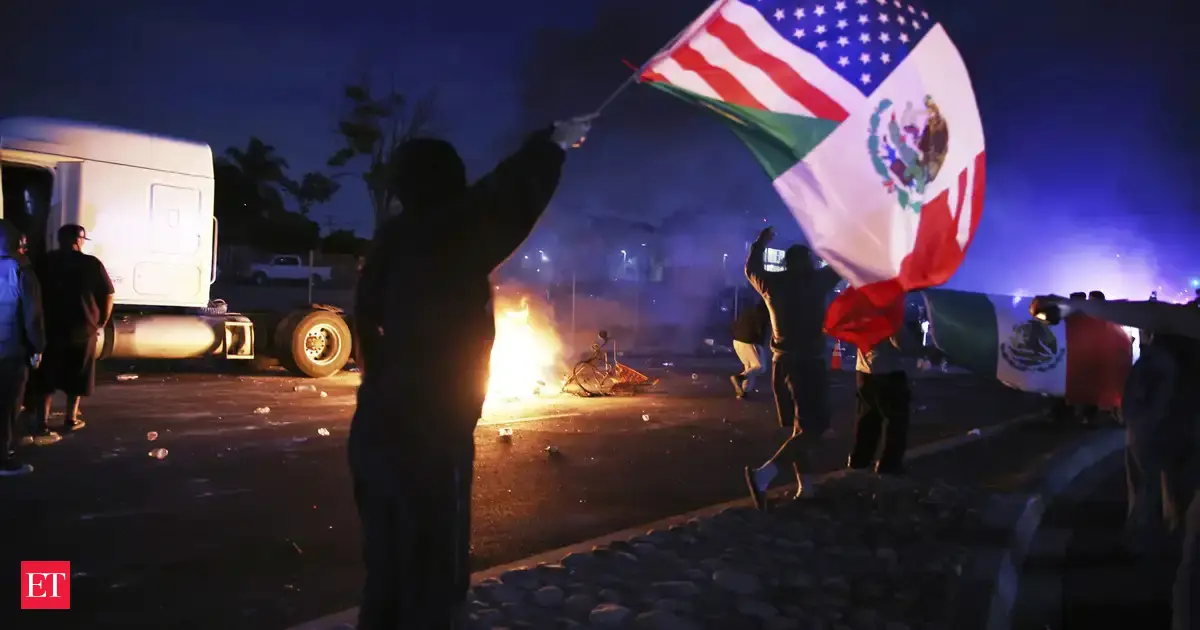
The deployment of the National Guard to Los Angeles in response to immigration raids and subsequent protests marks a significant escalation in the ongoing debate over immigration enforcement and federal authority. The raids, conducted by ICE with support from the Department of Homeland Security, targeted street vending zones, big-box stores, and distribution centers, resulting in the arrest of over 100 people. This action immediately ignited widespread protests across the city, with demonstrators clashing with federal agents and local law enforcement. The use of tear gas and flashbangs to disperse crowds further inflamed tensions, leading to a second day of unrest in a predominantly Latino district. The response from President Trump, ordering the deployment of at least 2,000 National Guard troops, has been met with strong condemnation from California Governor Gavin Newsom, who characterized the move as “provocative and irresponsible.” The situation raises fundamental questions about the balance of power between the federal government and state governments, particularly in the context of sanctuary laws and immigration policy. The deployment also carries echoes of past civil unrest in Los Angeles, prompting comparisons to the 1992 riots and raising concerns about the potential for further escalation. The involvement of diverse groups, including immigrants, labor unions, students, and civil rights organizations, underscores the broad-based opposition to the raids and the perceived overreach of federal authority. The legal ramifications of the deployment, particularly under Title 10 authority without the governor's explicit consent, are likely to be significant, with civil liberties groups already vowing to challenge the constitutionality of the operation. The events in Los Angeles serve as a stark reminder of the deeply divisive nature of immigration policy in the United States and the potential for conflict between federal and state authorities on this issue. The long-term consequences of this deployment, both legal and social, remain to be seen, but it is clear that the immigration debate will continue to be a central issue in American politics for the foreseeable future. The core issue lies in the differing perspectives on immigration enforcement. The federal government, under the Trump administration, has adopted a stricter approach, prioritizing enforcement and deportation. This approach is seen by many as necessary to maintain national security and uphold the rule of law. However, critics argue that it is inhumane and disproportionately impacts vulnerable communities. Sanctuary cities, like Los Angeles, have enacted policies to limit cooperation with federal immigration authorities, reflecting a belief that local law enforcement should focus on community safety rather than immigration enforcement. This conflict between federal and local policies creates a complex and often contentious landscape. The deployment of the National Guard further complicates the situation, raising concerns about the militarization of civil responses and the potential for escalation. The use of Title 10 authority, which allows the federal government to deploy troops without the governor's approval, is particularly controversial, as it raises questions about the limits of federal power and the rights of states to govern themselves. The legal challenges that are likely to follow will focus on these constitutional issues, potentially setting important precedents for future conflicts between the federal government and state governments. Furthermore, the social impact of the raids and the deployment of the National Guard is significant. The fear and anxiety among immigrant communities are palpable, with many residents afraid to leave their homes or seek assistance from law enforcement. This climate of fear can undermine community trust and make it more difficult to address other important social issues. The long-term consequences of this erosion of trust could be significant, particularly in communities with large immigrant populations. The events in Los Angeles also highlight the importance of effective communication and coordination between federal, state, and local authorities. The lack of coordination in this case has exacerbated tensions and undermined public trust. A more collaborative approach, based on mutual respect and a shared commitment to community safety, is essential to address the complex challenges of immigration enforcement. Ultimately, the events in Los Angeles serve as a microcosm of the broader national debate over immigration policy. The conflicting values and priorities of different stakeholders, the complex legal and constitutional issues, and the significant social and economic impacts all contribute to the complexity of this issue. Finding a solution that is both effective and humane will require a commitment to dialogue, compromise, and a recognition of the rights and dignity of all individuals.
The response of California Governor Gavin Newsom to the National Guard deployment underscores the deep divisions between state and federal authorities regarding immigration enforcement. Newsom's condemnation of the raids as “provocative and irresponsible” highlights the state's commitment to maintaining its sanctuary status, which restricts cooperation between local law enforcement and ICE. This stance reflects a broader philosophical difference regarding the role of law enforcement and the treatment of immigrant communities. While the federal government prioritizes enforcement and deportation, California emphasizes community integration and protection of vulnerable populations. This divergence in priorities has led to increasing friction between the state and federal governments, particularly under administrations with stricter immigration policies. The governor's sharp rebuke of the National Guard deployment, asserting that “This is not a war zone,” underscores the state's belief that the federal government is overstepping its authority and militarizing a civil issue. The lack of coordination between federal and state authorities further exacerbates the situation, undermining public trust and creating a climate of uncertainty. The governor's response also reflects the political realities of California, where a majority of residents support more inclusive immigration policies. By standing up to the federal government, Newsom is aligning himself with the values and priorities of his constituents. However, this stance also carries political risks, as it could alienate voters who support stricter immigration enforcement. The ongoing legal challenges to the National Guard deployment are likely to further complicate the situation, potentially leading to a protracted legal battle between the state and federal governments. The outcome of these legal challenges will have significant implications for the balance of power between the federal government and state governments on immigration issues. Furthermore, the governor's response highlights the importance of state leadership in advocating for the rights and interests of immigrant communities. By providing legal and social services, California is attempting to mitigate the negative impacts of federal immigration policies. This proactive approach is seen as essential to protecting vulnerable populations and promoting community integration. The long-term success of these efforts will depend on the continued commitment of state resources and the ability to navigate the complex legal and political landscape. The events in Los Angeles and the response of Governor Newsom underscore the ongoing struggle between state and federal authorities over immigration policy. This conflict is likely to continue for the foreseeable future, as long as there are fundamental differences in values and priorities. Finding a way to bridge this divide will require a commitment to dialogue, compromise, and a recognition of the legitimate concerns of all stakeholders.
The potential application of the Insurrection Act, even if not explicitly invoked, looms large over the events in Los Angeles, casting a shadow of constitutional uncertainty and raising concerns about the erosion of states' rights. Legal experts' warnings that the deployment of federal troops in a sanctuary city like Los Angeles could be a 'test run' for broader executive action are particularly chilling. The Insurrection Act, a rarely used law that allows the president to deploy troops within the United States to suppress civil disorder, has historically been invoked only in extreme circumstances. The prospect of using it to enforce federal immigration laws in a state with differing policies raises profound questions about the limits of federal power and the autonomy of state governments. The fact that Trump did not officially confirm the use of the Insurrection Act does not diminish the concerns, as the deployment of National Guard troops under Title 10 authority already represents a significant intervention in state affairs. The legal challenges that are likely to ensue will focus on whether the federal government has exceeded its constitutional authority and whether the deployment violates the principles of federalism. The implications of these legal challenges extend far beyond the specific case of Los Angeles. If the federal government is successful in asserting its authority to deploy troops in sanctuary cities, it could set a precedent for future interventions in other areas of state policy, such as healthcare, education, and environmental regulation. This erosion of states' rights could have a profound impact on the balance of power between the federal government and state governments, potentially leading to a more centralized and less responsive system of governance. Furthermore, the potential application of the Insurrection Act raises concerns about the militarization of civil responses and the erosion of civil liberties. Deploying troops to enforce immigration laws could create a climate of fear and intimidation, particularly within immigrant communities. The presence of heavily armed soldiers could also escalate tensions and lead to violence, undermining community trust and making it more difficult to address underlying social problems. The long-term consequences of militarizing civil responses could be significant, potentially leading to a more authoritarian and less democratic society. The events in Los Angeles serve as a stark reminder of the fragility of constitutional principles and the importance of safeguarding states' rights and civil liberties. The potential application of the Insurrection Act, even if not explicitly invoked, represents a grave threat to these values. It is essential that the courts and the public remain vigilant in defending these principles and holding the government accountable for its actions.