
 |
|
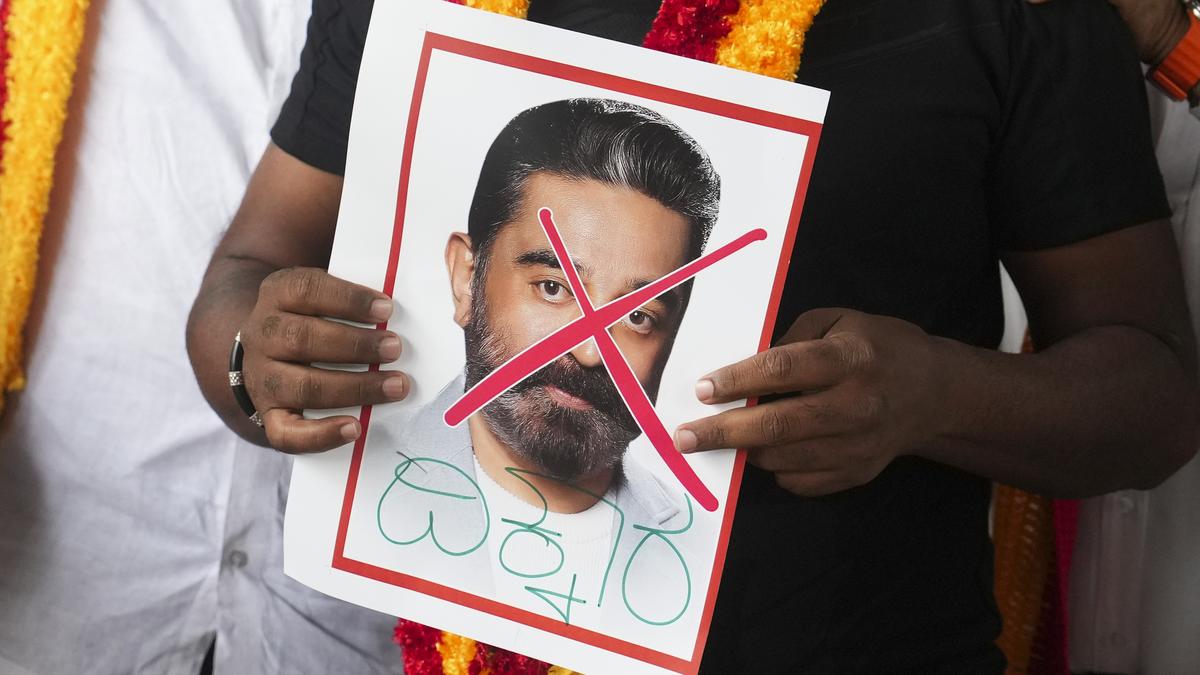
The controversy surrounding Kamal Haasan's assertion that “Kannada was born from Tamil” is not merely a linguistic disagreement but a reflection of deeper socio-political dynamics interwoven with language, identity, and historical narratives. This statement, while seemingly straightforward, has ignited passionate responses, particularly within Tamil Nadu and Karnataka, highlighting the sensitive nature of language as a marker of cultural pride and belonging. The assertion itself is not a novel one; it has been circulating within Tamil intellectual circles for centuries, rooted in the notion of Tamil as the primordial Dravidian language from which all others descend. This perspective, championed by some Tamil nationalists, stands in contrast to the more widely accepted linguistic theory that proposes a Proto-Dravidian language as the common ancestor of all Dravidian languages, including Tamil, Kannada, Telugu, and Malayalam. Robert Caldwell, a prominent 19th-century linguist, contributed significantly to the development of this Proto-Dravidian theory, yet it has never fully resonated with certain segments of the Tamil population who maintain a belief in Tamil's unique and foundational role. The tenacity of this belief underscores the emotional and cultural significance attached to language, transforming it from a mere tool of communication into a symbol of heritage and historical importance. It is important to acknowledge and comprehend that the historical development of linguistic theories have often been entwined with colonial perspectives and political agendas, sometimes inadvertently contributing to the perpetuation of hierarchical views of languages. A decolonized understanding of language families recognizes the complexity of linguistic evolution and discourages the assignment of arbitrary superiority to any particular language. The debates arising from Kamal Haasan's statement also highlight the increasing politicization of language in India’s multilingual context. As national groups solidify their identities, language emerges as a primary marker, and any perceived threat to linguistic pride can trigger strong reactions. In this climate, it becomes imperative to navigate discussions about language origins and relationships with sensitivity and awareness. Public pronouncements about one language being the source of another can be easily interpreted as demeaning or dismissive of other languages and cultures, leading to resentment and division. Therefore, advocating for the common Proto-Dravidian origin is not only more aligned with prevailing linguistic scholarship but also fosters greater harmony and equality among Dravidian-speaking communities. This approach acknowledges the shared heritage of these languages without implying any inherent superiority or subordination. It is also crucial to acknowledge the diverse range of perspectives present within Tamil Nadu itself. While the idea of Tamil as the origin of all languages holds sway among some Tamil nationalists, it is not universally accepted. The more nuanced and widely accepted idea of a Proto-Dravidian language has gained traction both within and beyond Tamil Nadu, reflecting a more balanced and inclusive understanding of Dravidian linguistic history. Furthermore, the reactions to Haasan's statement demonstrate the complexities of freedom of expression in a context where language is deeply intertwined with identity and politics. While individuals have the right to express their views, it is equally important to consider the potential impact of those views on others, particularly when dealing with sensitive issues such as language origins. The court's initial response to the controversy, seemingly pressuring Haasan to apologize, raises questions about the role of judicial institutions in mediating such disputes. Ideally, the court should prioritize the protection of freedom of expression while also recognizing the need to address any potential incitement to violence or social unrest. The court’s response should reflect a nuanced understanding of the delicate balance between individual rights and community sensitivities, avoiding actions that could be perceived as favoring one linguistic group over another. In Haasan’s case, his decision not to apologize, despite the potential commercial consequences, signals a commendable stance on the importance of standing by one's beliefs. It also underscores the significance of protecting the right to express opinions, even when those opinions are controversial or unpopular. Democratic societies thrive on open dialogue and the free exchange of ideas, and suppressing dissenting voices, even those that may be perceived as offensive, undermines the very foundations of democracy. Instead of resorting to censorship or coercion, the appropriate response to controversial statements is to engage in reasoned debate and to present counter-arguments based on evidence and logic. This approach not only protects freedom of expression but also fosters a more informed and tolerant society. Ultimately, the Kamal Haasan-Kannada controversy underscores the need for a more nuanced and informed approach to discussions about language origins and relationships. It highlights the importance of considering the socio-political context in which these discussions take place, and the potential impact of language-related statements on community relations. By fostering a greater understanding of linguistic diversity and promoting respect for all languages and cultures, we can create a more harmonious and inclusive society where freedom of expression is protected and the rights of all individuals are respected.
The historical backdrop to this controversy is complex and warrants careful consideration. The Dravidian language family, as a distinct linguistic group, was identified and studied extensively during the colonial period. While the early linguistic research laid the foundation for understanding the relationships between these languages, it also carried the biases and perspectives of the colonial era. Robert Caldwell's 'A Comparative Grammar of the Dravidian or South-Indian Family of Languages' (1856) was a landmark work that established the Dravidian language family as separate from the Indo-European family. However, Caldwell's work also contributed to a hierarchical view of languages, inadvertently fostering a sense of competition and superiority among different Dravidian languages. The notion that Tamil is the oldest and purest Dravidian language gained prominence during the Tamil Renaissance in the late 19th and early 20th centuries. This period witnessed a surge in Tamil cultural and linguistic pride, fueled by a desire to resist the perceived dominance of Sanskrit and Hindi. Tamil scholars and activists emphasized the antiquity and richness of Tamil literature, asserting its unique place in South Indian history and culture. This cultural revival played a crucial role in shaping Tamil identity and fostering a sense of collective pride. However, it also contributed to the perpetuation of certain myths and misconceptions about Tamil's origins and its relationship to other Dravidian languages. The claim that Tamil is the mother of all languages, while appealing to Tamil nationalists, lacks solid scientific evidence. Linguistic reconstruction methods, which are used to trace the origins of languages, suggest that Proto-Dravidian was the common ancestor of all Dravidian languages. While Tamil is undoubtedly an ancient and influential language, it is not the sole source of all other Dravidian languages. The other Dravidian languages, including Kannada, Telugu, and Malayalam, have their own unique histories and contributions to the Dravidian linguistic landscape. The controversy surrounding Kamal Haasan's statement also raises important questions about the role of public figures in shaping public discourse. Celebrities and influencers have a significant platform and their words can have a profound impact on public opinion. Therefore, it is essential for public figures to be mindful of the potential consequences of their statements, especially when dealing with sensitive issues such as language and identity. While freedom of expression is a fundamental right, it also comes with a responsibility to exercise that right with care and consideration. Public figures should strive to promote understanding and harmony, rather than inciting division and conflict. In this context, Kamal Haasan's initial statement could be interpreted as insensitive to the feelings of Kannada speakers. While he may have intended to express his admiration for the Kannada language and culture, his words were perceived by some as demeaning and dismissive. However, his subsequent decision not to apologize, despite the pressure he faced, demonstrates a commendable commitment to standing by his beliefs. It also underscores the importance of protecting the right to express opinions, even when those opinions are controversial or unpopular. The appropriate response to Kamal Haasan's statement is not to censor him or demand an apology, but to engage in a respectful and informed dialogue about language origins and relationships. This dialogue should be based on scientific evidence and should avoid perpetuating myths and misconceptions. It should also acknowledge the emotional and cultural significance of language and the importance of promoting respect for all languages and cultures.
Moving forward, it is crucial to promote a more nuanced and informed understanding of Dravidian linguistics and cultural history. This can be achieved through a variety of means, including education, public awareness campaigns, and inter-cultural dialogue. Educational institutions should incorporate more comprehensive and accurate information about Dravidian languages and cultures into their curricula. This should include a discussion of the Proto-Dravidian theory, as well as the unique histories and contributions of each Dravidian language. Public awareness campaigns can be used to dispel myths and misconceptions about language origins and relationships. These campaigns should emphasize the importance of linguistic diversity and the need to promote respect for all languages and cultures. Inter-cultural dialogue can provide a platform for people from different linguistic backgrounds to come together and share their perspectives. These dialogues can help to bridge cultural divides and promote understanding and empathy. In addition to these efforts, it is also important to address the underlying socio-political factors that contribute to language-related conflicts. This includes addressing issues of linguistic inequality and promoting policies that support the preservation and promotion of all languages. Linguistic inequality can manifest in various forms, including unequal access to education and employment opportunities for speakers of minority languages. Policies that support the preservation and promotion of all languages can help to ensure that all communities have the opportunity to maintain their linguistic heritage and to participate fully in society. Ultimately, the Kamal Haasan-Kannada controversy serves as a reminder of the complex and sensitive nature of language and identity. By promoting a more nuanced and informed understanding of Dravidian linguistics and cultural history, and by addressing the underlying socio-political factors that contribute to language-related conflicts, we can create a more harmonious and inclusive society where all languages and cultures are valued and respected. Furthermore, promoting multilingualism and intercultural understanding can break down barriers and foster greater collaboration and exchange between different communities. This can lead to a more vibrant and innovative society that is better equipped to address the challenges of the 21st century. Finally, it is essential to recognize the role of media in shaping public opinion and to encourage responsible reporting on language-related issues. Media outlets should strive to provide accurate and balanced coverage of these issues, avoiding sensationalism and promoting understanding and dialogue. By working together, we can create a more informed and tolerant society where language is celebrated as a source of diversity and cultural richness, rather than as a source of division and conflict. The ability of individuals and communities to express themselves in their own languages is a fundamental human right, and it is essential to protect and promote this right for all. By fostering a culture of linguistic inclusion and respect, we can create a more just and equitable world for future generations.