
 |
|
The escalating conflict between Israel and Iran has reached a dangerous new phase, marked by targeted assassinations, retaliatory missile strikes, and heightened international tensions. Israel's military has claimed responsibility for killing two high-ranking members of Iran's al-Quds force, the foreign branch of the Islamic Revolutionary Guard Corps, in overnight strikes. These strikes, according to Israeli officials, targeted Saeed Izadi, head of the Palestine Corps, and Behnam Shahriyari, another senior official responsible for financing Hezbollah. Israel alleges that Izadi played a significant role in funding and arming Hamas prior to its attack on Israel on October 7, 2023, which resulted in the deaths of approximately 1,200 people, mostly civilians. The timing of these strikes, preceding a warning from Iran regarding potential US intervention, underscores the gravity of the situation and the potential for wider regional conflict.
In response to the Israeli strikes, Iran launched a barrage of missiles at Israel, resulting in a fire in central Israel caused by shrapnel from an intercepted missile. Additionally, a drone strike damaged a residential building in northern Israel, though no casualties were reported. This tit-for-tat exchange of fire highlights the volatility of the conflict and the immediate threat to civilian populations on both sides. The cycle of violence, initiated by Israeli strikes on Iran purportedly aimed at preventing the country from obtaining a nuclear weapon, has rapidly escalated into a series of retaliatory bombings that has now entered its ninth day. The human cost of the conflict is already significant, with reports indicating that at least 430 people have been killed and 3,500 wounded in Iran by Israeli strikes, while at least 25 people have been killed and hundreds injured in Israel by Iranian strikes. The displacement of tens of thousands of city residents, particularly in Tehran, further exacerbates the humanitarian crisis.
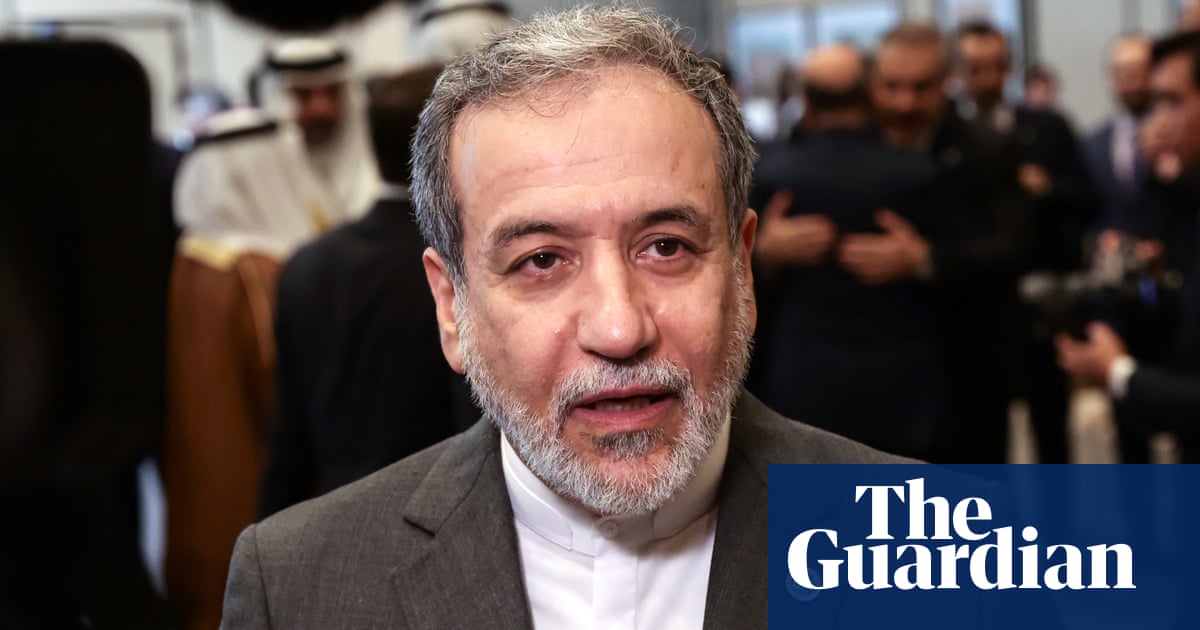
Diplomatic efforts to de-escalate the conflict have so far proven unsuccessful. Talks between the Iranian foreign minister, Abbas Araghchi, and European counterparts in Geneva aimed at reviving nuclear negotiations between the US and Iran have ended without a breakthrough. The European proposal, which included demands for Iran to move to zero uranium enrichment, restrict its missile program, and end its financing of proxy groups, appears to have been rejected by Iran, which insists on a cessation of Israeli bombings as a precondition for negotiations. This impasse underscores the deep-seated mistrust and animosity between the parties, and the difficulty of finding common ground for a ceasefire. The involvement of the United States adds another layer of complexity to the conflict. Donald Trump has stated that he will decide within two weeks whether or not the US will join Israel in its bombing of Iran, a decision that carries significant implications for regional stability. Iran has warned that US intervention would be "very, very dangerous for everyone," highlighting the potential for a wider regional war.
Amidst the escalating conflict, international actors are attempting to play a mediating role. Vladimir Putin has offered to mediate between Israel and Iran, emphasizing Russia's opposition to the proliferation of nuclear weapons. However, he also reiterated Russia's view that Iran has the right to use nuclear energy peacefully, echoing Iran's insistence that its nuclear program is intended for civilian purposes. The International Atomic Energy Agency (IAEA) has expressed serious concerns about Iran's enriched uranium production, which has reached a level of 60%, but US intelligence estimates that Iran is still several years away from producing a nuclear weapon. The potential for attacks on nuclear sites has raised further concerns about nuclear safety and security. The IAEA director general, Rafael Grossi, has warned against attacks on nuclear facilities in Iran, citing the potential for a "very high release of radioactivity to the environment," particularly in the event of an attack on the Bushehr nuclear power plant. Israel's foreign minister, Gideon Saar, has stated that Israeli attacks have delayed Iran from obtaining a nuclear bomb for at least "two or three years," indicating that the Israeli military campaign will continue. This commitment to continued military action, coupled with the lack of progress in diplomatic negotiations, suggests that the conflict between Israel and Iran is likely to persist, with potentially devastating consequences for the region and beyond.
The escalating tensions are also impacting critical infrastructure and civilian facilities. Iran's foreign ministry spokesperson, Esmaeil Baghaei, has accused Israel of intentionally attacking a Red Crescent ambulance in Tehran, calling it a war crime and a violation of international humanitarian law. Israel, in turn, claims that it is only targeting Iranian government sites, including the internal security forces headquarters in Tehran. However, reports indicate that civilian facilities have also been affected, with an Iranian missile hitting Soroka hospital in southern Israel, injuring at least 76 people and damaging the facility. These attacks on civilian infrastructure raise serious concerns about the adherence to international humanitarian law and the protection of non-combatants. The destruction of infrastructure and the targeting of essential services further exacerbate the humanitarian crisis, making it increasingly difficult to provide aid and support to those affected by the conflict. The lack of accountability for these attacks and the impunity with which they are carried out underscores the urgent need for international monitoring and investigation to ensure that the rules of war are respected and that perpetrators are held accountable for their actions. The long-term consequences of this conflict, including the potential for regional instability, the humanitarian crisis, and the proliferation of weapons, demand a concerted international effort to de-escalate tensions and find a peaceful resolution.
The complexities of the Israel-Iran conflict extend beyond immediate military actions and involve a web of political, economic, and ideological factors. The historical rivalry between the two nations, fueled by differing geopolitical ambitions and religious ideologies, has created a climate of deep distrust and animosity. Israel views Iran's nuclear program as an existential threat and has repeatedly stated its determination to prevent Iran from acquiring nuclear weapons. Iran, on the other hand, maintains that its nuclear program is for peaceful purposes and has accused Israel of undermining regional stability through its military actions and its alliance with the United States. The involvement of regional actors, such as Hezbollah in Lebanon and various proxy groups in Syria and Iraq, further complicates the conflict and increases the risk of escalation. These proxy groups, supported by Iran, have engaged in attacks against Israel and have contributed to the overall instability of the region. The support that both Israel and Iran receive from their respective allies also plays a significant role in shaping the conflict. The United States has been a staunch supporter of Israel, providing it with military and financial assistance. Iran, on the other hand, has received support from Russia and China, which have opposed sanctions and other measures aimed at curbing Iran's nuclear program. These external alliances further entrench the conflict and make it more difficult to find a peaceful resolution.
The economic consequences of the conflict are also far-reaching. The ongoing tensions have disrupted trade and investment, and have led to increased security costs. The sanctions imposed on Iran by the United States and other countries have severely restricted its ability to trade and conduct financial transactions, further straining its economy. The conflict has also had a negative impact on the economies of neighboring countries, which have been affected by the disruption of trade routes and the influx of refugees. The increased military spending by both Israel and Iran has diverted resources from other sectors, such as education and healthcare, further hindering economic development. The destruction of infrastructure and the displacement of populations have also had significant economic costs, requiring substantial resources for reconstruction and humanitarian assistance. The long-term economic consequences of the conflict are likely to be severe, particularly if the tensions continue to escalate. The disruption of oil supplies from the region could have a significant impact on global energy markets, further exacerbating economic instability. The international community needs to address the economic consequences of the conflict by providing financial assistance to affected countries and by promoting economic cooperation and integration in the region. This could include investing in infrastructure projects, promoting trade and investment, and supporting efforts to diversify economies and create jobs.
Addressing the root causes of the Israel-Iran conflict requires a multifaceted approach that addresses both the immediate security concerns and the underlying political, economic, and ideological factors. This includes promoting dialogue and negotiation between the parties, addressing the proliferation of weapons, and promoting regional cooperation and integration. The international community must also work to address the humanitarian crisis by providing aid and support to those affected by the conflict. This includes providing food, shelter, medical care, and other essential services to displaced populations and refugees. The long-term stability of the region depends on addressing the underlying political and economic grievances that have fueled the conflict. This includes promoting democracy and human rights, addressing economic inequality, and promoting inclusive governance. The international community must also work to address the root causes of terrorism and extremism, which have contributed to the instability of the region. This includes countering violent ideologies, disrupting terrorist networks, and promoting education and economic opportunity. The Israel-Iran conflict is a complex and multifaceted problem that requires a concerted international effort to resolve. There are no easy solutions, but with political will and commitment, it is possible to create a more peaceful and prosperous future for the region.
Source: Israel says it has killed two top al-Quds members as Iran warns US against joining war