
 |
|
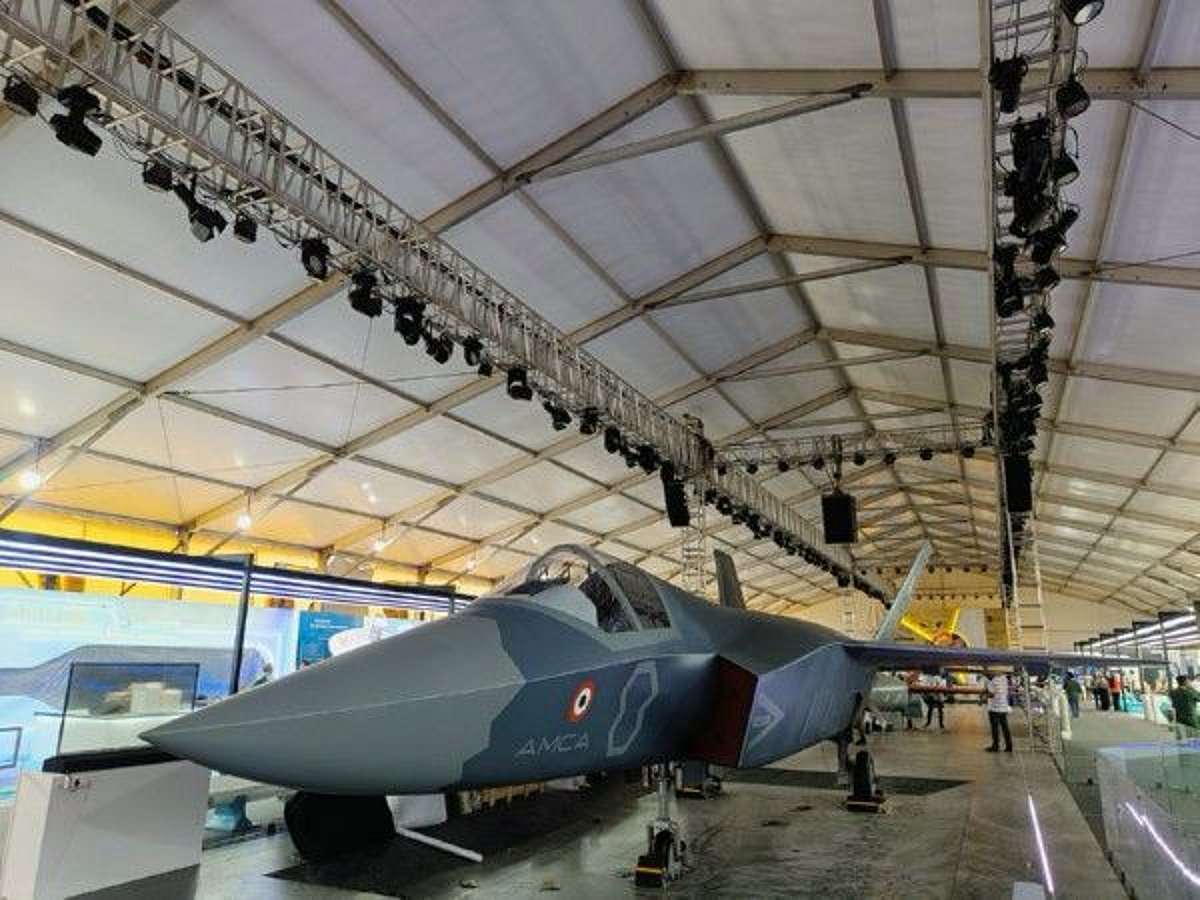
India's Advanced Medium Combat Aircraft (AMCA), a fifth-generation fighter jet project, has received a significant boost with the Defence Ministry's approval for the Aeronautical Development Agency (ADA) to commence design and development of its execution model. This decision, though belated in light of the rapidly evolving security landscape in the region, signals a renewed commitment to bolstering India's air power capabilities. The project, which has been in the pipeline for several years, aims to equip the Indian Air Force (IAF) with a cutting-edge fighter platform that can effectively counter emerging threats and maintain a strategic edge over potential adversaries. The Cabinet Committee on Security's nod, followed by the Ministry's clearance, marks a crucial step forward in translating the AMCA from a concept to a tangible reality. However, the road ahead is fraught with challenges, including technological complexities, budgetary constraints, and tight deadlines. Meeting these challenges will require a concerted effort from all stakeholders, including the ADA, the IAF, and private sector partners. The AMCA program is not just about acquiring a new fighter jet; it is about building indigenous capabilities in advanced aerospace technologies, fostering innovation, and creating a robust defense industrial base. The success of the AMCA program will have far-reaching implications for India's national security, economic growth, and technological self-reliance. The project aims to reduce India's dependence on foreign suppliers for critical defense equipment and promote the development of a domestic ecosystem for aerospace manufacturing. The AMCA's development aligns with the 'Make in India' initiative, encouraging local production, job creation, and technological advancement. The technological demands of a fifth-generation fighter are extensive, involving advanced aerodynamics, stealth capabilities, sensor fusion, network-centric warfare, and advanced weaponry. The integration of these technologies requires substantial research, development, and testing, demanding the highest levels of engineering expertise and project management. The AMCA's design incorporates stealth features to minimize its radar cross-section, making it difficult to detect by enemy radar systems. This stealth capability is crucial for penetrating enemy airspace and conducting precision strikes against high-value targets. The aircraft will also be equipped with advanced sensors, including radar, electro-optical sensors, and electronic warfare systems, providing it with unparalleled situational awareness. The sensor fusion capabilities of the AMCA will allow it to integrate data from multiple sensors, creating a comprehensive picture of the battlefield. The AMCA will also be equipped with advanced weaponry, including air-to-air missiles, air-to-ground missiles, and precision-guided bombs. These weapons will allow the AMCA to engage a wide range of targets, from enemy fighters to ground-based infrastructure. The AMCA will also be designed to operate in a network-centric warfare environment, allowing it to share information with other platforms and command centers. This network-centric capability will enhance the IAF's overall operational effectiveness. The development of the AMCA is a complex and challenging undertaking, requiring significant investment in research, development, and testing. The project will also require close collaboration between the ADA, the IAF, and private sector partners. The ADA will be responsible for the design and development of the AMCA, while the IAF will provide operational requirements and feedback. Private sector partners will be involved in the manufacturing and integration of various components and systems. The success of the AMCA program will depend on the ability of these stakeholders to work together effectively and efficiently. The timeline for the AMCA program is ambitious, with the first prototype expected to be unveiled in three years and the operational roll-out expected by 2035. Meeting these deadlines will require a focused and coordinated effort from all stakeholders. The project also faces budgetary constraints, with an allocated budget of ₹15,000 crore. Managing costs effectively will be crucial for ensuring the long-term sustainability of the program. The initial prototypes are estimated to cost approximately ₹1,720 crore each, but this cost is expected to decrease to ₹860 crore when production scales up. This reduction in cost will be essential for making the AMCA affordable and accessible to the IAF. The AMCA program is not without its critics. Some argue that the project is too ambitious and that India lacks the technological capabilities to develop a fifth-generation fighter jet. Others argue that the project is too expensive and that the money could be better spent on other priorities. However, the government remains committed to the AMCA program, viewing it as a crucial investment in India's national security. The successful development of the AMCA will not only enhance India's air power capabilities but also contribute to the growth of the domestic aerospace industry.
The geopolitical context surrounding the AMCA's development cannot be ignored. India's strategic rivals, particularly China and Pakistan, are rapidly modernizing their air forces. China already possesses a significant number of operational fifth-generation fighter jets, and Pakistan is acquiring more. This creates a strategic imbalance that India must address. The AMCA is intended to bridge this gap and provide the IAF with a qualitative edge over its adversaries. China's reported unveiling of its sixth-generation fighter, the Chengdu J-36, further underscores the urgency for India to accelerate its own aerospace programs. While these reports remain unconfirmed, they highlight the rapid pace of technological advancement in the region and the need for India to stay ahead of the curve. The delay in the AMCA program has already put India at a disadvantage, and further delays could have serious consequences for its national security. The IAF's squadron strength is already stretched thin, with only 31 squadrons against an authorized strength of 42. This shortfall in squadron strength makes it difficult for the IAF to meet its operational commitments, particularly in the face of growing regional tensions. The AMCA is intended to augment the IAF's existing fleet and provide it with the necessary capabilities to maintain its operational effectiveness. The Indian Air Force is currently operating a mix of fighter aircraft, including Russian-origin Sukhoi Su-30MKIs, MiG-29s, and French-origin Rafales. While these aircraft are capable, they are not as advanced as fifth-generation fighter jets. The AMCA will complement these existing platforms and provide the IAF with a more balanced and versatile force structure. The integration of the AMCA into the IAF's fleet will require significant training and logistical support. The IAF will need to develop new tactics and procedures for operating the AMCA, and it will need to invest in the necessary infrastructure to maintain and support the aircraft. The IAF will also need to train its pilots and maintenance personnel to operate and maintain the AMCA. This will require a significant investment in training and education. The AMCA program is not just about acquiring a new fighter jet; it is about transforming the IAF into a modern, technologically advanced force. The AMCA will enable the IAF to operate more effectively in a complex and dynamic security environment. The project will also help the IAF to develop new capabilities in areas such as network-centric warfare, electronic warfare, and precision strike. The success of the AMCA program will depend on the ability of the IAF to adapt to these new technologies and capabilities. The AMCA program also presents opportunities for collaboration with foreign partners. India has already partnered with Russia on the development of the fifth-generation fighter aircraft (FGFA), but this project has been plagued by delays and cost overruns. The AMCA program could provide an opportunity to forge new partnerships with other countries that have experience in developing fifth-generation fighter jets. Collaboration with foreign partners could help to accelerate the development of the AMCA and reduce its cost. However, India must be careful to protect its intellectual property and ensure that it retains control over the project. The AMCA program is a strategic imperative for India. It is essential for maintaining India's national security, promoting economic growth, and fostering technological self-reliance. The government must provide the necessary resources and support to ensure the success of the AMCA program. The project must be managed effectively and efficiently, and all stakeholders must work together to achieve the common goal of developing a world-class fifth-generation fighter jet.
Looking ahead, the AMCA program's success hinges on several critical factors. First and foremost is the need for a 'mission mode' approach. This entails prioritizing the project, streamlining decision-making processes, and ensuring seamless coordination between various stakeholders. Bureaucratic hurdles and inter-agency delays must be minimized to keep the program on track. Second, technological challenges must be addressed proactively. Investing in advanced research and development, fostering collaboration between academia and industry, and leveraging international expertise are crucial for overcoming these challenges. The development of indigenous technologies, such as advanced radar systems, electronic warfare capabilities, and engine technology, is essential for achieving self-reliance in the long run. Third, budgetary constraints must be managed effectively. Careful planning, cost optimization, and efficient resource allocation are necessary for staying within budget without compromising the project's scope or quality. Exploring innovative financing mechanisms and attracting private sector investment can also help to alleviate budgetary pressures. Fourth, the AMCA program must be integrated into a broader strategic framework. This includes developing a comprehensive doctrine for the use of fifth-generation fighter jets, training pilots and maintenance personnel, and establishing the necessary infrastructure to support the aircraft. The integration of the AMCA into the IAF's fleet must be seamless and efficient. Fifth, the AMCA program must be transparent and accountable. Regular progress reports, independent reviews, and public consultations are essential for ensuring that the project remains on track and that the public is informed about its progress. Transparency and accountability are crucial for building public trust and support for the AMCA program. Finally, the AMCA program must be adaptable and responsive to changing circumstances. The geopolitical landscape is constantly evolving, and the AMCA must be able to adapt to new threats and challenges. This requires a flexible and agile approach to program management and a willingness to embrace innovation. The AMCA program is a complex and challenging undertaking, but it is also a strategic imperative for India. The successful development of the AMCA will not only enhance India's air power capabilities but also contribute to the growth of the domestic aerospace industry and strengthen India's national security. The government must provide the necessary resources and support to ensure the success of the AMCA program. This is not just about developing a new fighter jet; it's about building a future where India is a leader in aerospace technology and a force to be reckoned with on the global stage. A successful AMCA program will send a strong signal to the world that India is committed to defending its interests and maintaining its strategic autonomy. The AMCA is more than just a machine; it's a symbol of India's ambition, ingenuity, and resolve. The success of the AMCA program will depend on the commitment and dedication of all those involved, from the engineers and scientists who are designing the aircraft to the pilots and maintenance personnel who will be operating and maintaining it. The AMCA is a testament to the power of human innovation and the importance of investing in research and development. It is a reminder that India has the potential to be a global leader in aerospace technology, and that with the right resources and support, it can achieve anything it sets its mind to. The AMCA is not just a fighter jet; it is a symbol of India's future.
Source: India's fifth generation AMCA needs mission mode to meet deadlines