
 |
|
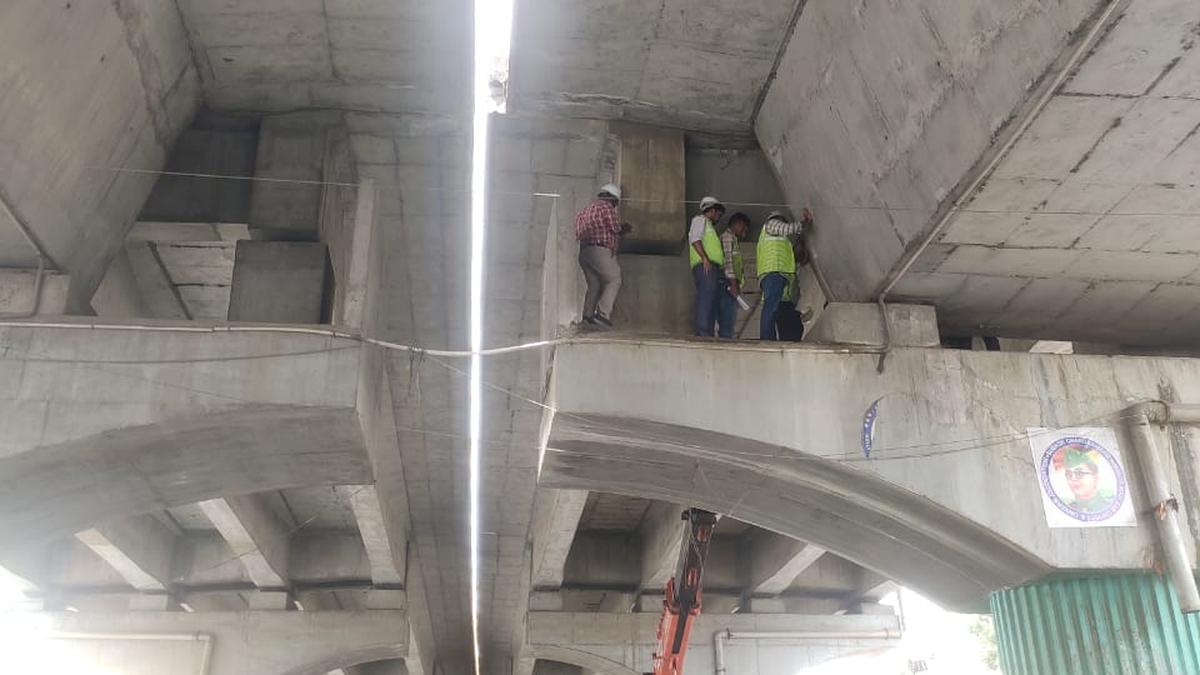
The Hosur-Bengaluru National Highway experienced significant disruption on Saturday, June 21, 2025, as a 700-meter-long flyover was closed to traffic due to a critical bearing failure. This failure resulted in a transverse shift of the flyover, prompting immediate action to suspend vehicular movement and prevent a potential mishap. The incident highlights the vulnerability of infrastructure to unforeseen issues and underscores the importance of regular maintenance and inspection. The closure of the flyover had a direct impact on traffic heading towards Bengaluru, causing delays and inconvenience for commuters and businesses alike. The timely detection of the transverse shift, attributed to diligent patrols, averted what could have been a far more serious incident, potentially involving injuries or fatalities. The event immediately triggered a response from the National Highways Authority of India (NHAI), which dispatched a team of officials and an independent bridge expert to assess the structural integrity of the flyover and determine the cause of the bearing failure. The assessment process is crucial not only for understanding the immediate problem but also for identifying potential weaknesses in similar structures and implementing preventative measures to avoid future incidents. The rapid response also illustrates the protocols in place for handling infrastructure emergencies, emphasizing the need for coordinated action between various stakeholders, including NHAI, maintenance consultants, and local authorities. The economic ramifications of the flyover closure are also noteworthy, particularly for industries in Hosur that rely on efficient transportation networks for the movement of goods and personnel. The resulting traffic congestion has led to increased transportation costs and delays, potentially impacting productivity and profitability. The incident serves as a reminder of the interconnectedness of infrastructure, transportation, and economic activity, highlighting the importance of investing in robust and well-maintained infrastructure to support sustainable economic growth. Furthermore, the closure has reignited discussions about the need for alternative routes and improved transportation planning in the region, underscoring the long-term implications of infrastructure failures on regional development. The incident also presents an opportunity for NHAI to review its maintenance protocols and inspection procedures to ensure that potential problems are identified and addressed proactively, rather than reactively. The incident necessitates a comprehensive investigation into the root cause of the bearing failure, considering factors such as design flaws, material defects, construction quality, and environmental conditions. The findings of the investigation should be used to inform future infrastructure projects and to improve the durability and resilience of existing structures. The involvement of an independent bridge expert in the assessment process is crucial for ensuring an objective and unbiased evaluation of the flyover's structural integrity. The expert's expertise and experience can provide valuable insights into the potential causes of the failure and the most appropriate course of action for remediation. The incident also highlights the importance of continuous monitoring of infrastructure to detect early warning signs of potential problems. This can be achieved through the use of advanced sensing technologies, such as strain gauges and accelerometers, which can provide real-time data on the structural health of bridges and other critical infrastructure. The implementation of a comprehensive infrastructure monitoring system can enable proactive maintenance and prevent catastrophic failures, saving lives and reducing economic losses. The Hosur flyover closure serves as a valuable learning experience for infrastructure managers and policymakers, emphasizing the need for a holistic approach to infrastructure management that considers not only the technical aspects but also the economic, social, and environmental implications. The lessons learned from this incident can be applied to improve infrastructure planning, design, construction, maintenance, and monitoring practices, ensuring the safety and reliability of transportation networks for years to come. The incident also underscores the importance of transparency and communication in handling infrastructure emergencies. The prompt and accurate dissemination of information to the public is crucial for managing expectations, mitigating inconvenience, and preventing panic. The authorities should provide regular updates on the progress of the assessment and repair efforts, and clearly communicate any alternative routes or transportation options that are available. The successful resolution of the Hosur flyover incident will require a collaborative effort between NHAI, the contractor responsible for the flyover's maintenance, local authorities, and the affected communities. By working together, these stakeholders can ensure that the flyover is safely and efficiently repaired, and that the region's transportation network is restored to full functionality. The incident provides an opportunity to showcase the resilience and adaptability of the community, demonstrating its ability to overcome challenges and emerge stronger from adversity. The long-term impact of the flyover closure will depend on the effectiveness of the remediation efforts and the extent to which the lessons learned are applied to improve infrastructure management practices. By investing in infrastructure, prioritizing safety, and fostering collaboration, the region can build a more resilient and sustainable transportation network that supports economic growth and enhances the quality of life for its residents.
Virender Sambyal, the Regional Officer and part of the NHAI's inspecting team, indicated that the bearing failure could be attributed to a combination of factors, including normal wear and tear over the past two decades or a 'sudden failure' resulting from unforeseen circumstances. Bridge bearings are critical components that support both longitudinal and rotational movements of the flyover, playing a vital role in transferring loads from the superstructure (the bridge deck) to the substructure (the supporting piers and foundations). A failure in these bearings can compromise the structural integrity of the entire bridge, potentially leading to catastrophic consequences. Sambyal's assessment that no immediate damage to the structure was evident is reassuring, but the replacement of the damaged bearing is essential to restore the flyover to its full operational capacity. The prompt action to address the bearing failure underscores the commitment of NHAI to prioritize safety and minimize disruption to traffic flow. The decision to replace the bearing rather than attempt a temporary repair reflects a focus on long-term reliability and durability. The fact that a bearing malfunctioned after just over two decades of operation raises questions about the expected lifespan of these components and the effectiveness of current maintenance practices. Sambyal acknowledged that factors such as jerks, heavy vehicle traffic, and wear and tear could contribute to premature bearing failure. This highlights the importance of considering these factors during the design and construction phases of bridge projects, as well as during routine maintenance and inspections. The use of hydraulic jacks to reverse the bridge displacement is a standard procedure for correcting structural misalignments. However, the NHAI team's decision to wait and observe the flyover for 48 hours before initiating the jacking process reflects a cautious approach, prioritizing safety and ensuring that there are no underlying structural issues that could be exacerbated by the jacking operation. The phased approach to restoring traffic, starting with light vehicles, is a prudent measure designed to minimize stress on the repaired flyover and allow for gradual monitoring of its performance under increasing loads. The timeline of one month for restoring normal traffic flow indicates the complexity of the repair process and the need for careful planning and execution. The involvement of G.L. Verma, an independent bridge expert, alongside NHAI officials and the Project Director of Krishnagiri, Golla Ramesh, underscores the importance of expertise and collaboration in addressing infrastructure challenges. Verma's independent assessment will provide an objective perspective on the cause of the failure and the effectiveness of the proposed repair strategy. The source from MSV Consultants, responsible for the maintenance of the NH-44 between Hosur and Krishnagiri, noted that the superstructural shift on the ‘GRT’ flyover was first detected by a patrol on Saturday, triggering the alert to NHAI. This highlights the critical role of regular patrols and visual inspections in identifying potential problems before they escalate into major failures. The NHAI's refusal to comment on whether the bearing malfunction within two decades was expected suggests that the issue is still under investigation and that further analysis is needed to determine the root cause. The fact that the lateral shift of the bridge affected a 40-meter length, while the entire 700-meter flyover was shut down, reflects the need for a conservative approach to safety, ensuring that the entire structure is thoroughly inspected and deemed safe before being reopened to traffic. The incident also underscores the importance of having contingency plans in place to manage traffic disruptions caused by infrastructure failures. The diversion of traffic onto the other half of the two-lane flyover demonstrates a practical approach to minimizing congestion, but it also highlights the limitations of the existing infrastructure and the need for alternative routes. The closure of the Hosur flyover is not an isolated incident. Many bridges and other infrastructure assets around the world are aging and in need of repair or replacement. The challenges of maintaining aging infrastructure are compounded by factors such as increasing traffic volumes, heavier loads, and extreme weather events. Addressing these challenges requires a comprehensive and proactive approach to infrastructure management, including regular inspections, preventive maintenance, and timely repairs. The Hosur flyover incident serves as a reminder of the importance of investing in infrastructure and prioritizing safety. By taking a proactive approach to infrastructure management, we can ensure the safety and reliability of our transportation networks and support sustainable economic growth.
The sudden traffic jam on Saturday night, as reported by K. Velmurugan, former president of the Hosur Small and Tiny Industries Association, highlights the immediate impact of the flyover closure on local businesses and commuters. Velmurugan's statement that it took two hours to cross a two-kilometer distance vividly illustrates the severity of the congestion and the inconvenience caused to those traveling through the area. His remarks also bring back into focus the long-standing issue of the absence of alternate routes and the lack of progress on the North Inner Ring Road, a plan conceived eight years ago. The lack of alternative routes exacerbates the impact of infrastructure failures, as there are limited options for diverting traffic and minimizing congestion. The North Inner Ring Road project, if implemented, would provide a much-needed alternative route, relieving pressure on the Hosur-Bengaluru National Highway and improving traffic flow in the region. The delay in the implementation of this project underscores the challenges of infrastructure planning and development, including issues such as land acquisition, funding constraints, and bureaucratic hurdles. The Hosur Corporation's advisory to shops and food carts under the bridge to move out for safety purposes demonstrates the local authorities' concern for public safety and their proactive approach to mitigating potential risks. The removal of these businesses from the vicinity of the flyover reduces the potential for damage or injury in the event of a structural collapse or other unforeseen incident. The incident also highlights the vulnerability of small businesses that operate in the vicinity of infrastructure assets. These businesses often rely on the accessibility and convenience provided by the infrastructure, and their operations can be significantly disrupted by infrastructure failures. The Hosur flyover closure has a ripple effect, impacting not only commuters and businesses but also the wider community. The increased congestion leads to higher fuel consumption, increased air pollution, and reduced productivity. The incident also creates uncertainty and anxiety among residents, who rely on the flyover for their daily commutes and access to essential services. Addressing the challenges posed by infrastructure failures requires a multi-faceted approach, involving not only technical solutions but also policy interventions, community engagement, and effective communication. Policymakers need to prioritize infrastructure investment, streamline regulatory processes, and promote innovation in infrastructure design and construction. Community engagement is essential for ensuring that infrastructure projects are aligned with the needs and priorities of the local population. Effective communication is crucial for informing the public about infrastructure projects, managing expectations, and mitigating the impact of disruptions. The Hosur flyover closure serves as a wake-up call, reminding us of the importance of investing in resilient and sustainable infrastructure. By prioritizing infrastructure, promoting innovation, and engaging communities, we can build a transportation network that supports economic growth, enhances quality of life, and protects the environment. The incident also highlights the need for a long-term vision for infrastructure development, one that considers not only immediate needs but also future challenges, such as climate change, population growth, and technological advancements. The infrastructure of the future must be resilient, adaptable, and sustainable, capable of withstanding the stresses and strains of a changing world. The Hosur flyover closure is a reminder that infrastructure is not just about concrete and steel; it is about connecting communities, enabling economic activity, and improving the lives of people. By investing in infrastructure, we are investing in our future.
The broader context surrounding the Hosur flyover incident extends beyond the immediate disruption and touches upon the larger issues of infrastructure maintenance, planning, and resilience in a rapidly developing nation. India's infrastructure landscape is a complex tapestry of aging assets, rapidly expanding networks, and increasing demands driven by a burgeoning population and economic growth. The challenges are multifaceted, encompassing funding constraints, bureaucratic hurdles, technological limitations, and the ever-present threat of climate change. The Hosur flyover, commissioned in 2002, is a relatively young structure by infrastructure standards. Its premature bearing failure raises serious questions about the quality of materials, construction practices, and the adequacy of maintenance protocols. The incident underscores the need for a comprehensive reassessment of infrastructure management strategies, shifting from a reactive, repair-based approach to a proactive, prevention-oriented model. Preventive maintenance, including regular inspections, condition assessments, and timely repairs, is essential for extending the lifespan of infrastructure assets and minimizing the risk of catastrophic failures. This requires a significant investment in skilled personnel, advanced technologies, and robust data management systems. The NHAI, as the primary agency responsible for national highways, faces the daunting task of managing a vast and complex network of roads, bridges, and tunnels. Its capacity to effectively monitor and maintain this network is often stretched thin, leading to delayed repairs and increased vulnerability to failures. The adoption of advanced technologies, such as drones, sensors, and artificial intelligence, can significantly enhance the NHAI's ability to monitor infrastructure conditions and detect potential problems early on. These technologies can provide real-time data on structural health, traffic flow, and environmental conditions, enabling proactive maintenance and improved decision-making. The involvement of independent bridge experts, as seen in the Hosur incident, is crucial for ensuring objectivity and impartiality in infrastructure assessments. These experts can bring specialized knowledge and experience to the table, providing valuable insights and recommendations for remediation. The lack of alternative routes in the Hosur region is a recurring theme in discussions about transportation infrastructure. The long-delayed North Inner Ring Road project is a prime example of the challenges associated with infrastructure planning and development. Land acquisition, environmental clearances, and funding constraints often contribute to project delays, hindering the development of critical infrastructure. Streamlining these processes and fostering greater collaboration between government agencies, private developers, and local communities is essential for accelerating infrastructure development. The Hosur incident also highlights the importance of community engagement in infrastructure projects. Local residents and businesses are often the most affected by infrastructure failures, and their input is crucial for ensuring that projects are designed and implemented in a way that minimizes disruption and maximizes benefits. The Hosur Corporation's advisory to shops and food carts under the bridge demonstrates a responsible approach to public safety. However, more comprehensive measures are needed to protect vulnerable businesses and communities during infrastructure disruptions. These measures may include providing temporary relocation assistance, offering financial compensation, and ensuring access to essential services. The Hosur flyover incident is not an isolated case. Similar incidents have occurred across India and around the world, highlighting the global challenge of managing aging infrastructure. Addressing this challenge requires a concerted effort by governments, private sector companies, and research institutions. Innovation is key to developing new materials, construction techniques, and maintenance strategies that can enhance the durability, resilience, and sustainability of infrastructure. Collaboration is essential for sharing knowledge, best practices, and resources. The Hosur flyover incident serves as a catalyst for change, prompting a renewed focus on infrastructure management and a commitment to building a more resilient and sustainable future. By learning from the past, embracing innovation, and working together, we can create a transportation network that supports economic growth, enhances quality of life, and protects the environment for generations to come.
Source: Crack develops on Hosur flyover, traffic to Bengaluru hit