
 |
|
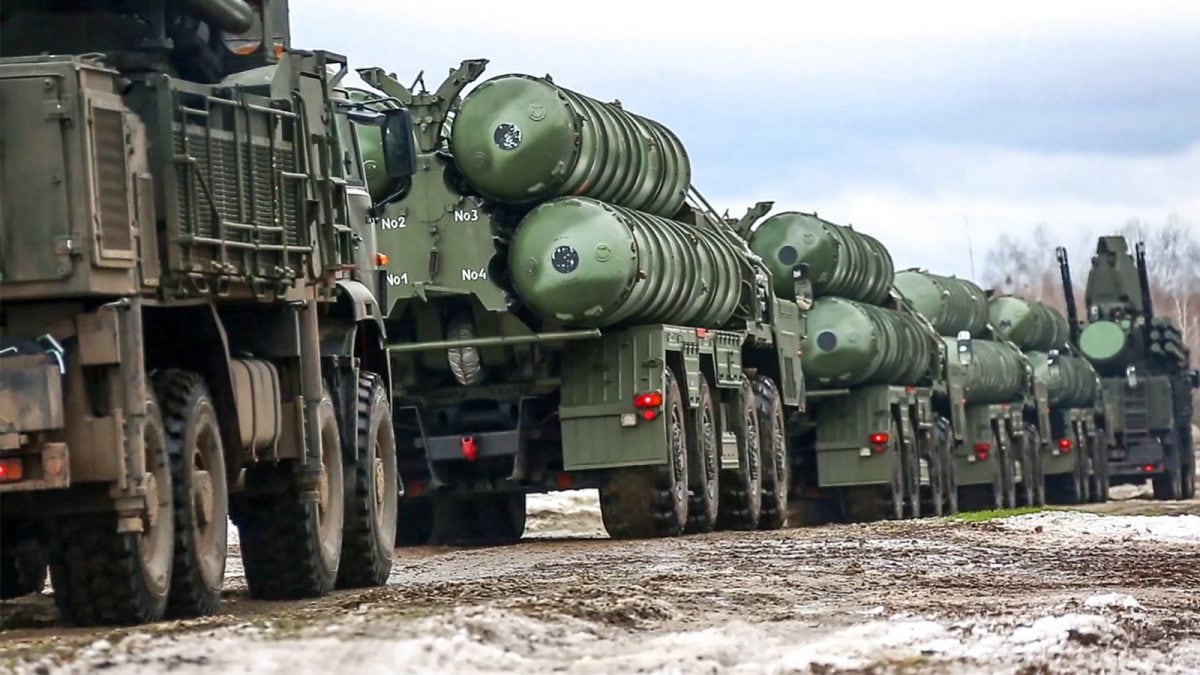
In an increasingly volatile global landscape, characterized by escalating security concerns, rapid technological advancements, and evolving strategic military doctrines, the significance of air defense systems has reached unprecedented levels. Nations across the world are recognizing the critical role these systems play in safeguarding their sovereignty, protecting their populations, and deterring potential aggression. From the renowned Iron Dome in Israel to the sophisticated Patriot systems in the United States and the formidable S-400s in Russia, air defense capabilities have become indispensable tools in modern warfare and national security strategies. The article examines the evolution of air defense systems globally, with a particular focus on India's progress in this critical domain. Air defense systems serve as the first line of defense against a wide range of aerial threats, including drones, missiles, and aircraft. These systems operate by continuously scanning the skies, detecting, tracking, and intercepting incoming threats before they can reach their intended targets. The importance of air defense systems extends beyond simply protecting cities, military bases, and strategic installations from enemy attacks. They also play a crucial role in deterring enemy aggression by demonstrating a nation's capability to effectively respond to aerial threats. In conflict zones, mobile air defense shields provide essential protection for ground forces, enabling them to operate with greater freedom and security. With the proliferation of drones, cruise missiles, and hypersonic weapons, advanced air defenses have become even more vital for maintaining national security. These advanced weapons systems pose a significant challenge to traditional air defense strategies due to their speed, maneuverability, and ability to evade detection. As a result, countries are investing heavily in developing multi-layered air defense systems that can respond quickly and effectively to these emerging threats. The core components of an air defense system typically include radars and sensors for detecting and tracking threats, command and control systems for making decisions based on radar input, and interceptor weapons, such as missiles or guns, for neutralizing the threat. The effectiveness of an air defense system depends on the seamless integration of these components and the ability to operate in a coordinated manner. The article highlights some of the leading air defense systems currently deployed around the world, categorized by their range, altitude, interceptor speed, and target types. Russia's S-400 Triumf stands out as one of the most advanced long-range, multi-layered air defense systems, with a range of up to 400 kilometers. The S-400 is capable of targeting aircraft, cruise missiles, and ballistic missiles, and can track up to 80 targets simultaneously. Its mobility and high level of integration make it a formidable asset for any nation's air defense capabilities. The United States' Patriot PAC-3 MSE is another highly regarded air defense system, with a range of approximately 35 kilometers for ballistic missiles and 160 kilometers for aircraft. The Patriot system is known for its hit-to-kill technology and its combat-proven performance in various conflicts. The US THAAD (Terminal High Altitude Area Defense) system is designed to intercept short-to-intermediate-range ballistic missiles at high altitudes. Its ability to work in conjunction with Aegis and Patriot systems provides a layered defense against ballistic missile threats. The US Aegis Combat System with SM-3/SM-6 Missiles is a powerful system capable of intercepting intercontinental ballistic missiles (ICBMs) in mid-course. Its integration with NATO assets enhances its effectiveness in a multinational defense environment. Israel's Iron Dome is a short-range air defense system designed to intercept rockets, artillery, mortar shells, and drones. Its high success rate and real-time threat evaluation capabilities make it a valuable asset for protecting against short-range threats. The article also examines India's progress in developing its own air defense capabilities. Over the past two decades, India has made significant strides in building a multi-layered air defense network, combining indigenous systems, joint collaborations with countries like Israel and Russia, and foreign acquisitions. India is now considered one of the top five global air defense powers in terms of volume, diversity, and depth of its arsenal. India's air defense arsenal includes the S-400 Triumf, imported from Russia, which provides strategic deterrence against potential adversaries. The Ballistic Missile Defence (BMD) system, developed by DRDO, consists of exo- and endo-atmospheric interceptors for ballistic missiles. The MR-SAM/Barak 8, jointly developed by India and Israel, is a medium-range surface-to-air missile with advanced capabilities. The Akash & Akash-NG are indigenous air defense systems designed to target aircraft, drones, and cruise missiles. The Quick Reaction Surface-to-Air Missile (QRSAM) is a mobile air defense system for protecting moving army columns. The Very Short Range Air Defence (VSHORADS) system is a man-portable missile for infantry and forward units. The Israeli SPYDER system provides point defense for strategic bases. The upcoming Indian XRSAM is being developed to bridge the gap between MR-SAM and S-400. India has also trialed the Iron Dome system, but has opted to focus on Akash & QRSAM for similar roles. In addition to these missile systems, India has the IACCS (Integrated Air Command and Control System), which provides real-time tracking and interception across radars and missile units. The radar systems supporting India's air defense include swordfish LRTR for BMD tracking, Ashwin Radar, Bharani, Rohini, Arudhra, and Atulya. Since 2019, India has strengthened its forward air defense by deploying S-400 systems in Punjab sector, upgrading its radar networks near LoC, and placing quick-reaction air defense (QRSAM) systems in high-threat areas. In conclusion, air defense systems are becoming increasingly important in the modern world, as nations face a growing range of aerial threats. India has made significant progress in developing its own air defense capabilities and is now among the top global powers in this field. As technology continues to advance, air defense systems will continue to evolve, becoming even more sophisticated and effective in protecting against aerial threats. The development, deployment, and continuous improvement of these systems are crucial for ensuring national security and maintaining peace and stability in an increasingly uncertain world. The integration of artificial intelligence and machine learning into air defense systems is also expected to play a significant role in the future, enhancing their ability to detect and respond to threats in real-time. Furthermore, the development of directed energy weapons, such as lasers and high-powered microwaves, could revolutionize air defense capabilities, providing a cost-effective and highly precise means of neutralizing aerial threats.
The evolution of air defense systems is not solely a technological endeavor; it is also deeply intertwined with geopolitical strategies and international relations. The acquisition and deployment of advanced air defense systems can significantly alter the balance of power in a region, influencing diplomatic relations and military alliances. For instance, India's decision to purchase the S-400 Triumf from Russia has been met with both praise and concern from different countries, highlighting the complex geopolitical implications of such strategic acquisitions. The effectiveness of air defense systems is not solely dependent on their technical capabilities but also on the training and expertise of the personnel operating them. Regular training exercises and simulations are essential for ensuring that air defense crews are prepared to respond effectively to a wide range of threats. The integration of air defense systems with other military assets, such as fighter aircraft and electronic warfare systems, is also crucial for maximizing their effectiveness. A well-coordinated and integrated air defense network can provide a comprehensive shield against aerial threats, enhancing a nation's overall defensive capabilities. The development and deployment of air defense systems also raise important ethical considerations. The potential for civilian casualties in the event of a missile interception or the use of force against an aerial threat necessitates careful consideration of the rules of engagement and the principles of proportionality and discrimination. International law and humanitarian principles must be strictly adhered to in the planning and execution of air defense operations. The ongoing development of hypersonic weapons presents a significant challenge to existing air defense systems. These weapons, which can travel at speeds of Mach 5 or greater, are extremely difficult to intercept due to their speed, maneuverability, and unpredictable flight paths. New air defense technologies and strategies are needed to counter the threat posed by hypersonic weapons. One potential solution is the development of space-based interceptors that can track and intercept hypersonic weapons from orbit. Another approach is to develop more advanced radar systems that can detect and track hypersonic weapons at greater distances. The integration of artificial intelligence and machine learning into air defense systems is also crucial for enhancing their ability to respond to hypersonic threats. The use of artificial intelligence can enable air defense systems to analyze vast amounts of data in real-time, identify potential threats, and automatically engage them with minimal human intervention.
The future of air defense systems is likely to be shaped by several key trends, including the increasing use of artificial intelligence, the development of directed energy weapons, and the proliferation of unmanned aerial vehicles (UAVs). Artificial intelligence is expected to play a growing role in air defense systems, enhancing their ability to detect and respond to threats in real-time. Machine learning algorithms can be used to analyze vast amounts of data from radar systems and other sensors, identifying potential threats and automatically engaging them with minimal human intervention. Artificial intelligence can also be used to improve the accuracy and effectiveness of air defense missiles, enabling them to intercept targets with greater precision. Directed energy weapons, such as lasers and high-powered microwaves, are emerging as a promising technology for air defense. These weapons offer several advantages over traditional missile systems, including lower cost per shot, greater precision, and the ability to engage multiple targets simultaneously. Directed energy weapons can be used to disable or destroy drones, missiles, and aircraft, providing a cost-effective and highly precise means of neutralizing aerial threats. The proliferation of unmanned aerial vehicles (UAVs) is also posing a significant challenge to air defense systems. UAVs are becoming increasingly sophisticated and capable, and they can be used for a wide range of purposes, including reconnaissance, surveillance, and attack. The small size and low cost of many UAVs make them difficult to detect and intercept, requiring new air defense technologies and strategies. One potential solution is the development of counter-UAV systems that can detect, track, and neutralize UAVs using a variety of methods, including jamming, electronic warfare, and directed energy weapons. The integration of artificial intelligence and machine learning into counter-UAV systems can enhance their ability to automatically detect and engage UAVs with minimal human intervention. The development and deployment of effective air defense systems is crucial for ensuring national security and maintaining peace and stability in an increasingly uncertain world. As technology continues to advance, air defense systems will continue to evolve, becoming even more sophisticated and effective in protecting against aerial threats. The integration of artificial intelligence, the development of directed energy weapons, and the proliferation of unmanned aerial vehicles are all shaping the future of air defense, requiring continuous innovation and adaptation to meet the evolving challenges. The ongoing investment in research and development is essential for ensuring that air defense systems remain at the forefront of technological innovation and can effectively counter the threats of tomorrow.
Source: Guardians Of The Sky: How India & The World Are Reinventing Air Defence Systems