
 |
|
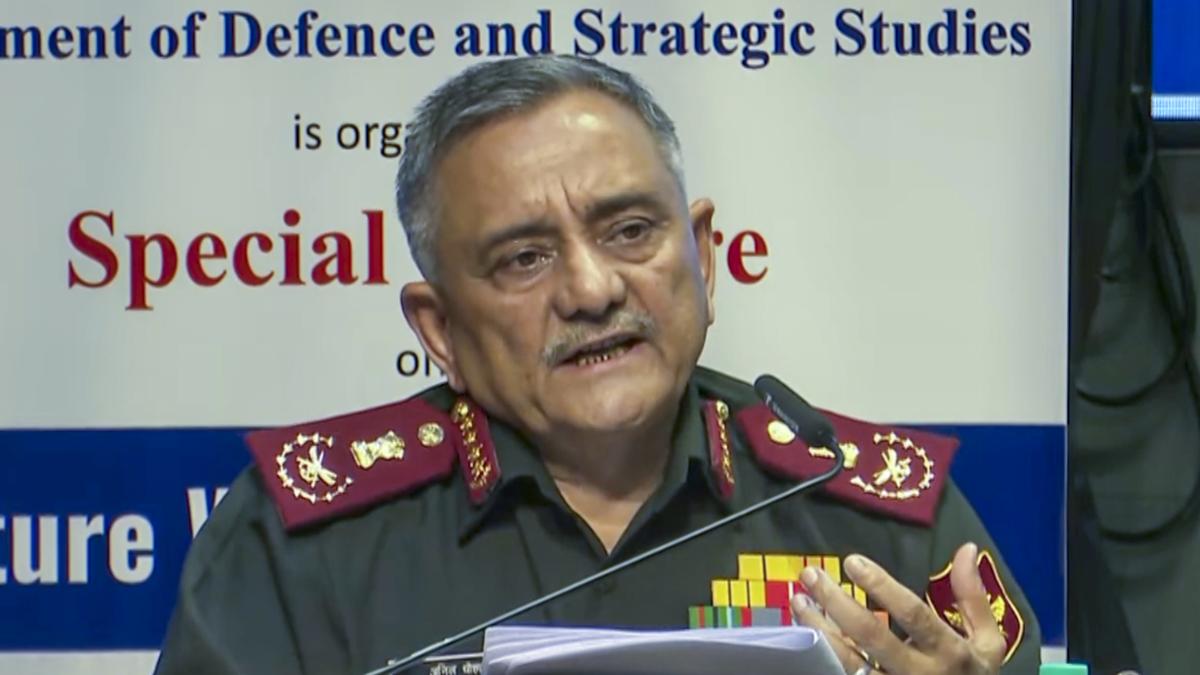
General Anil Chauhan, Chief of Defence Staff, delivered a powerful address emphasizing India's firm stance against cross-border terrorism perpetrated by Pakistan. Speaking at Savitribai Phule Pune University on June 3, 2025, Gen Chauhan asserted that professional militaries prioritize overall outcomes over temporary setbacks, directly addressing criticisms regarding the acknowledgement of Indian combat jet losses during Operation Sindoor's initial phase. He underscored that while losses are inevitable in war, maintaining morale and focusing on achieving strategic objectives remain paramount. The core message of his address revolved around India's resolve to not be held hostage by state-sponsored terrorism emanating from Pakistan. The General explicitly highlighted Pakistan's strategy of inflicting damage through a 'thousand cuts' approach and underscored that India has now established new redlines to combat this threat, effectively conveyed through the strategic execution of Operation Sindoor. He also mentioned Pakistan Army chief Gen Asim Munir's venomous rhetoric against India and Hindus prior to the Pahalgam attack to underscore Pakistan’s long standing anti-India sentiment. Chauhan’s presentation also included an explanation of India’s precise strikes that were used during the operation and how Pakistan’s response operation folded after only eight hours when the expectation was that it would take at least 48 hours to cause significant damage to India. He said India accepted Pakistan’s call for talks and de-escalation. The General also mentioned connecting terror to water and drawing a new line of military operations against terror.
The operation’s principal goal, Chauhan stated, was to deter Pakistan from continuing its state-sponsored terrorist activities and prevent it from using terrorism as a tool to exert undue influence over India. This assertion reflects a significant shift in India's strategic approach, moving from a reactive posture to a more proactive stance aimed at dismantling the infrastructure of terrorism. The strategic intent behind Operation Sindoor was not merely retaliatory but aimed at establishing a deterrent effect, signaling to Pakistan that India is willing and capable of responding decisively to any act of cross-border terrorism. Gen Chauhan's remarks on Pakistan's plan to prolong their counter-operations for 48 hours, which ultimately collapsed within eight hours, emphasize the efficacy of India's military response. This demonstrates India's enhanced capabilities in swiftly neutralizing threats and underscores the strategic advantage gained through precise and targeted strikes. The acknowledgement of Pakistan's subsequent request for talks and de-escalation highlights the impact of India's actions in compelling Pakistan to reconsider its aggressive stance. The incident serves as a stark reminder of India's unwavering commitment to safeguarding its sovereignty and security.
The Chief of Defence Staff's emphasis on maintaining morale even in the face of setbacks is a crucial aspect of military leadership. His rejection of criticism for acknowledging losses underscores the importance of transparency and realism in assessing military operations. By openly addressing the losses incurred, Gen Chauhan demonstrated confidence in India's overall strategic capabilities and reassured the public that temporary setbacks do not undermine the nation's resolve to combat terrorism. His detailed explanation of the events leading up to Pakistan's request for talks provides valuable insights into the dynamics of the conflict and highlights India's strategic prowess in achieving its objectives. The articulation of India's raised bar and its connection of terror to water resources signifies a comprehensive approach to counter-terrorism. This holistic strategy acknowledges the multifaceted nature of terrorism and recognizes the importance of addressing its root causes, including the use of water as a tool of coercion. By drawing a new line of military operation against terror, India has signaled its determination to adopt a more aggressive and proactive approach to combating cross-border terrorism. This commitment to protecting its interests and ensuring regional stability reflects India's growing role as a responsible and assertive global power. Overall, the General's address effectively conveyed India's unwavering commitment to combating terrorism and safeguarding its national security, solidifying its position as a key player in maintaining regional stability.
Furthermore, General Chauhan's statement reflects a broader shift in India's foreign policy, characterized by a greater willingness to assert its interests and defend its sovereignty against external threats. This shift is driven by a combination of factors, including India's growing economic and military strength, as well as a heightened awareness of the challenges posed by cross-border terrorism and regional instability. India's decision to conduct Operation Sindoor and establish new redlines against cross-border terrorism represents a significant departure from its previous policy of restraint and non-interference. This shift reflects a recognition that India can no longer afford to remain passive in the face of persistent terrorist attacks and that it must take proactive measures to protect its citizens and interests. The operation was also likely intended to send a message to other countries in the region, demonstrating India's willingness to use military force to defend its interests and deter aggression. By raising the stakes in the conflict with Pakistan, India has signaled its determination to maintain regional stability and prevent the escalation of tensions. The connection of terror to water resources also reflects a growing recognition of the strategic importance of water in the region. Water scarcity is a major challenge in South Asia, and access to water resources has become a source of tension and conflict between India and Pakistan. By linking terrorism to water, India has highlighted the potential for conflict over water resources and has signaled its determination to protect its water interests.
The significance of the operation lies not only in its immediate impact on Pakistan but also in its broader implications for regional security and stability. By demonstrating its willingness to use military force to defend its interests, India has sent a clear message to other countries in the region that it will not tolerate cross-border terrorism and will take proactive measures to protect its sovereignty. This message is particularly important in the context of the ongoing challenges posed by terrorism and extremism in South Asia. The region is home to a number of terrorist groups, including those that operate across borders and pose a threat to regional security. India's decision to take a more assertive approach to counter-terrorism is therefore a welcome development and has the potential to contribute to greater stability in the region. The operation is also significant because it demonstrates India's commitment to working with other countries to combat terrorism. India has been a strong advocate for international cooperation in the fight against terrorism and has actively participated in multilateral efforts to counter terrorism. The decision to conduct Operation Sindoor reflects India's belief that terrorism is a global threat that requires a coordinated response from all countries. By working together, countries can share intelligence, coordinate their efforts, and ultimately defeat terrorism.
In conclusion, General Chauhan's address at Savitribai Phule Pune University underscores India's unwavering commitment to combating cross-border terrorism and safeguarding its national security. The Operation Sindoor serves as a tangible demonstration of India's resolve to deter Pakistan from engaging in state-sponsored terrorist activities and to prevent it from using terrorism as a tool to exert undue influence. The strategic shift towards a more proactive and assertive approach to counter-terrorism reflects India's growing economic and military strength, as well as its heightened awareness of the challenges posed by regional instability. By raising the bar and establishing new redlines, India has signaled its determination to protect its interests and ensure regional stability. General Chauhan's emphasis on maintaining morale, transparency, and realism in assessing military operations further reinforces India's commitment to responsible and effective leadership. The connection of terror to water resources highlights the multifaceted nature of terrorism and the importance of addressing its root causes. Overall, India's proactive stance against cross-border terrorism not only safeguards its own security but also contributes to the stability of the region and reinforces its position as a responsible and assertive global power. The implications of this stance extend beyond immediate military considerations, influencing diplomatic relations, economic partnerships, and the broader geopolitical landscape of South Asia. As India continues to strengthen its capabilities and refine its strategic approach, it will undoubtedly play an increasingly important role in shaping the future of regional security and stability.
Source: Pakistan wants to bleed India by thousand cuts, we drew new redlines to combat terror: Gen Chauhan