
 |
|
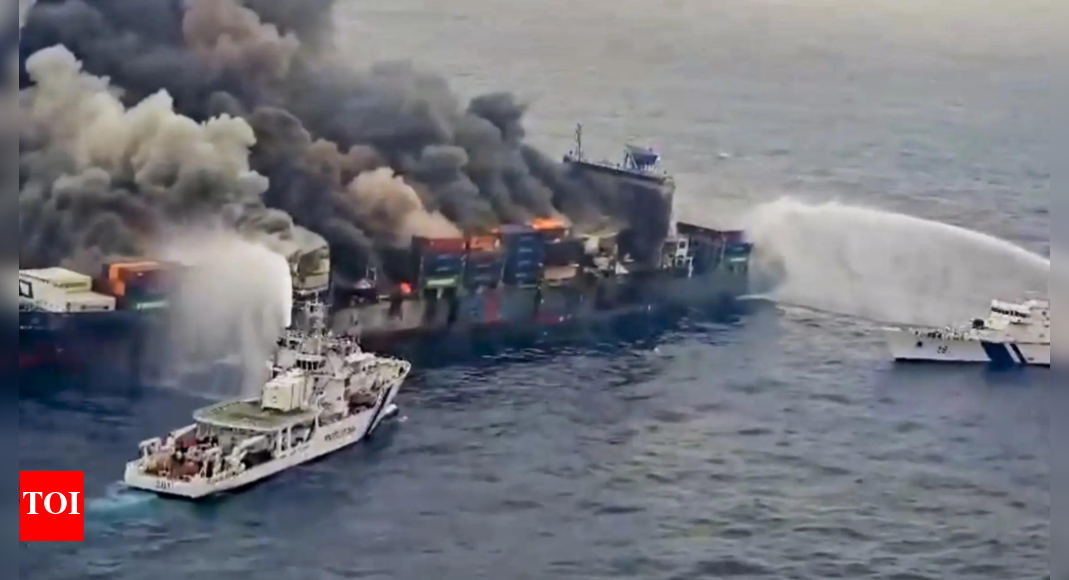
The recent maritime incident involving the Singapore-flagged cargo vessel MV Wan Hai 503 off the Kerala coast highlights the critical importance of international cooperation in maritime safety and rescue operations. The vessel, carrying a significant number of Chinese crew members, including individuals from Taiwan, experienced a severe onboard explosion and fire, prompting a swift and coordinated response from Indian authorities. China's expression of gratitude to India for their 'prompt and professional' intervention underscores the positive diplomatic and operational relationship between the two nations in addressing maritime emergencies. This incident serves as a reminder of the inherent risks associated with maritime transportation and the need for robust emergency response systems and collaborative frameworks to mitigate potential disasters. The Indian Coast Guard's rapid deployment of multiple ships, including the Samudra Prahari, Sachet, and Rajdoot, demonstrates their preparedness and capability to handle complex maritime emergencies. The use of aerial surveys and air-droppable equipment further illustrates the comprehensive approach adopted by the Indian authorities in combating the fire and ensuring the safety of the crew members. The involvement of the Indian National Centre for Ocean Information Services (INCOIS) in issuing advisories regarding potential oil spills and drifting containers highlights the broader environmental and navigational implications of such incidents. The simulations conducted by INCOIS to predict the movement of debris and floating cargo are crucial for enabling local authorities to take appropriate measures to protect coastal areas and maritime routes. The urgency with which local authorities were urged to step up shoreline surveillance underscores the potential for significant environmental and navigational hazards resulting from the incident. This coordinated response, involving multiple agencies and stakeholders, exemplifies the effective disaster management protocols in place in India and the country's commitment to ensuring maritime safety and security in the region. The incident also raises important questions about the safety standards and operational procedures of cargo vessels, particularly those carrying hazardous materials or operating in high-traffic maritime zones. A thorough investigation into the cause of the explosion and fire is essential to identify any systemic weaknesses or failures that may have contributed to the incident. This investigation should also consider the role of crew training, vessel maintenance, and regulatory oversight in preventing similar incidents from occurring in the future. Furthermore, the incident underscores the importance of international collaboration in maritime safety and security, particularly in addressing cross-border challenges such as search and rescue operations, pollution control, and maritime piracy. The sharing of information, resources, and expertise among nations is crucial for enhancing collective capacity to respond effectively to maritime emergencies and ensuring the safety and security of seafarers and maritime trade. The positive response from China to India's assistance in this incident provides an opportunity to further strengthen bilateral cooperation in maritime affairs and promote a more secure and sustainable maritime environment in the region. This can be achieved through joint exercises, training programs, and information-sharing initiatives, as well as through collaboration in international forums and organizations focused on maritime safety and security.
The MV Wan Hai 503 incident also provides a valuable case study for examining the effectiveness of existing maritime emergency response frameworks and identifying areas for improvement. The response time of the Indian Coast Guard, the coordination among different agencies, and the use of advanced technologies all played a crucial role in mitigating the impact of the incident and ensuring the safety of the crew members. However, the incident also highlights the challenges associated with responding to maritime emergencies in remote locations, particularly in adverse weather conditions. The difficulty in locating and rescuing the missing crew members underscores the need for enhanced search and rescue capabilities, including the use of advanced sensor technologies and unmanned aerial vehicles. The potential for oil spills and the dispersal of debris also poses significant challenges for environmental protection and navigational safety. The timely and accurate prediction of the movement of pollutants and debris is crucial for enabling effective containment and cleanup efforts. Furthermore, the incident highlights the importance of effective communication and coordination among all stakeholders, including the vessel operator, the flag state, the coastal state, and the international maritime community. The sharing of information and the timely dissemination of warnings are essential for preventing further incidents and ensuring the safety of maritime operations. The incident also underscores the need for greater public awareness about the risks associated with maritime transportation and the importance of supporting efforts to enhance maritime safety and security. Public education campaigns can help to raise awareness about the potential environmental and economic impacts of maritime accidents and promote responsible maritime practices. The MV Wan Hai 503 incident is a reminder of the complex and multifaceted challenges associated with maritime transportation and the need for a comprehensive and coordinated approach to ensuring maritime safety and security. By learning from this incident and working together to address the identified weaknesses, the international maritime community can enhance its ability to prevent and respond to future emergencies and promote a more sustainable and resilient maritime environment.
The geopolitical context surrounding this incident also warrants consideration. The South China Sea, a region characterized by overlapping territorial claims and heightened maritime activity, has been a source of tension between China and its neighbors. India's involvement in the rescue operation, and China's subsequent appreciation, can be interpreted as a positive sign of cooperation in a region often marked by conflict. However, it is important to recognize that the underlying geopolitical dynamics remain complex and that maritime incidents can sometimes be exploited for political purposes. The incident also raises questions about the role of international law and maritime governance in ensuring safety and security in the region. The United Nations Convention on the Law of the Sea (UNCLOS) provides a comprehensive framework for regulating maritime activities, including navigation, resource exploitation, and environmental protection. However, the interpretation and enforcement of UNCLOS provisions remain contentious issues, particularly in the South China Sea. The MV Wan Hai 503 incident underscores the need for greater adherence to international law and for enhanced mechanisms for resolving maritime disputes peacefully. The incident also highlights the importance of promoting transparency and confidence-building measures in the maritime domain. The sharing of information about maritime activities, the conduct of joint exercises, and the establishment of communication channels can help to reduce the risk of miscalculation and escalation. Furthermore, the incident underscores the need for greater regional cooperation in maritime security. The establishment of regional mechanisms for coordinating search and rescue operations, combating piracy, and protecting the marine environment can help to enhance collective capacity to address maritime challenges. The MV Wan Hai 503 incident provides an opportunity to promote dialogue and cooperation in the maritime domain and to build a more stable and secure maritime environment in the region. By focusing on shared interests, such as maritime safety and security, and by adhering to international law and norms, the countries in the region can work together to overcome the challenges and opportunities presented by the maritime domain. The incident serves as a reminder of the interconnectedness of the maritime world and the importance of international cooperation in ensuring its safety and sustainability.