
 |
|
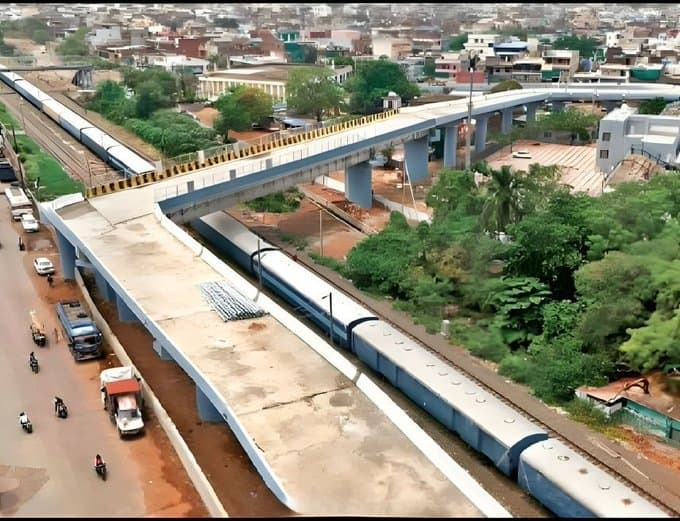
The railway overbridge (RoB) near Aishbagh Stadium in Bhopal, Madhya Pradesh, has become a focal point of public criticism due to its unconventional and potentially hazardous design. The bridge, which was intended to alleviate traffic congestion in the Aishbagh area, features a sharp 90-degree L-shaped turn on one of its sections, raising serious concerns about the safety of motorists and other commuters. The design has been widely ridiculed on social media, with many users creating memes and expressing disbelief at the apparent oversight in planning and execution. The resulting public outcry has prompted authorities to announce plans for a redesign of the problematic section of the bridge, aiming to mitigate the risks associated with the sharp turn. The situation highlights the importance of thorough planning and consideration of safety factors in infrastructure projects, as well as the power of social media to hold authorities accountable for design flaws and potential hazards. This Bhopal bridge fiasco underscores the delicate balance between expedited project timelines and comprehensive safety assessments. The current predicament showcases the ramifications of overlooking fundamental engineering principles in the pursuit of quick solutions, leading to outcomes that not only fail to achieve their intended goals but also pose substantial risks to the public. The incident should serve as a cautionary tale for future infrastructure undertakings, emphasizing the necessity of prioritizing safety and functionality above all else. The Bhopal bridge controversy serves as a reminder of the crucial role that public scrutiny plays in ensuring accountability and transparency in infrastructure development. The swift and widespread condemnation of the bridge's design on social media platforms forced authorities to acknowledge the issue and take corrective action. This highlights the increasing power of online platforms to amplify public concerns and influence decision-making processes, particularly in matters of public safety and well-being. The authorities' initial decision to proceed with such a design raises questions about the competency and oversight mechanisms in place during the planning and construction phases. A comprehensive investigation into the matter is warranted to identify the root causes of the design flaws and to implement measures to prevent similar incidents from occurring in the future. This incident also highlights the potential for miscommunication and lack of coordination between different government departments involved in infrastructure projects. The report mentions coordination issues between the Public Works Department and the railways as a contributing factor to the construction delays. Effective communication and collaboration between different agencies are essential for ensuring the smooth and efficient execution of infrastructure projects, and steps should be taken to improve coordination mechanisms to avoid similar issues in the future. Furthermore, the incident raises concerns about the level of community engagement in the planning and design of infrastructure projects. While local residents raised concerns about the potential risks to commuters, it is unclear whether their concerns were adequately addressed during the initial design phase. Incorporating community feedback and conducting thorough public consultations are crucial for ensuring that infrastructure projects meet the needs and expectations of the communities they are intended to serve. Ultimately, the Bhopal bridge controversy underscores the importance of prioritizing safety, functionality, and community engagement in all infrastructure projects. The incident serves as a valuable lesson for authorities and engineers alike, highlighting the potential consequences of overlooking fundamental design principles and neglecting the concerns of the public.
The core issue surrounding the Bhopal bridge is the sharp 90-degree turn incorporated into its design. This feature presents a significant safety hazard for motorists, particularly those unfamiliar with the area or traveling at moderate speeds. The abrupt change in direction necessitates a drastic reduction in speed, potentially leading to accidents and traffic congestion. The design flaw has been widely criticized by local residents and online users alike, with many questioning the logic behind such a decision. The authorities' initial response to the criticism was to propose expanding the turn by three feet, which would enable a more rounded approach. However, this solution has been met with skepticism, with many arguing that it is insufficient to address the underlying safety concerns. Critics contend that a more comprehensive redesign is necessary to eliminate the sharp turn altogether and ensure the safety of commuters. The construction delays further compound the problem, as the bridge has already been under construction for over 36 months, significantly longer than the initially projected 18 months. These delays have been attributed to various factors, including the shifting of electrical lines and coordination issues between the Public Works Department and the railways. The prolonged construction period has caused inconvenience to local residents and businesses, further fueling public discontent. The Bhopal bridge incident highlights the importance of thorough design reviews and safety audits throughout the construction process. Independent experts should be involved in reviewing the design to identify potential safety hazards and recommend appropriate mitigation measures. Regular safety audits should be conducted to ensure that the construction is proceeding according to plan and that all safety standards are being met. The incident also raises questions about the accountability of the engineers and officials responsible for the design and construction of the bridge. A thorough investigation should be conducted to determine whether any negligence or misconduct contributed to the design flaws and construction delays. Appropriate disciplinary action should be taken against those found responsible. In addition, the incident underscores the need for greater transparency in infrastructure projects. The public should be kept informed about the progress of the project and any potential issues that may arise. Public consultations should be conducted to solicit feedback from local residents and businesses. This would help to ensure that the project meets the needs and expectations of the community and that any potential concerns are addressed in a timely manner. The Bhopal bridge controversy serves as a reminder of the potential consequences of neglecting safety and quality in infrastructure projects. It is essential that authorities and engineers prioritize these factors above all else to ensure the safety and well-being of the public.
The incident in Bhopal underscores several critical aspects of modern infrastructure development and public accountability. First, it exemplifies the power of social media in amplifying public concerns and holding authorities accountable. The rapid spread of images and videos showcasing the bridge's flawed design triggered a widespread outcry, forcing officials to acknowledge the problem and initiate corrective measures. This highlights the increasing role of online platforms in shaping public discourse and influencing decision-making processes related to public works. Second, the incident underscores the importance of meticulous planning and rigorous quality control in infrastructure projects. The design flaw, characterized by the sharp 90-degree turn, suggests a lack of thorough assessment of potential safety hazards during the planning phase. Furthermore, the construction delays, attributed to coordination issues and unforeseen obstacles, indicate potential shortcomings in project management and execution. Third, the incident raises questions about the competence and accountability of the individuals and organizations responsible for the design and construction of the bridge. A comprehensive investigation is necessary to determine whether negligence, incompetence, or conflicts of interest contributed to the design flaws and construction delays. Appropriate disciplinary action should be taken against those found responsible to ensure that such incidents are not repeated in the future. Fourth, the incident highlights the importance of public engagement and transparency in infrastructure projects. While local residents raised concerns about the potential risks posed by the bridge's design, it is unclear whether these concerns were adequately addressed during the planning phase. Open communication with the public, including opportunities for feedback and input, is crucial for ensuring that infrastructure projects meet the needs and expectations of the communities they are intended to serve. Fifth, the incident serves as a reminder of the potential costs of compromising safety and quality in the pursuit of expediency or cost savings. While the initial objective of the bridge was to alleviate traffic congestion and reduce travel time, the flawed design has created a potentially dangerous situation for motorists and pedestrians. The cost of rectifying the design flaws and addressing the resulting safety concerns will likely outweigh any potential savings achieved through shortcuts or compromises in quality. The Bhopal bridge controversy should serve as a wake-up call for authorities and engineers involved in infrastructure projects across the country. It is essential to prioritize safety, quality, and public engagement to ensure that infrastructure investments deliver lasting benefits to the communities they are intended to serve. The incident also underscores the need for robust regulatory frameworks and independent oversight mechanisms to prevent similar incidents from occurring in the future. By learning from the mistakes made in Bhopal, we can strive to create a more efficient, sustainable, and safe infrastructure system for all.
Moreover, the Bhopal bridge situation brings forth the often overlooked aspect of user experience in infrastructure design. While engineers focus on structural integrity and functionality, the ease of use and safety for the end-users should be paramount. The 90-degree turn represents a significant oversight in this regard, as it directly compromises the safety and convenience of motorists. This emphasizes the need for a human-centered design approach in infrastructure projects, where the needs and limitations of the users are carefully considered. A human-centered approach involves not only understanding the physical capabilities of users but also their cognitive abilities and perceptions. In the case of the Bhopal bridge, the sharp turn may be particularly challenging for elderly drivers or those with limited visibility, potentially increasing the risk of accidents. This highlights the importance of designing infrastructure that is accessible and safe for all users, regardless of their age or abilities. Furthermore, the Bhopal bridge incident underscores the importance of continuous monitoring and evaluation of infrastructure projects after completion. Even if a design appears sound on paper, unforeseen issues may arise during actual use. Therefore, it is crucial to have systems in place for monitoring traffic patterns, identifying potential safety hazards, and gathering feedback from users. This information can then be used to make necessary adjustments and improvements to the infrastructure to ensure its long-term safety and effectiveness. The Bhopal bridge controversy also raises questions about the role of technology in infrastructure design and construction. With the advent of advanced modeling and simulation tools, engineers can now create virtual prototypes of infrastructure projects and test their performance under various conditions. This can help to identify potential design flaws and optimize the design for safety and efficiency. However, it is important to remember that technology is only a tool, and it should not be used as a substitute for sound engineering judgment and careful consideration of human factors. The Bhopal bridge incident serves as a reminder that even with the most advanced technology, human error and oversight can still occur. Therefore, it is essential to have a robust quality control process in place to ensure that all infrastructure projects meet the highest standards of safety and performance. In conclusion, the Bhopal bridge controversy is a multifaceted issue that highlights the importance of various factors in infrastructure design and construction, including public accountability, meticulous planning, rigorous quality control, public engagement, user experience, continuous monitoring, and the responsible use of technology. By addressing these factors effectively, we can strive to create a more sustainable, safe, and user-friendly infrastructure system for all.
Source: Bhopal's '90-degree' bridge to be redesigned after internet explodes with memes