
) |
|
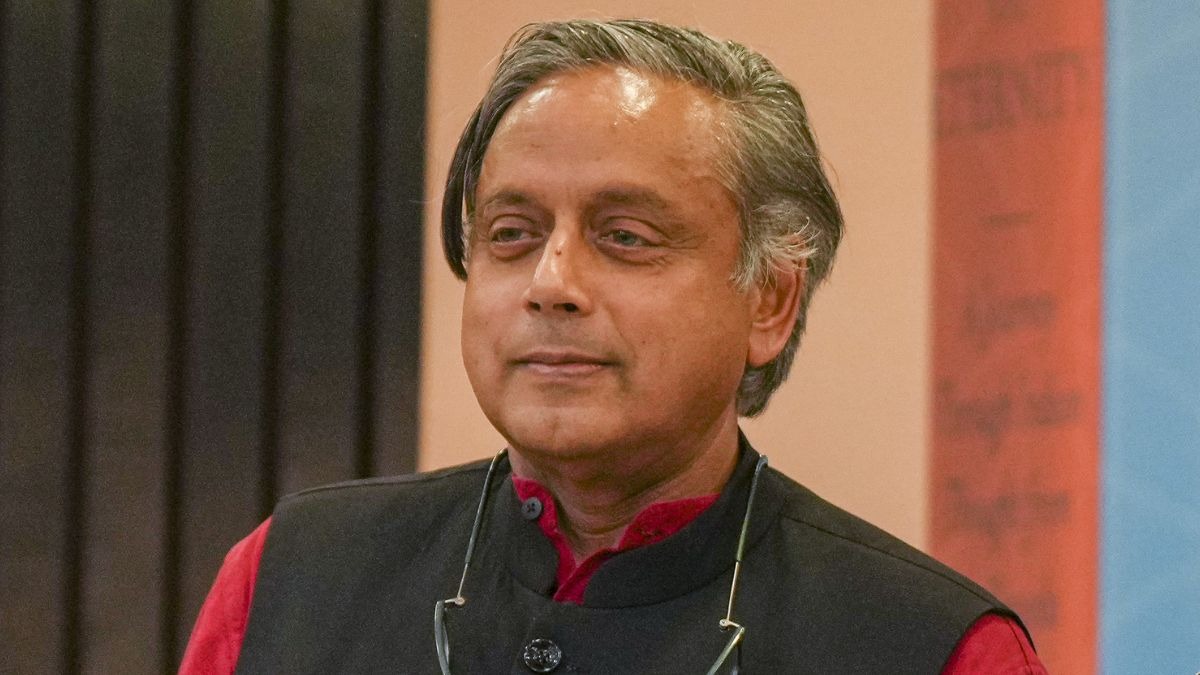
The statement by Shashi Tharoor regarding the alleged 88-hour conflict between India and Pakistan, presented at an interactive event in New York, warrants careful consideration. Tharoor's narrative positions India as a reactive force, responding to initial provocations from across the border. His explicit assertion that India did not initiate the conflict – "We didn’t want to start anything" – is a crucial element in framing the Indian perspective. The subsequent declaration, "We were just sending a message to terrorists. You started, we replied. If you stop, we stop," outlines a specific conditional response strategy. This 'tit-for-tat' approach, however, raises fundamental questions about the proportionality of the response, the definition of 'terrorists' in this context, and the potential for escalation inherent in such a policy. The characterization of the conflict as an 88-hour war, while concise, perhaps simplifies a more complex reality involving intricate political maneuvering, diplomatic exchanges, and military operations on both sides. The admission of "frustration" and the acknowledgement of "lives lost" inject a somber note into Tharoor's account, highlighting the human cost of the conflict. However, the simultaneous expression of "a steely and renewed sense of determination" suggests a hardening of resolve in the face of perceived threats. This complex interplay of regret and resolve forms a key part of the Indian government's presentation of its security policy. The context surrounding Tharoor's remarks is equally significant. The event, sponsored by the Consulate General of India in New York, represents a concerted effort to communicate India's perspective to an international audience. Furthermore, Tharoor's role as the leader of an all-party group presenting India's case in the American continents underscores the bipartisan support for this diplomatic initiative. The delegation's travels to Guyana, Panama, Colombia, Brazil, and the US indicate a broad outreach strategy aimed at engaging with diverse stakeholders and countering what the Indian government perceives as "false propaganda" emanating from Pakistan. The mention of the Pahalgam terror assault as a trigger for these diplomatic efforts provides a specific context for India's concerns. However, the underlying tensions between India and Pakistan, stemming from historical grievances and territorial disputes, cannot be overlooked. The reference to Operation Sindoor as a response to the terror attack in Kashmir on April 22 further situates the conflict within the broader framework of the ongoing security challenges in the region. It is crucial to examine the narrative presented by Tharoor through the lens of international law, diplomatic protocols, and the principles of conflict resolution. The use of force, even in response to perceived acts of terrorism, must adhere to the principles of necessity and proportionality. The definition of 'terrorists' should be consistent with international standards and avoid the risk of conflating non-state actors with legitimate political movements. The pursuit of diplomatic solutions, through dialogue and negotiation, remains the preferred approach to resolving conflicts and addressing underlying grievances. The long-term stability and security of the region depend on the ability of India and Pakistan to engage in constructive dialogue and build mutual trust. Tharoor's remarks, while intended to convey a message of resolve and deterrence, should also serve as a reminder of the human cost of conflict and the importance of pursuing peaceful solutions. Ultimately, the narrative surrounding the 88-hour conflict underscores the need for greater transparency, accountability, and restraint in the conduct of international relations.
The delegation's purpose, according to the article, is to "demolish Pakistan's false propaganda and highlight the country's connections to terrorism." This framing inherently positions Pakistan as an adversary and suggests a pre-determined narrative that the delegation is tasked with reinforcing. While addressing legitimate concerns about terrorism is important, a purely adversarial approach may be counterproductive. It risks hardening positions, fueling mistrust, and undermining efforts to find common ground. A more nuanced approach would involve acknowledging the complexities of the situation, addressing legitimate grievances on both sides, and promoting dialogue based on mutual respect. The term "false propaganda" itself is loaded and subjective. What one side perceives as propaganda, the other may view as a legitimate expression of its perspective. A more constructive approach would involve focusing on verifiable facts, presenting evidence-based arguments, and engaging in open and transparent communication. The delegation's defense of Operation Sindoor is also noteworthy. Military operations, even those undertaken in response to perceived threats, carry significant risks of civilian casualties, unintended consequences, and escalation. It is essential to ensure that such operations are conducted in accordance with international law and humanitarian principles. Transparency and accountability are crucial to building trust and preventing future conflicts. The article does not provide details about the specific objectives, tactics, or outcomes of Operation Sindoor. This lack of information makes it difficult to assess the operation's effectiveness or its adherence to ethical and legal standards. A more comprehensive account would include details about the planning, execution, and aftermath of the operation, as well as measures taken to minimize civilian casualties and mitigate unintended consequences. The repeated emphasis on sending a "message to terrorists" suggests a focus on deterrence and retaliation. While these may be legitimate objectives, they should not overshadow the importance of addressing the root causes of terrorism. Poverty, inequality, political marginalization, and lack of access to education and opportunity can all contribute to radicalization and extremism. A comprehensive approach to combating terrorism should include addressing these underlying issues, promoting inclusive governance, and fostering economic development. Furthermore, the narrative presented in the article may not fully reflect the views of all stakeholders. It is important to consider the perspectives of the Pakistani government, the Kashmiri people, and the international community. A more balanced account would include a diversity of voices and perspectives, allowing readers to form their own informed opinions. Finally, the article's limited scope and brevity prevent a thorough analysis of the complex issues at stake. A more comprehensive analysis would require a deeper dive into the historical context, the geopolitical dynamics, and the security challenges facing the region.
The article highlights a critical aspect of international relations: the crafting and dissemination of national narratives. Tharoor's presentation in New York is a prime example of a nation actively shaping its image and defending its actions on the global stage. This involves not only articulating specific policies but also framing events in a way that resonates with international audiences and advances the nation's interests. In this instance, the narrative centers on India's response to perceived acts of terrorism emanating from Pakistan. By portraying India as a victim and a responsible actor responding proportionately to aggression, the government seeks to garner international support for its policies and actions. The effectiveness of such narratives, however, depends on several factors. First, the narrative must be credible and supported by evidence. If the facts on the ground contradict the narrative, it is likely to be met with skepticism and resistance. Second, the narrative must resonate with the values and concerns of the target audience. What might be persuasive in one context may be ineffective in another. Third, the narrative must be consistent and coherent. Contradictory or inconsistent messages can undermine credibility and erode trust. In the case of the India-Pakistan conflict, the competing narratives from both sides often clash and contradict each other. This makes it difficult for international audiences to discern the truth and form a balanced opinion. Furthermore, the narratives are often intertwined with historical grievances, cultural sensitivities, and political agendas. This makes it challenging to address the underlying issues and find common ground. The role of media in shaping public perception is also crucial. Media outlets often play a significant role in disseminating national narratives and influencing public opinion. However, media coverage can also be biased, sensationalized, or incomplete. It is important to be critical of media reports and to seek out diverse sources of information. The use of social media as a tool for disseminating national narratives is also on the rise. Social media platforms allow governments and individuals to bypass traditional media outlets and communicate directly with audiences around the world. However, social media can also be used to spread misinformation, propaganda, and hate speech. It is important to be aware of the potential for manipulation and to exercise caution when consuming information from social media sources. In conclusion, the crafting and dissemination of national narratives is a complex and multifaceted process. It involves not only articulating specific policies but also shaping events in a way that resonates with international audiences and advances the nation's interests. The effectiveness of such narratives depends on several factors, including credibility, coherence, and resonance with the target audience. Media plays a crucial role in shaping public perception, and it is important to be critical of media reports and to seek out diverse sources of information.
The mention of Pahalgam terror attack in relation to the delegation's outreach emphasizes the role of terrorism as a key element in shaping the bilateral relationship between India and Pakistan. It's important to acknowledge that terrorism is a complex phenomenon with diverse roots and motivations. To effectively counter it, a multifaceted approach is required that addresses the underlying causes, disrupts terrorist networks, and promotes international cooperation. Simply labeling Pakistan as a state sponsor of terrorism, while potentially appealing to some domestic audiences, may not be the most effective way to achieve long-term security and stability in the region. A more nuanced approach would involve engaging with Pakistan to address its concerns about terrorism, offering assistance in strengthening its counter-terrorism capabilities, and working together to dismantle terrorist networks operating in the region. This requires building trust and fostering a sense of shared responsibility. The article also mentions Operation Sindoor as a response to the terror attack in Kashmir. While it's understandable that governments feel compelled to respond to acts of terrorism, it's important to ensure that such responses are proportionate and in accordance with international law. Unilateral military actions can escalate tensions and undermine diplomatic efforts. A more effective approach would involve working with international partners to condemn terrorism, bringing perpetrators to justice, and providing assistance to victims. Furthermore, it's crucial to address the root causes of terrorism in Kashmir. This involves addressing the grievances of the Kashmiri people, promoting inclusive governance, and fostering economic development. A purely security-based approach is unlikely to be sustainable in the long run. The delegation's focus on countering what it perceives as "false propaganda" from Pakistan also raises questions about freedom of expression and access to information. While governments have a legitimate interest in defending themselves against misinformation, it's important to avoid censorship and to protect the right of individuals to express their opinions freely. A more effective approach would involve promoting media literacy, encouraging fact-checking, and fostering a culture of open dialogue. The India-Pakistan relationship is deeply intertwined with the Kashmir dispute. It's crucial to acknowledge that there are multiple perspectives on the issue and that a resolution requires dialogue, compromise, and mutual respect. Unilateral actions, such as altering the status of Kashmir without the consent of the Kashmiri people, can exacerbate tensions and undermine efforts to find a peaceful solution. The long-term stability and security of the region depend on the ability of India and Pakistan to engage in constructive dialogue, build mutual trust, and resolve their outstanding disputes peacefully.
The concept of 'sending a message' through military action, as described by Tharoor, presents a number of challenges in international relations. While deterrence is a recognized strategy, the effectiveness of signaling intentions through the use of force depends on a clear understanding of the adversary's motivations, capabilities, and perceptions. If the message is misinterpreted or the response is miscalculated, it can lead to unintended consequences and escalation. In the case of the alleged 88-hour conflict, the effectiveness of India's 'message' to Pakistan is debatable. While Tharoor claims that 'they stopped,' it's unclear whether this was solely due to India's military response or to other factors, such as diplomatic pressure, international condemnation, or internal constraints. Furthermore, the 'message' itself is open to interpretation. What constitutes a 'terrorist' and what actions justify a military response are questions that are subject to debate and can be easily manipulated for political purposes. The risk of miscalculation is particularly high in situations where there is a history of conflict, a lack of trust, and a high degree of political polarization. In the India-Pakistan context, these factors are all present, making it difficult to accurately assess the adversary's intentions and to predict their response to military actions. The use of force as a signaling tool also raises ethical concerns. Military actions often result in civilian casualties and collateral damage, even when they are intended to target specific individuals or groups. The principle of proportionality requires that the use of force be proportionate to the threat and that all feasible precautions be taken to minimize harm to civilians. However, in practice, it can be difficult to apply this principle, particularly in situations where there is a lack of transparency and accountability. Furthermore, the focus on 'sending a message' can overshadow the importance of addressing the underlying causes of conflict. Military actions may provide a temporary sense of security, but they are unlikely to resolve the root causes of terrorism, political instability, or economic inequality. A more sustainable approach involves addressing these underlying issues, promoting inclusive governance, and fostering economic development. The long-term stability and security of the region depend on the ability of India and Pakistan to engage in constructive dialogue, build mutual trust, and resolve their outstanding disputes peacefully. This requires a shift away from a focus on 'sending messages' through military action and towards a more comprehensive approach that addresses the underlying causes of conflict and promotes sustainable development.
Finally, it is crucial to consider the potential impact of the Indian government's diplomatic outreach on the international community's perception of the India-Pakistan conflict. By actively engaging with foreign governments and organizations, India seeks to shape the narrative surrounding the conflict and to garner support for its policies and actions. However, the effectiveness of this diplomatic outreach depends on several factors, including the credibility of India's claims, the receptiveness of the target audience, and the competing narratives presented by other actors, including Pakistan. If India's claims are perceived as biased or exaggerated, they are likely to be met with skepticism and resistance. It is important for India to present its case in a transparent and objective manner, acknowledging the complexities of the situation and addressing legitimate concerns raised by other stakeholders. The receptiveness of the target audience also plays a crucial role. Some governments and organizations may be more sympathetic to India's position due to historical ties, shared values, or strategic interests. Others may be more skeptical due to concerns about human rights, regional stability, or the potential for escalation. It is important for India to tailor its message to the specific interests and concerns of each target audience. The competing narratives presented by other actors, including Pakistan, can also influence the international community's perception of the conflict. Pakistan is likely to present its own perspective on the issues, highlighting India's alleged human rights abuses in Kashmir and its support for separatist movements in Pakistan. It is important for India to be prepared to respond to these counter-narratives and to present a compelling case for its own position. The long-term success of India's diplomatic outreach will depend on its ability to build trust, foster understanding, and promote dialogue among all stakeholders. This requires a commitment to transparency, accountability, and a willingness to engage in constructive criticism. It also requires a recognition that the India-Pakistan conflict is a complex and multifaceted issue with no easy solutions. A sustainable resolution will require a long-term commitment to dialogue, compromise, and mutual respect. The Indian government's diplomatic outreach efforts should be viewed as a part of a broader strategy aimed at promoting peace, stability, and prosperity in the region. This strategy should include efforts to address the underlying causes of conflict, to promote economic development, and to foster greater cooperation among all stakeholders.