
 |
|
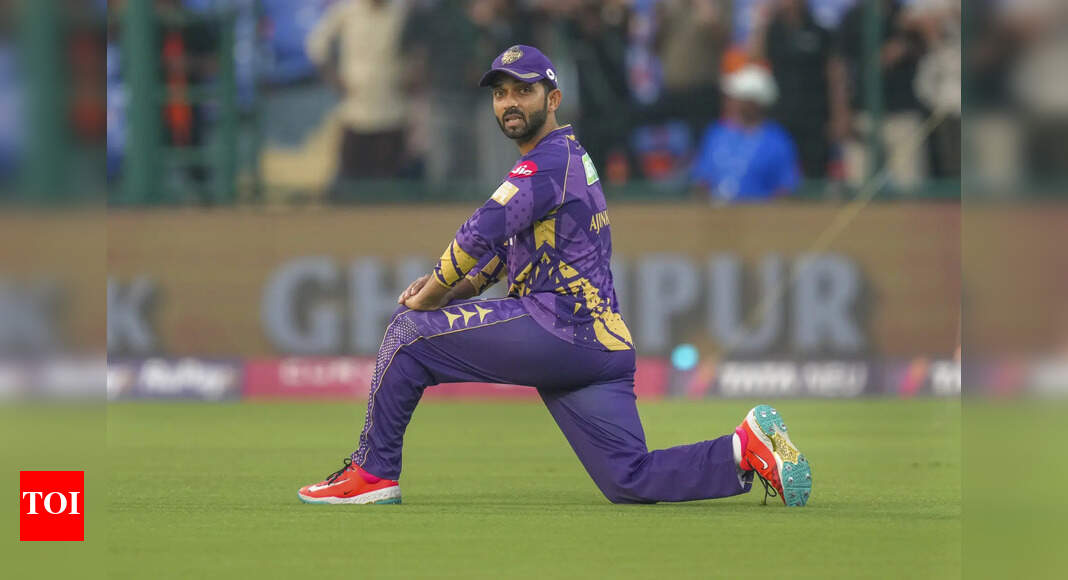
The Kolkata Knight Riders' (KKR) 2025 Indian Premier League (IPL) season ended in disappointment, culminating in a heavy defeat against Sunrisers Hyderabad (SRH). This loss has ignited a debate surrounding the captaincy of Ajinkya Rahane, with former India opener Virender Sehwag being particularly critical of Rahane's decision-making, specifically his batting position. Sehwag argues that Rahane prioritized his own preferences over the team's needs, a claim that Rahane vehemently denies. The crux of Sehwag's argument lies in his belief that a captain should adapt to the team's requirements rather than adhering to a rigid personal agenda. He points to examples of other captains, such as Rishabh Pant, who have been flexible in their batting order to accommodate in-form players. Sehwag emphasizes that KKR's team management and coaching staff should have taken the initiative to adjust the batting lineup based on player performance and strategic considerations. He cites the example of Chennai Super Kings (CSK), who altered their batting order to promote Shivam Dube and Dewald Brevis, demonstrating a willingness to adapt to changing circumstances. Sehwag's criticism extends beyond just Rahane's batting position. He implies that Rahane's overall leadership lacked the dynamism and adaptability necessary to guide KKR to success. By contrasting Rahane's approach with that of other captains who have shown a greater willingness to experiment and make bold decisions, Sehwag implicitly questions Rahane's suitability for the captaincy role. The comments raise the fundamental question of what constitutes effective leadership in a high-pressure environment like the IPL. Is it about adhering to a pre-determined plan, or is it about being flexible, adaptable, and willing to make tough decisions based on the specific circumstances of each game? Sehwag clearly believes that the latter is the more effective approach, and his criticism of Rahane suggests that he felt Rahane fell short in this regard. The timing of Sehwag's criticism is also significant. Coming in the wake of KKR's elimination from the tournament, it adds fuel to the fire of disappointment and frustration among fans and analysts alike. It also puts Rahane under increased scrutiny, potentially impacting his future role with the team. Furthermore, Sehwag’s comments add to the already intense pressure faced by IPL captains, who are constantly under the microscope for their decisions both on and off the field. His remarks highlight the fine line that captains must walk between asserting their authority and adapting to the needs of their team. The incident also underscores the importance of clear communication and alignment between the captain, team management, and coaching staff. A lack of consensus on key strategic decisions can lead to confusion, disharmony, and ultimately, poor performance on the field.
In response to Sehwag's criticism, Ajinkya Rahane defended his decision not to open for KKR, emphasizing that his priority was to fulfill the team's needs. He highlighted his past success as an opener, citing his impressive performance in the Syed Mushtaq Ali Trophy, where he scored 469 runs in eight innings with a striking strike rate of 164. However, he argued that the team's existing combination, with Quinton de Kock as a fixed opener and Sunil Narine's history of explosive starts, meant that he and Angkrish Raghuvanshi had to adapt to middle-order roles. Rahane stated that the team did not want to disrupt a winning combination and believed that positions 3 and 4 were ideal for him and Raghuvanshi. His defense hinges on the argument that his personal preferences were secondary to the overall team strategy and that he was willing to sacrifice his preferred position for the greater good of the team. Rahane's explanation suggests a pragmatic and team-oriented approach to captaincy. He argues that his decision was based on a careful assessment of the team's strengths and weaknesses and a desire to maintain a stable and successful batting lineup. However, his defense also raises the question of whether he was too conservative in his approach. Critics might argue that he should have been more willing to experiment with the batting order, even if it meant disrupting the existing combination. Rahane's justification highlights the complex trade-offs that captains often face when making strategic decisions. They must balance their own preferences with the needs of the team, the expectations of the fans, and the pressure to win. There is often no easy answer, and the best course of action may depend on a variety of factors, including the specific circumstances of each game, the form of individual players, and the overall team dynamics. Furthermore, Rahane addressed the team's overall performance in the IPL 2025 season, acknowledging that it had been inconsistent. He admitted that the batting unit had fallen short, despite the bowling unit's commendable efforts. Rahane also pointed to several close matches that could have gone either way, suggesting that a few key moments could have made a significant difference in the team's fortunes. These close matches included games against the Punjab Kings, Lucknow Super Giants (LSG), and Chennai Super Kings (CSK). He believes that a slightly different outcome in those 2-3 games would have painted a different picture for the season. Rahane's assessment suggests a sense of frustration and disappointment, but also a determination to learn from the experience and come back stronger next year.
Rahane also expressed pride in his team's effort and emphasized that everyone had given their best. He acknowledged the added pressure of being the defending champions, but maintained that the team had tried their hardest. Rahane concluded by expressing his confidence that KKR would return stronger in the following season. Rahane's comments suggest that he is taking responsibility for the team's performance, while also acknowledging the challenges of the captaincy role. He also attempts to convey a sense of optimism and resilience, despite the disappointment of the season. His claim that 'everyone tried their best' can be seen as an attempt to defend his players against criticism and to maintain a positive team atmosphere. However, it could also be interpreted as a deflection of responsibility, suggesting that the team's shortcomings were not due to a lack of effort, but rather to other factors beyond his control. Rahane's remarks demonstrate the delicate balance that captains must strike between accountability and encouragement. They must be willing to take responsibility for their team's failures, while also inspiring their players to believe in their ability to succeed. This requires a combination of honesty, empathy, and strategic thinking. Rahane's post-match press conference provides insights into his leadership style and his perspective on the team's performance. His defense of his batting position and his assessment of the team's overall season highlight the challenges and complexities of captaincy in the IPL. Rahane's responses suggest a pragmatic and team-oriented approach, but also raise questions about his willingness to be more flexible and experimental. The debate between Sehwag and Rahane underscores the importance of leadership, adaptability, and strategic thinking in the context of the IPL. While Sehwag criticizes Rahane for prioritizing his own preferences over the team's needs, Rahane defends his decisions by emphasizing his commitment to the overall team strategy. Ultimately, the success or failure of a captain depends on a variety of factors, including their ability to inspire and motivate their players, their strategic acumen, and their willingness to adapt to changing circumstances. The exchange between Sehwag and Rahane serves as a reminder of the intense scrutiny and pressure that IPL captains face, and the importance of effective leadership in navigating the complexities of the tournament. Beyond the specific details of KKR's IPL season, the disagreement between Sehwag and Rahane reflects a broader debate about the nature of leadership and the qualities that make a successful captain. Is it about being a strong individual performer, or is it about prioritizing the needs of the team above all else? Is it about sticking to a pre-determined plan, or is it about being flexible and adaptable? There is no easy answer to these questions, and the best approach may vary depending on the specific context and the individuals involved. However, the exchange between Sehwag and Rahane provides a valuable opportunity to reflect on these issues and to consider the qualities that are most important in a leader.
Source: 'Not written anywhere...': Virender Sehwag blasts KKR captain Ajinkya Rahane