
 |
|
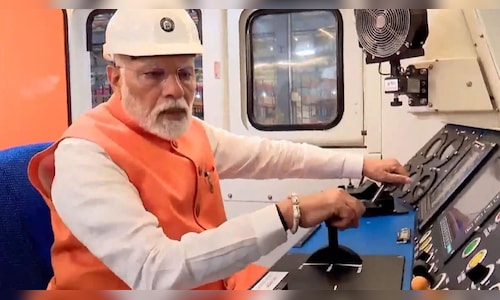
Prime Minister Narendra Modi's visit to Dahod, Gujarat, marked a significant event in the region's development, underscored by the inauguration of projects worth a staggering ₹24,000 crore. This substantial investment signals a strong commitment to enhancing infrastructure and boosting the local economy. Among the projects inaugurated, the locomotive manufacturing plant stands out as a key component, poised to produce electric locomotives of 9000 HP for both domestic use and export, illustrating India's growing capabilities in manufacturing and its ambition to become a global player in the railway industry. The Prime Minister's presence and the scale of the investment are indicative of the strategic importance Dahod holds in the government's broader economic development plan. The event was not merely a formality but a display of confidence and a demonstration of progress, with the Prime Minister emphasizing the transformative impact these projects will have on the region and the nation. The narrative surrounding the inauguration also included a retrospective element, with Modi recalling the foundation stone laying three years prior and addressing the skepticism that may have existed at the time. This approach served to highlight the tangible results of the government's policies and the realization of its promises. The inauguration of the locomotive plant is expected to generate employment opportunities, attract further investment, and stimulate economic activity in the surrounding areas, contributing to the overall prosperity of Gujarat. Furthermore, the project's focus on electric locomotives aligns with the global trend towards sustainable transportation solutions, reflecting India's commitment to reducing its carbon footprint and promoting environmentally friendly technologies. The strategic location of Dahod and the establishment of the locomotive plant are likely to enhance the region's connectivity and logistics capabilities, making it an attractive hub for manufacturing and trade. This development is expected to have a cascading effect on various sectors, including transportation, engineering, and technology, fostering innovation and driving economic growth. The Prime Minister's emphasis on India's manufacturing progress extended beyond the railway sector, encompassing smartphones, vehicles, toys, weapons, and medicines. This broad perspective underscored the diversification of India's manufacturing base and its growing competitiveness in the global market. The mention of exporting technology behind rails and metros further highlighted India's transition from being a mere consumer to a producer and exporter of sophisticated technologies. This shift is crucial for enhancing India's economic self-reliance and strengthening its position as a global economic power. The Prime Minister also highlighted the expansion of the Vande Bharat train network, with operational routes now spanning 70 locations across the country. This expansion signifies a significant upgrade in India's railway infrastructure, offering passengers faster, more comfortable, and more efficient transportation options. The Vande Bharat trains are equipped with modern amenities and advanced safety features, reflecting India's commitment to providing world-class railway services. The increasing popularity of these trains is indicative of the growing demand for high-speed rail travel and the positive impact it can have on regional connectivity and economic development. The development in Dahod and the broader railway initiatives are part of a larger national strategy to modernize India's infrastructure, improve connectivity, and promote economic growth. The government's focus on infrastructure development is driven by the recognition that it is a crucial enabler for attracting investment, creating jobs, and improving the quality of life for citizens. The Prime Minister's visit to Dahod served as a powerful symbol of this commitment and a demonstration of the progress being made in transforming India's infrastructure landscape. In addition to the economic benefits, the projects inaugurated in Dahod also have social and political implications. The creation of employment opportunities and the improvement of infrastructure can contribute to reducing poverty, improving living standards, and enhancing social cohesion. The government's focus on inclusive growth aims to ensure that the benefits of economic development are shared by all segments of society. The successful implementation of these projects can also strengthen the government's credibility and enhance its political support. The Prime Minister's emphasis on achieving tangible results and delivering on promises is crucial for building trust and maintaining public confidence. The Dahod event served as an opportunity for the government to showcase its achievements and reaffirm its commitment to serving the people of India. The broader context of India's economic development includes various challenges, such as infrastructure deficits, bureaucratic hurdles, and regional disparities. Addressing these challenges requires a comprehensive and coordinated approach, involving government, private sector, and civil society. The government's focus on streamlining regulations, promoting investment, and fostering innovation is crucial for overcoming these obstacles and accelerating economic growth. The success of the projects in Dahod and similar initiatives across the country will depend on effective implementation, efficient resource management, and strong public-private partnerships. The Prime Minister's leadership and vision are essential for driving these efforts and ensuring that India achieves its full economic potential. The inauguration of projects in Dahod is a microcosm of India's broader development trajectory, reflecting its ambition to become a global economic powerhouse. The government's focus on infrastructure development, manufacturing, and technological innovation is crucial for achieving this goal. The successful implementation of these projects will not only transform the region but also contribute to India's overall economic growth and prosperity. The Prime Minister's visit to Dahod was a significant event that underscored the government's commitment to development and its confidence in India's future.
The projects inaugurated by PM Modi in Dahod are not isolated endeavors, but rather integral parts of a larger, interconnected network of infrastructure development initiatives across the state of Gujarat and the nation as a whole. The focus on rail projects, specifically the locomotive manufacturing plant, highlights the strategic importance of the railway sector in driving economic growth and facilitating connectivity. The ability to produce electric locomotives locally, both for domestic use and export, signifies a significant step towards self-reliance and a reduction in dependence on foreign technology. This development also aligns with the government's broader Make in India initiative, which aims to promote domestic manufacturing and attract foreign investment. The economic impact of the locomotive plant extends beyond the immediate creation of jobs and the generation of revenue. It also stimulates demand for related industries, such as steel, engineering, and electronics, creating a ripple effect throughout the economy. Furthermore, the plant's export potential can contribute to earning valuable foreign exchange and enhancing India's trade balance. The choice of Dahod as the location for the locomotive plant reflects a strategic decision to promote development in a region that may have previously lagged behind in terms of economic opportunities. By investing in infrastructure and creating jobs in Dahod, the government aims to reduce regional disparities and ensure that the benefits of economic growth are shared more equitably. This approach is consistent with the government's broader focus on inclusive growth and its commitment to uplifting marginalized communities. The Prime Minister's emphasis on the completion of 100% electrification of the railway network in Gujarat is another significant achievement. Electrification not only reduces the environmental impact of rail travel but also improves efficiency and reduces operating costs. This modernization of the railway network is essential for supporting the growth of industries and facilitating the movement of goods and people. The expansion of the Vande Bharat train network further enhances the efficiency and convenience of rail travel. These high-speed trains offer passengers a faster and more comfortable alternative to traditional trains, making rail travel more attractive and competitive with other modes of transportation. The increasing popularity of the Vande Bharat trains is a testament to their quality and the growing demand for improved railway services. The government's investment in railway infrastructure is not limited to the construction of new lines and the electrification of existing lines. It also includes the modernization of railway stations, the improvement of signaling systems, and the enhancement of safety measures. These efforts are aimed at creating a world-class railway network that can meet the growing demands of a modern economy. The broader infrastructure development agenda also encompasses other sectors, such as roads, ports, and airports. The government is investing heavily in these sectors to improve connectivity and facilitate trade. The development of industrial corridors, such as the Delhi-Mumbai Industrial Corridor, is another key initiative that aims to promote manufacturing and create jobs. These corridors provide a favorable environment for businesses by offering access to infrastructure, skilled labor, and supportive policies. The government's focus on infrastructure development is driven by the recognition that it is a crucial enabler for economic growth. Infrastructure provides the foundation for businesses to operate efficiently and compete effectively in the global market. It also improves the quality of life for citizens by providing access to essential services, such as transportation, water, and electricity. The Prime Minister's visit to Dahod served as a powerful reminder of the importance of infrastructure development and the government's commitment to investing in this sector. The projects inaugurated in Dahod are a testament to the progress that is being made in transforming India's infrastructure landscape. These projects will not only benefit the local community but also contribute to the overall economic growth and prosperity of the nation. The government's continued focus on infrastructure development will be essential for achieving its vision of a prosperous and inclusive India.
The assertion by Prime Minister Modi regarding India's rapid progress in manufacturing warrants a closer examination. While the inauguration of the locomotive plant in Dahod and the expansion of the Vande Bharat train network undoubtedly represent significant achievements, the claim that India is now a major exporter of smartphones, vehicles, toys, weapons, and medicines requires further scrutiny. While India has made strides in these sectors, the extent of its export prowess varies considerably. In some areas, such as pharmaceuticals, India has indeed established itself as a major global player, with a significant share of the export market. However, in other sectors, such as smartphones and vehicles, India's export performance is still relatively modest compared to other manufacturing powerhouses like China and South Korea. The challenge for India lies in moving up the value chain and becoming a producer of higher-value goods and services. This requires investment in research and development, innovation, and skilled labor. The government's efforts to promote domestic manufacturing through initiatives like Make in India are aimed at addressing these challenges. However, the success of these initiatives will depend on effective implementation and a conducive business environment. The Prime Minister's emphasis on exporting the technology behind rails and metros is a particularly noteworthy point. This suggests that India is not only manufacturing these products but also developing the underlying technology, which is a crucial step towards achieving technological self-reliance. However, the extent to which India is truly exporting this technology remains to be seen. It is possible that India is exporting components or sub-systems that incorporate domestically developed technology, rather than the complete technology package. Nevertheless, the fact that the Prime Minister is highlighting this aspect is indicative of the government's ambition to become a leader in railway technology. The expansion of the Vande Bharat train network is a tangible example of India's progress in railway technology. These trains are designed and manufactured in India and incorporate advanced features, such as regenerative braking, automatic doors, and comfortable seating. The success of the Vande Bharat trains demonstrates India's ability to develop and deploy advanced railway technology. However, it is important to note that India still relies on foreign technology in certain areas of the railway sector, such as signaling and communication systems. The government's efforts to promote indigenous development of these technologies are crucial for achieving complete technological self-reliance. The Prime Minister's remarks about India's manufacturing progress should be viewed in the context of the broader global economic landscape. The global economy is becoming increasingly competitive, and countries are vying for a share of the global manufacturing market. India faces stiff competition from other manufacturing powerhouses, such as China, Vietnam, and Mexico. To succeed in this environment, India needs to focus on improving its competitiveness by reducing costs, enhancing productivity, and improving the quality of its products. The government's efforts to streamline regulations, improve infrastructure, and promote skill development are aimed at addressing these challenges. However, the government also needs to create a stable and predictable business environment to attract investment and foster innovation. The Prime Minister's visit to Dahod and his emphasis on manufacturing progress are a sign of the government's commitment to transforming India into a global manufacturing hub. However, achieving this goal will require sustained effort and a comprehensive approach that addresses the various challenges facing the manufacturing sector. The inauguration of the locomotive plant in Dahod and the expansion of the Vande Bharat train network are important steps in this direction, but much more remains to be done.
Source: PM Modi enters Dahod, Gujarat to great fanfare, inaugurates high-value projects - CNBC TV18